HomeMCPSkillsWorkbenchOpenChem
HomeWorkbenchNotificationsMe
llms.txt · skill.md · MCP GuidePrivacy Policy · Terms of Service · Supportv1.8.5
  1. Home
  2. /Reaction

HCID 178462010, compound → HCID 178462011, compound

HRID 339890
Print

Reaction equation

[C:1]1([Li])[CH:6]=[CH:5][CH:4]=[CH:3][CH:2]=1.Br[C:9]1[CH:14]=[CH:13][C:12]([C:15]2([CH3:35])[C:20]([CH3:22])([CH3:21])[O:19][C:18]([NH:23][C@H:24]([C:26]3[CH:31]=[CH:30][CH:29]=[CH:28][C:27]=3[F:32])[CH3:25])=[N:17][S:16]2(=[O:34])=[O:33])=[CH:11][CH:10]=1>C1COCC1.C(OCCCC)CCC.[Cl-].[Zn+2].[Cl-].C1C=CC(P(C2C=CC=CC=2)[C-]2C=CC=C2)=CC=1.C1C=CC(P(C2C=CC=CC=2)[C-]2C=CC=C2)=CC=1.Cl[Pd]Cl.[Fe+2]>[C:9]1([C:1]2[CH:6]=[CH:5][CH:4]=[CH:3][CH:2]=2)[CH:14]=[CH:13][C:12]([C:15]2([CH3:35])[C:20]([CH3:22])([CH3:21])[O:19][C:18]([NH:23][C@H:24]([C:26]3[CH:31]=[CH:30][CH:29]=[CH:28][C:27]=3[F:32])[CH3:25])=[N:17][S:16]2(=[O:34])=[O:33])=[CH:11][CH:10]=1
ParticipantsProcedureWorkupSources & evidenceReaction notes

Participants

7

Reactant 2

HCID 178462010HCID 178462010, compoundHCID 178506676HCID 178506676, compound2×

Product 1

HCID 178462011HCID 178462011, compound

Reagents, catalysts & solvents 4

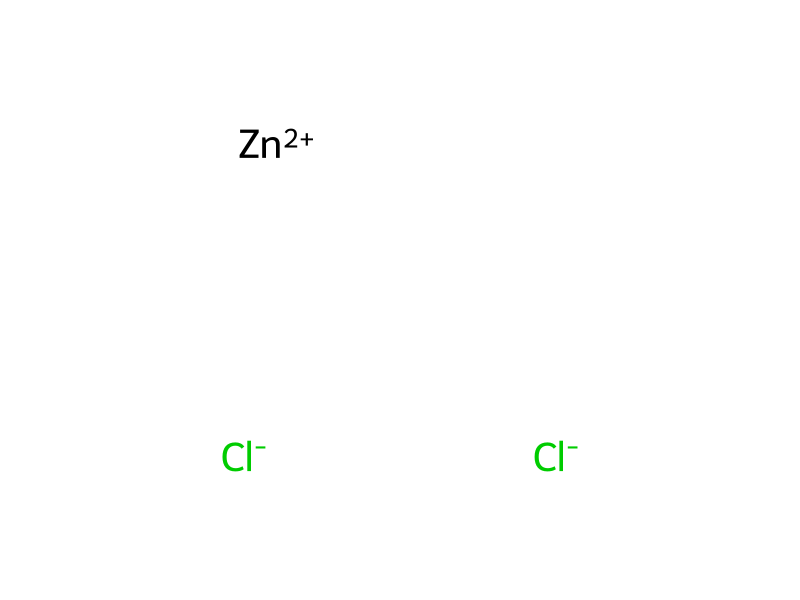
HCID 3007855SinkkikloridiCatalyst2×HCID 44119782
Bis(cyclopenta-1,4-dien-1-yl(diphenyl)phosphane);dichloropalladium;iron(2+)
Catalyst
HCID 8028TetrahydrofuranSolvent2×
HCID 8909Butyl etherSolvent

Procedure

Under inert gas, 5.56 ml of a 0.5 N zinc chloride solution in THF were cooled to −75° C., and 1.03 ml of a 1.8 N phenyllithium solution in dibutyl ether was added dropwise. The reaction solution was allowed to come to room temperature and stirred for 30 minutes. Then this solution was added to a solution of 87 mg of [5-(4-bromophenyl)-5,6,6-trimethyl-4,4-dioxo-5,6-dihydro-4H-4lambda6-1,4,3-oxathiazin-2-yl]-[(S)-1-(2-fluorophenyl)ethyl]amine and 8 mg of dichloro[1,1′-bis(diphenylphosphino)ferrocene]palladium in 3 ml of THF. After stirring at 60° C. for 75 minutes, the conversion was checked by LCMS. Since it was incomplete, the reaction mixture was stirred at 60° C. for a further 2.5 hours. Since, by LCMS, no further conversion had taken place, another 30% of the above-described amount of the self-prepared solution of phenyllithium and zinc chloride was added, and the mixture was stirred at 60° C. for a further 60 minutes. Since, by LCMS, there was no further conversion, the reaction solution was concentrated by rotary evaporation. The residue was admixed with dichloromethane and water, and the organic phase was dried over MgSO4 and concentrated by rotary evaporation. The residue was purified by means of normal phase chromatography using a Flashmaster with an n-heptane/ethyl acetate gradient. The product-containing fractions were combined and concentrated by rotary evaporation, and the crude product was purified further in a purification laboratory by means of preparative HPLC. The product-containing fractions were combined and lyophilized. This gave the product (29.1 mg) with a molecular weight of 466.6 g/mol (C26H27FN2O3S); MS (ESI): m/e=467 (M+H+).

Workup

  1. customto come to room temperature
  2. stirringAfter stirring at 60° C. for 75 minutes
  3. stirringthe reaction mixture was stirred at 60° C. for a further 2.5 hours
  4. stirringthe mixture was stirred at 60° C. for a further 60 minutes
  5. concentrationthe reaction solution was concentrated by rotary evaporation
  6. dry with materialthe organic phase was dried over MgSO4
  7. concentrationconcentrated by rotary evaporation
  8. customThe residue was purified by means of normal phase chromatography
  9. concentrationconcentrated by rotary evaporation
  10. customthe crude product was purified further in a purification laboratory by means of preparative HPLC

Sources & evidence

ORD record
ord-347c41306c2546c78fd30b7b70c067a3
Source dataset
uspto-grants-2014_11
DOI
10.6084/m9.figshare.5104873.v1
Patent number
US08895547B2

Reaction notes

On this pageParticipantsProcedureWorkupSources & evidenceReaction notes