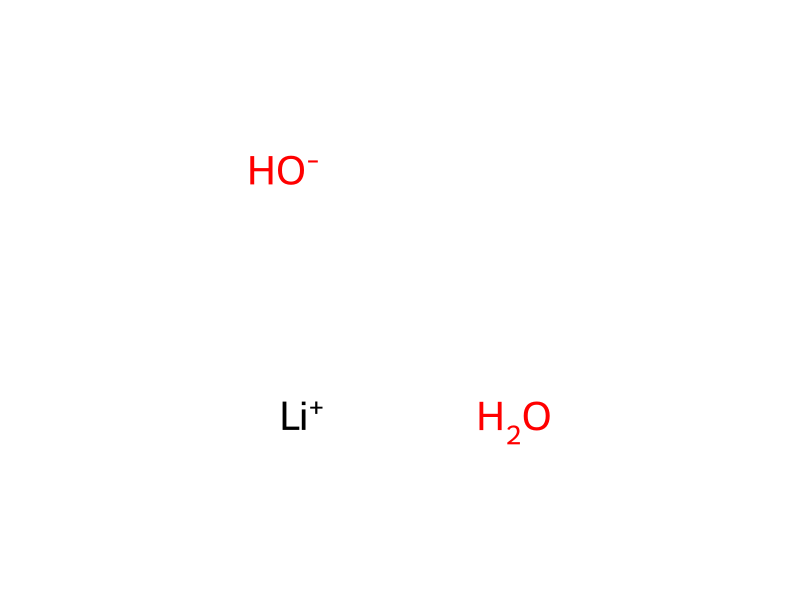
Methanol (300 kg) was added to the residue from Example 7 containing (S)-1-(4-benzylpiperazin-1-yl)-1-oxopropan-2-yl acetate 4 and the mixture was cooled to 0-10° C. A solution of lithium hydroxide monohydrate (13.6 kg, 324 mol) in water (100 kg) was added at a rate to maintain the reaction temperature at 0-15° C. After aging for 2 h, the pH was adjusted to 7 at 5-15° C. with acetic acid (4.5 kg, 75 mol). The mixture was concentrated under reduced pressure. To the residue was added dichloromethane (150 kg) and the layers were separated. The aqueous layer was extracted with dichloromethane (2×150 kg). The organic layers were combined, dried over anhydrous sodium sulfate, filtered and concentrated under reduced pressure. Ethyl acetate (31 kg) was added to the residue, followed by slow addition of cyclohexane (183 kg). The mixture was heated to 40-50° C. and stirred for 1 h. The mixture was cooled to 0-10° C. and aged for 8 h. The solid was collected by filtration, washed with cold cyclohexane and dried under reduced pressure at 50° C. for 12 h to afford (S)-1-(4-benzylpiperazin-1-yl)-2-hydroxypropan-1-one 5 (46 kg, 71% yield, 98% purity by HPLC). 1H NMR (300 MHz, CDCl3) δ 7.42-7.20 (m, 5H), 4.43 (q, J=6.4 Hz, 1H), 3.84 (broad s, 1H), 3.76-3.55 (m, 2H), 3.53 (s, 2H), 3.48-3.32 (m, 2H), 2.46 (s, 4H), 1.32 (dd, J=6.6, 3.9 Hz, 3H).