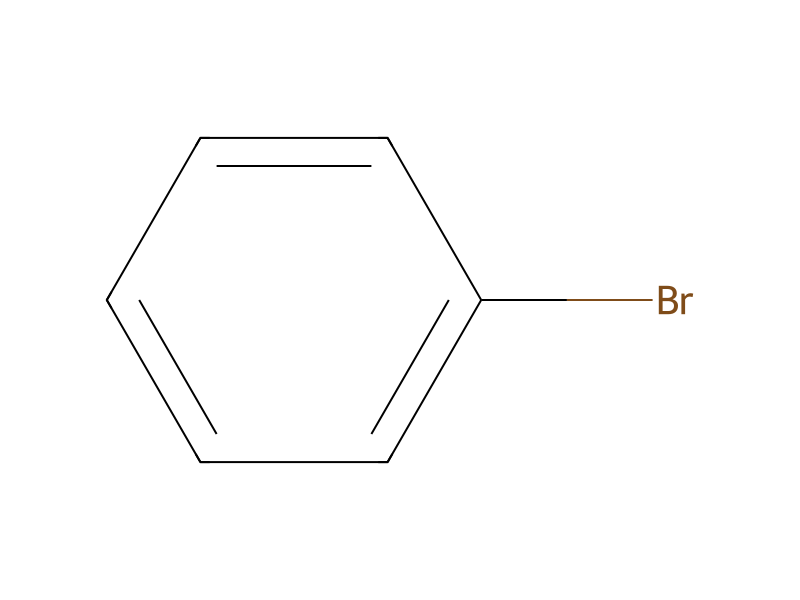
In a 3 liter, three-neck flask equipped with mechanical stirring, a solution of 3-fluoroaniline (75 g, 675 mol), bromobenzene (73 mL, 690 mol), and dichloro[1,1′-bis(diphenylphosphino)-ferrocene]palladium(II) dichloromethane adduct (15 g, 18 mmol) in anhydrous toluene (1.3 L) containing sodium tert-butoxide (130 g, 1.35 mol) was heated at 105° C. for 3 h. The reaction mixture was then cooled to 80° C., and then quenched by gradually pouring the reaction mixture into ice water (1 L). The aqueous layer was removed, and was then extracted with an additional volume of toluene (300 mL). The organic extracts were combined, rinsed with brine, dried over MgSO4, and passed through a silica plug (1.3 kg), eluting with toluene. The solvent was removed to give a dark amber oil (86 g). LCMS m/z (%)=188.0 [M+H]+; 1H NMR (400 MHz, CDCl3) δ 6.45 (t, J=8.5 Hz, 1H), 6.62-6.66 (m, 2H), 6.87 (t, J=7.2 Hz, 1H), 6.98 (d, J=7.6 Hz, 2H), 7.05 (q, J=7.5 Hz, 1H), 7.17 (t, J=8.6 Hz, 2H).