HomeMCPWorkbenchSkills
HomeWorkbenchNotificationsMe
llms.txt · MCP GuidePrivacy Policy · Terms of Service · Supportv1.8.0
  1. Home
  2. /Reaction

Hydrochloric Acid → N-(4-Dimethylamino-4-phenylcyclohexylmethyl)-4-(1H-indol-3-yl)butyramide hydrochloride

HRID 346789
Notes
Print preview

Reaction equation

HRID 346789 reaction equation
[NH:1]1[C:9]2[C:4](=[CH:5][CH:6]=[CH:7][CH:8]=2)[C:3]([CH2:10][CH2:11][CH2:12][C:13]([OH:15])=O)=[CH:2]1.[NH2:16][CH2:17][CH:18]1[CH2:23][CH2:22][C:21]([N:30]([CH3:32])[CH3:31])([C:24]2[CH:29]=[CH:28][CH:27]=[CH:26][CH:25]=2)[CH2:20][CH2:19]1.[Cl-:33].[CH3:34][O:35]C1N=C(OC)N=C([N+]2(C)CCOCC2)N=1.Cl>CC(=O)CC.C(O)C.CO>[ClH:33].[CH3:31][N:30]([CH3:32])[C:21]1([C:24]2[CH:29]=[CH:28][CH:27]=[CH:26][CH:25]=2)[CH2:22][CH2:23][CH:18]([CH2:17][NH:16][C:13](=[O:15])[CH2:12][CH2:11][CH2:10][C:3]2[C:4]3[C:9](=[CH:8][CH:7]=[CH:6][CH:5]=3)[NH:1][CH:2]=2)[CH2:19][CH2:20]1.[CH3:31][N:30]([CH3:32])[C:21]1([C:24]2[CH:25]=[CH:26][CH:27]=[CH:28][CH:29]=2)[CH2:20][CH2:19][CH:18]([CH2:17][NH:16][C:34](=[O:35])[CH:10]([C:3]2[C:4]3[C:9](=[CH:8][CH:7]=[CH:6][CH:5]=3)[NH:1][CH:2]=2)[CH2:11][CH3:12])[CH2:23][CH2:22]1
ParticipantsProcedureWorkupSources & evidenceReaction notes

Participants

8

Reactant 4

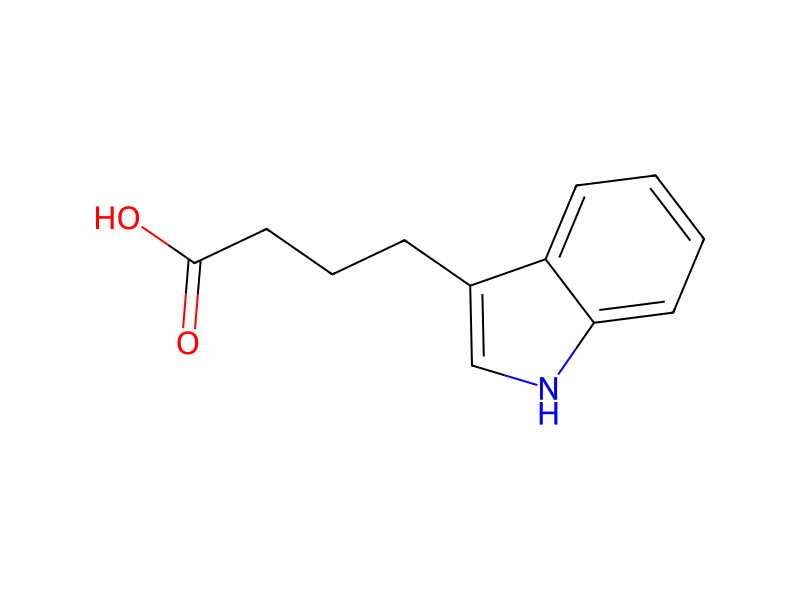
HCID 313Hydrochloric AcidHCID 8617Indole-3-Butyric AcidHCID 27340594-(4,6-Dimethoxy-1,3,5-triazin-2-yl)-4-methylmorpholinium chlorideHCID 21082146(4-Aminomethyl-1-phenylcyclohexyl)dimethylamine

Product 2

HCID 10253417N-(4-Dimethylamino-4-phenylcyclohexylmethyl)-4-(1H-indol-3-yl)butyramide hydrochloride
HCID 21082149
N-(4-dimethylamino-4-phenylcyclohexylmethyl)-2-(1H-indol-3-yl)butyramide

Reagents, catalysts & solvents 2

HCID 887MethanolSolventHCID 225585302-Butanone ethanolSolvent

Procedure

4-(1H-Indol-3-yl)butyric acid (232 mg, 1.0 mmol.), the mixture of the diastereoisomers of (4-aminomethyl-1-phenylcyclohexyl)dimethylamine (203 mg, 1.0 mmol.) and 4-(4,6-dimethoxy-1,3,5-triazin-2-yl)-4-methylmorpholinium chloride (415 mg, 1.5 mmol.) were dissolved in abs. methanol and stirred for 20 h at RT. For working up, the mixture was concentrated and the residue was taken up in water (15 ml), adjusted to pH 11 with 5M NaOH and extracted with EE (4×20 ml). The organic phase was washed with 1M NaOH (3 ml), dried, filtered and concentrated. The residue was a mixture of the bases of the diastereoisomeric target products, which were separated by flash chromatography on silica gel (45 g) (eluant: 700 ml methanol/EE 3:1). The non-polar diastereoisomer was obtained in a yield of 163 mg (0.39 mmol.) and was dissolved in 2-butanone/ethanol (7 ml/2 ml); isopropanolic 5M HCl (125 μl, 0.62 mmol.) was added and stirring was carried out for 2 h at RT. Concentration and drying in vacuo yielded the hydrochloride of the non-polar diastereoisomer of N-(4-dimethylamino-4-phenylcyclohexylmethyl)-2-(1H-indol-3-yl)butyramide in the form of a slightly hygroscopic white solid (177 mg, m.p. 95–100° C.).

Workup

  1. dissolutionwere dissolved in abs
  2. concentrationthe mixture was concentrated
  3. extractionextracted with EE (4×20 ml)
  4. washThe organic phase was washed with 1M NaOH (3 ml)
  5. customdried
  6. filtrationfiltered
  7. concentrationconcentrated
  8. additiona mixture of the bases of the diastereoisomeric target products, which
  9. customwere separated by flash chromatography on silica gel (45 g) (eluant: 700 ml methanol/EE 3:1)
  10. customThe non-polar diastereoisomer was obtained in a yield of 163 mg (0.39 mmol.)
  11. concentrationConcentration
  12. customdrying in vacuo

Sources & evidence

ORD record
ord-a546b773c4bb4beebee5ed137649b1a7
Source dataset
uspto-grants-2007_02
DOI
10.6084/m9.figshare.5104873.v1
Patent number
US07173045B2

Reaction notes

Loading…

On this pageParticipantsProcedureWorkupSources & evidenceReaction notes