HomeMCPWorkbenchSkills
HomeWorkbenchNotificationsMe
llms.txt · MCP GuidePrivacy Policy · Terms of Service · Supportv1.8.0
  1. Home
  2. /Reaction

2,4-Dichloropyridine → Ethyl 2-[(4-chloro-2-pyridinyl)amino]-1,3-oxazole-5-carboxylate

HRID 351
Notes
Print preview

Reaction equation

HRID 351 reaction equation
CCOC(=O)c1cnc(N)o1.Clc1ccnc(Cl)c1>C1COCCO1.CC(C)c1cc(C(C)C)c(-c2ccccc2P(C(C)(C)C)C(C)(C)C)c(C(C)C)c1.O=C(/C=C/c1ccccc1)/C=C/c1ccccc1.O=C(/C=C/c1ccccc1)/C=C/c1ccccc1.O=C(/C=C/c1ccccc1)/C=C/c1ccccc1.O=C([O-])[O-].[Cs+].[Cs+].[Pd].[Pd]>CCOC(=O)c1cnc(Nc2cc(Cl)ccn2)o1
ParticipantsConditionsProcedureSources & evidenceReaction notes

Participants

7

Reactant 2

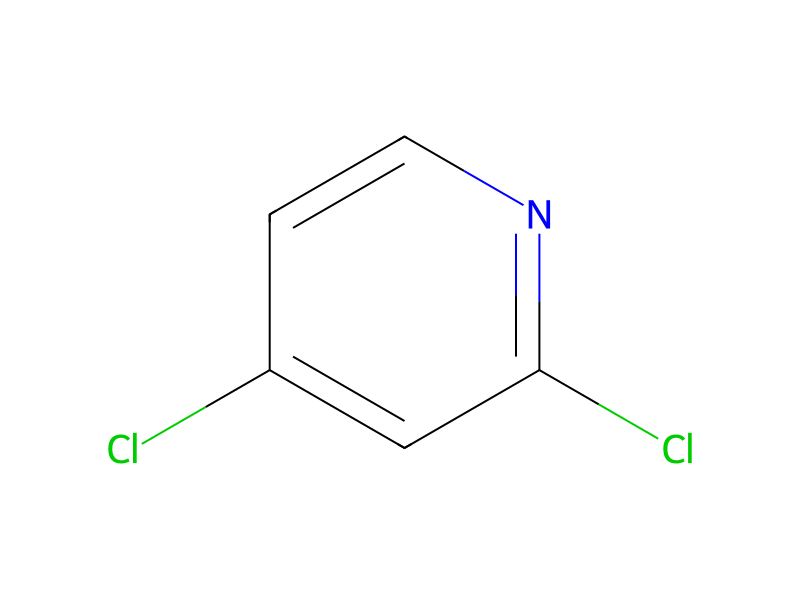
HCID 335152,4-DichloropyridineHCID 5260193Ethyl 2-amino-1,3-oxazole-5-carboxylate

Product 1

HCID 101584499Ethyl 2-[(4-chloro-2-pyridinyl)amino]-1,3-oxazole-5-carboxylateYield 0%

Reagents, catalysts & solvents 4

HCID 10796Cesium carbonateReagentHCID 9811564
Bis(dibenzylideneacetone)palladium
Catalyst
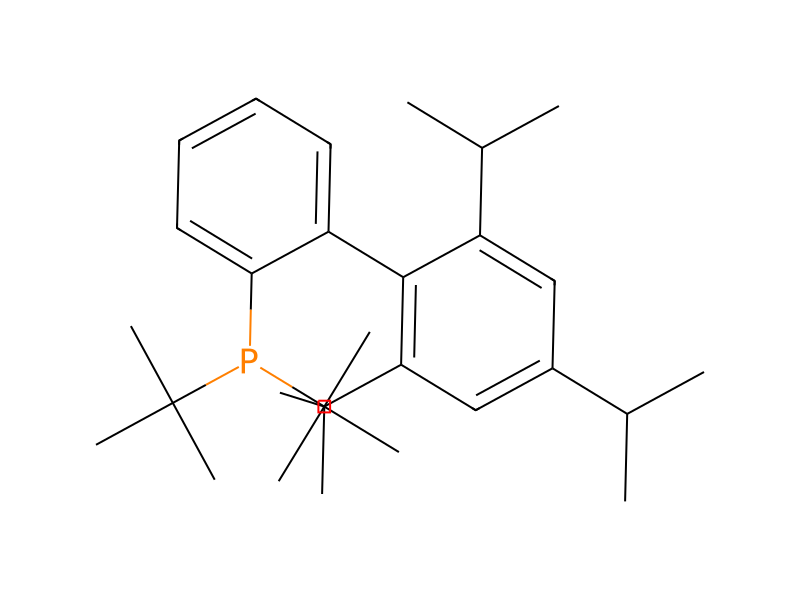
HCID 11618717Di-tert-butyl(2',4',6'-tris(propan-2-yl)-(1,1'-biphenyl)-2-yl)phosphaneCatalyst
HCID 312751,4-DioxaneSolvent

Conditions

Temperature
160 °C

Procedure

Objective: Series of experiments to optimise yield of the above coupled product. Pd2(dba)3 (22.89 mg, 0.025 mmol), di-tert- butyl(2',4',6'-triisopropylbiphenyl-2-yl)phosphine (42.4 mg, 0.10 mmol), 2,4-dichloropyridine (148 mg, 1.00 mmol), cesium carbonate (651 mg, 2.00 mmol),ethyl 2-aminooxazole-5-carboxylate (156 mg, 1.00 mmol) and 4,4'-di-tert- butylbiphenyl (60 mg, 0.23 mmol) were added to an oven dried microwave vial, the vial was capped and placed under an inert atmosphere, dioxane (4 mL) was added and the resulting mixture was heated at 160 °C for 1 h by microwave irradiation under a nitrogen atmosphere. Crude LCMS shows a complete switch in regioselectivity, with the other isomer becoming the major product in 26% yield based on internal standard (note: this is a rough estimate as the U.V absorbance may be significantly different for this regioisomer). The regioisomeric ratio is 2.8:1 and although the product was not formed in synthetically useful yields, it is an interesting result. Conclusion: Switch in regioselectivty with the change in ligand may be worth pursuing.

Sources & evidence

ORD record
ord-0fa704c187644f658d22f391e350db77
Source dataset
750 AstraZeneca ELN dataset
Original link
View source

Reaction notes

Loading…

On this pageParticipantsConditionsProcedureSources & evidenceReaction notes