Reaction equation

[C:1]([OH:6])(=O)[C:2]([CH3:4])=[O:3].[CH2:7]([O:9][C:10](=[O:16])[C@@H:11]1[CH2:15][CH2:14][CH2:13][NH:12]1)[CH3:8].C1(N=C=NC2CCCCC2)CCCCC1>C(Cl)(Cl)Cl>[CH2:7]([O:9][C:10](=[O:16])[C@@H:11]1[CH2:15][CH2:14][CH2:13][N:12]1[C:1](=[O:6])[C:2]([CH3:4])=[O:3])[CH3:8]Participants
Reactant 3
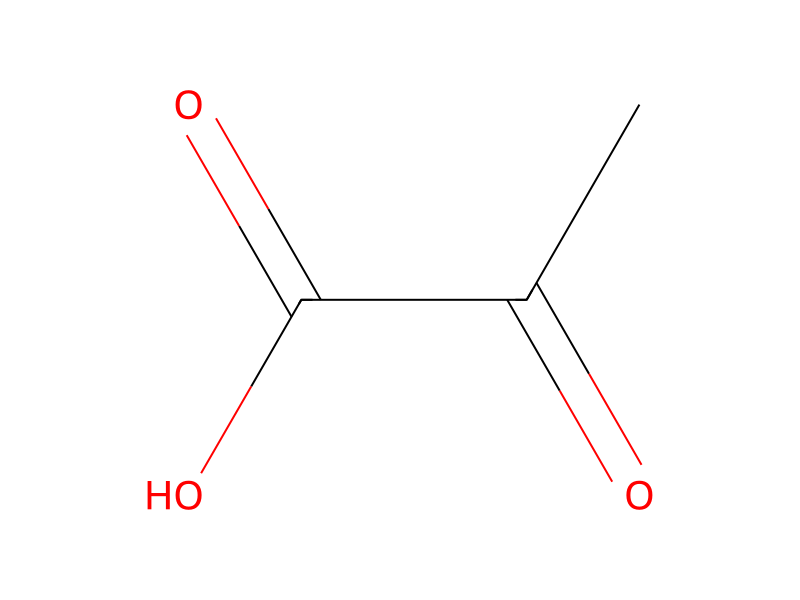


Product 1

Reagents, catalysts & solvents 1

Conditions
- Temperature
- -5 °C
Procedure
A solution of 60 mmoles of pyruvic acid plus 60 mmoles of L-proline ethyl ester in redistilled chloroform is cooled to -50° C. in an acetone-dry ice bath. To this solution is added 60 mmoles of a precooled solution of dicyclohexylcarbodiimide (DCC) in cloroform and the mixture is stirred at -5° C. for 1 hour. The reaction mixture is slowly warmed to room temperature and stirred for an additional 2 hours and then stirred at 4° C. overnight. The mixture is filtered to remove dicyclohexylurea, then cooled in an ice bath. The organic phase is washed with cold water, cold 1N NaHCO3 and finally with cold saturated NaCl. The organic phase is dried over anhydrous MgSO4 and filtered. The solvent is removed with a rotary evaporator yielding N-pyruvoyl-L-proline ethyl ester.
Workup
- temperatureThe reaction mixture is slowly warmed to room temperature
- stirringstirred for an additional 2 hours
- stirringstirred at 4° C. overnight
- filtrationThe mixture is filtered
- customto remove dicyclohexylurea
- temperaturecooled in an ice bath
- washThe organic phase is washed with cold water, cold 1N NaHCO3 and finally with cold saturated NaCl
- dry with materialThe organic phase is dried over anhydrous MgSO4
- filtrationfiltered
- customThe solvent is removed with a rotary evaporator
Sources & evidence
- ORD record
- ord-8c36c7ea9bdf4d7584a59061c541e8aa
- Source dataset
- uspto-grants-1988_08
- Patent number
- US04766110
Linked notes
Loading…