Reaction equation
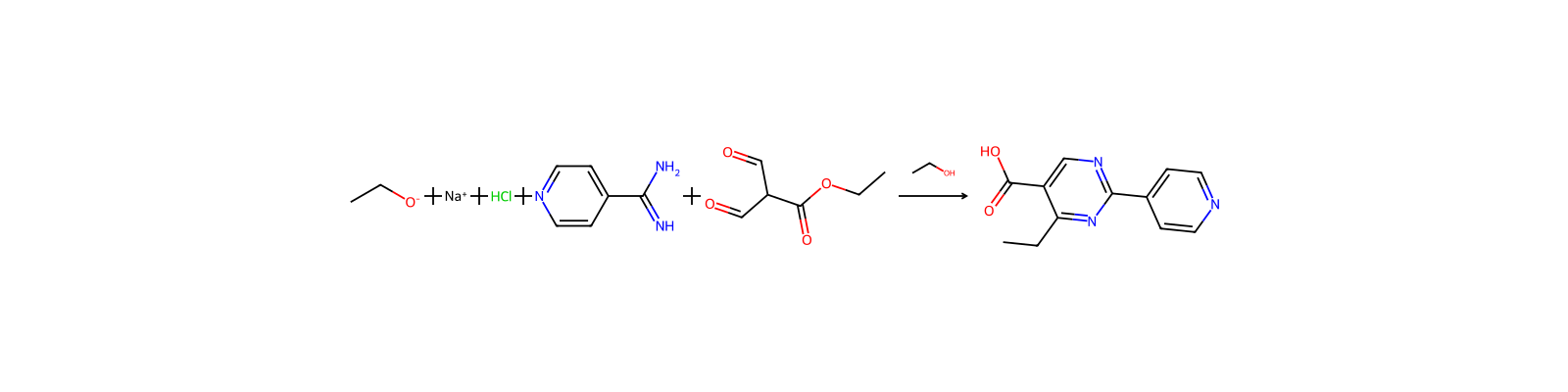
[O-][CH2:2][CH3:3].[Na+].Cl.[C:6]([C:9]1[CH:14]=[CH:13][N:12]=[CH:11][CH:10]=1)(=[NH:8])[NH2:7].[CH:15]([CH:17]([CH:23]=O)[C:18]([O:20]CC)=[O:19])=O>C(O)C>[CH2:2]([C:15]1[C:17]([C:18]([OH:20])=[O:19])=[CH:23][N:7]=[C:6]([C:9]2[CH:14]=[CH:13][N:12]=[CH:11][CH:10]=2)[N:8]=1)[CH3:3]Participants
5




Procedure
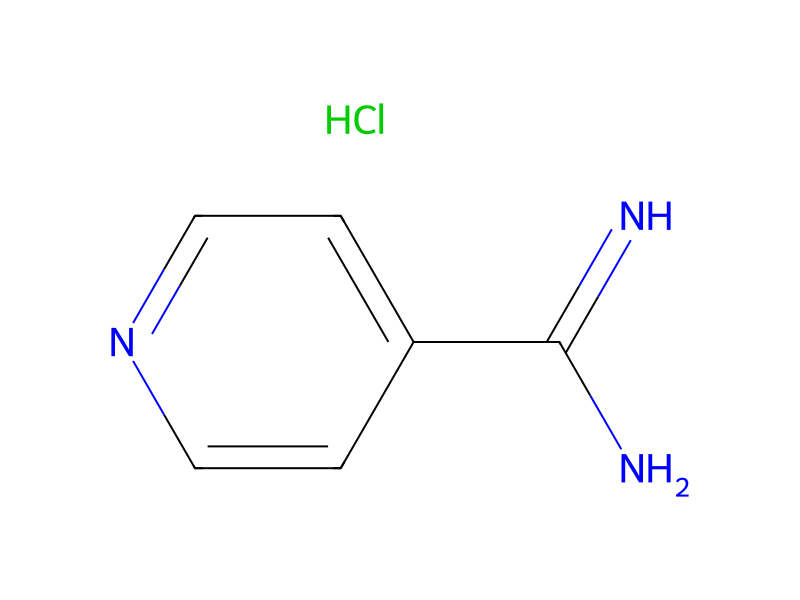
Sodium ethoxide (590 mg) was dissolved in anhydrous ethanol (50 ml) at room temperature. To the resulting solution, 4-amidinopyridine hydrochloride (1.31 g) was added, followed by the dropwise addition of a solution of ethyl 2,2-diformylacetate (1.20 g) in anhydrous ethanol (50 ml). The resulting mixture was heated under reflux for 6 hours. To the residue obtained by distilling off the solvent under reduced pressure, dichloromethane and water were added. The organic layer thus separated was dried over anhydrous sodium sulfate. After the solvent was concentrated under reduced pressure, the residue was crystallized in ethanol, whereby the title compound (279 mg, 15%) was obtained as colorless crystals.
Workup
- temperatureThe resulting mixture was heated
- temperatureunder reflux for 6 hours
- customTo the residue obtained
- distillationby distilling off the solvent under reduced pressure, dichloromethane and water
- additionwere added
- customThe organic layer thus separated
- dry with materialwas dried over anhydrous sodium sulfate
- concentrationAfter the solvent was concentrated under reduced pressure
- customthe residue was crystallized in ethanol
Sources & evidence
- ORD record
- ord-967aba538dbf4028b42d4705cf39787f
- Source dataset
- uspto-grants-2004_06
- Patent number
- US06747023B1
Linked notes
Loading…