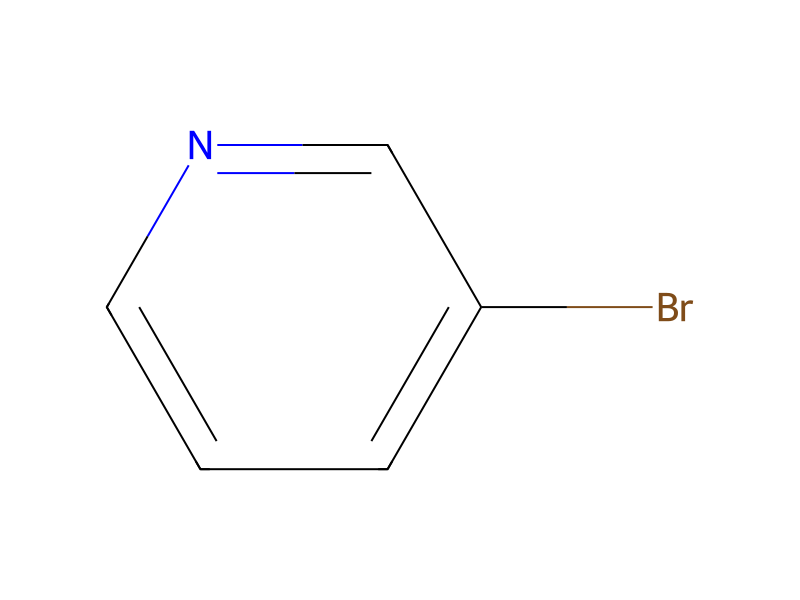
Br[C:2]1[CH:3]=[N:4][CH:5]=[CH:6][CH:7]=1.[S:8]1[C:12]([Sn](C)(C)C)=[CH:11][N:10]=[CH:9]1>C1C=CC=CC=1.C1C=CC([P]([Pd]([P](C2C=CC=CC=2)(C2C=CC=CC=2)C2C=CC=CC=2)([P](C2C=CC=CC=2)(C2C=CC=CC=2)C2C=CC=CC=2)[P](C2C=CC=CC=2)(C2C=CC=CC=2)C2C=CC=CC=2)(C2C=CC=CC=2)C2C=CC=CC=2)=CC=1>[S:8]1[C:12]([C:2]2[CH:3]=[N:4][CH:5]=[CH:6][CH:7]=2)=[CH:11][N:10]=[CH:9]1At room temperature, tetrakis(triphenylphosphine)palladium (470 mg) was added to 3-bromopyridine (805 μl) and a solution of (5-thiazolyl)trimethyltin (2.07 g) in benzene (80 ml), followed by heating under reflux overnight. After the reaction mixture was allowed to cool down to room temperature, it was washed with a saturated aqueous solution (100 ml) of sodium bicarbonate. The water layer was extracted with ethyl acetate (3×20 ml). The organic layers were combine, dried over anhydrous sodium sulfate and distilled under reduced pressure to remove the solvent. The residue was purified by chromatography on a silica gel column (hexane:ethyl acetate=2:1), whereby the title compound (1.68 g, purity: 85%) was obtained as a colorless solid.