HomeMCPWorkbenchSkills
HomeWorkbenchNotificationsMe
llms.txt · MCP GuidePrivacy Policy · Terms of Service · Supportv1.8.3
  1. Home
  2. /Reaction

2,4-Dichloropyridine → Ethyl 2-[(4-chloro-2-pyridinyl)amino]-1,3-oxazole-5-carboxylate

HRID 353
Print

Reaction equation

HRID 353 reaction equation
CCOC(=O)c1cnc(N)o1.Clc1ccnc(Cl)c1>C1COCCO1.COc1ccc(OC)c(P(c2cc(C(F)(F)F)cc(C(F)(F)F)c2)c2cc(C(F)(F)F)cc(C(F)(F)F)c2)c1-c1c(C(C)C)cc(C(C)C)cc1C(C)C.O=C(/C=C/c1ccccc1)/C=C/c1ccccc1.O=C(/C=C/c1ccccc1)/C=C/c1ccccc1.O=C(/C=C/c1ccccc1)/C=C/c1ccccc1.O=C([O-])[O-].[Cs+].[Cs+].[Pd].[Pd]>CCOC(=O)c1cnc(Nc2cc(Cl)ccn2)o1
ParticipantsConditionsProcedureSources & evidenceReaction notes

Participants

7

Reactant 2

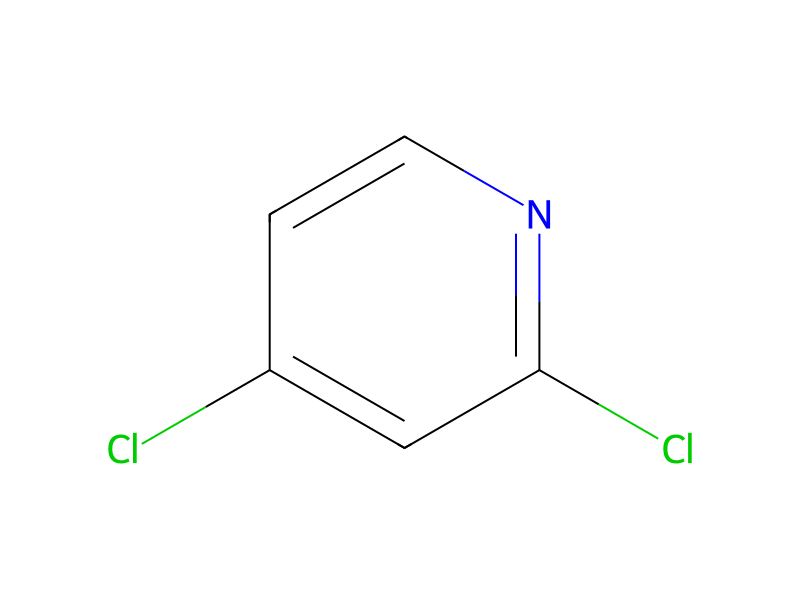
HCID 335152,4-DichloropyridineHCID 5260193Ethyl 2-amino-1,3-oxazole-5-carboxylate

Product 1

HCID 101584499Ethyl 2-[(4-chloro-2-pyridinyl)amino]-1,3-oxazole-5-carboxylateYield 0%

Reagents, catalysts & solvents 4

HCID 10796Cesium carbonateReagentHCID 9811564
Bis(dibenzylideneacetone)palladium
Catalyst
HCID 44597232Bis(3,5-bis(trifluoromethyl)phenyl)(3,6-dimethoxy-2',4',6'-tri(propan-2-yl)(1,1'-biphenyl)-2-yl)phosphaneCatalyst
HCID 312751,4-DioxaneSolvent

Conditions

Temperature
160 °C

Procedure

Objective: Series of experiments to optimise yield of the above coupled product. Pd2(dba)3 (22.89 mg, 0.025 mmol), bis(3,5-bis(trifluoromethyl)phenyl)(2',4',6'-triisopropyl-3,6-dimethoxybiphenyl-2-yl)phosphine (80 mg, 0.10 mmol), 2,4-dichloropyridine (148 mg, 1.00 mmol), cesium carbonate (651 mg, 2.00 mmol),ethyl 2-aminooxazole-5-carboxylate (156 mg, 1.00 mmol) and 4,4'-di-tert-butylbiphenyl (60 mg, 0.23 mmol) were added to an oven dried microwave vial, the vial was capped and placed under an inert atmosphere, dioxane (4 mL) was added and the resulting mixture was heated at 160 °C for 1 h by microwave irradiation under a nitrogen atmosphere. Crude LCMS shows a switch in regioselectivity again with respect to the bidentate ligand Xantphos, with the other isomer becoming the major product in 28% yield based on internal standard (note: this is a rough estimate as the U.V absorbance may be significantly different to the other regioisomer). None of the other regioisomer observed. Conclusion: Switch in regioselectivty with the change in ligand may be worth pursuing, this reaction is _apparently_ completely selective for the 4-regioisomer. Note: Necessary to isolate product to confirm.

Sources & evidence

ORD record
ord-f5babb1245424d42a4fc7bc229425c40
Source dataset
750 AstraZeneca ELN dataset
Original link
View source

Reaction notes

On this pageParticipantsConditionsProcedureSources & evidenceReaction notes


