Reaction equation

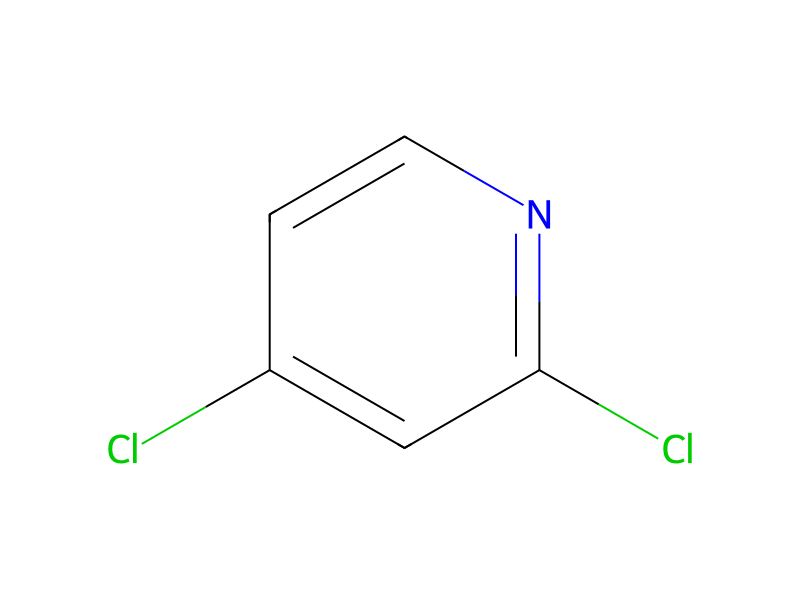
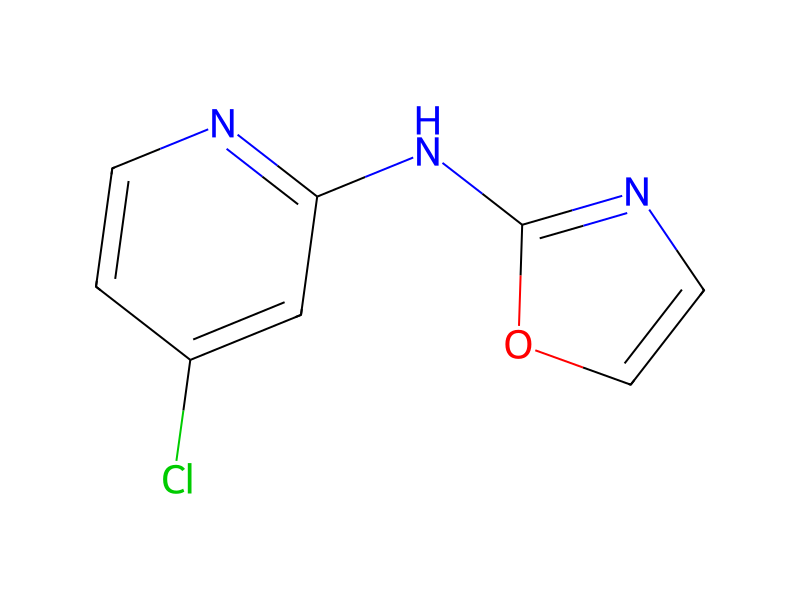
Clc1ccnc(Cl)c1.Nc1ncco1>C1COCCO1.COc1ccc(OC)c(P(c2cc(C(F)(F)F)cc(C(F)(F)F)c2)c2cc(C(F)(F)F)cc(C(F)(F)F)c2)c1-c1c(C(C)C)cc(C(C)C)cc1C(C)C.O=C(/C=C/c1ccccc1)/C=C/c1ccccc1.O=C(/C=C/c1ccccc1)/C=C/c1ccccc1.O=C(/C=C/c1ccccc1)/C=C/c1ccccc1.O=C([O-])[O-].[Cs+].[Cs+].[Pd].[Pd]>Clc1ccnc(Nc2ncco2)c1Participants
7
Reactant 2

Product 1
Reagents, catalysts & solvents 4




Conditions
- Temperature
- 140 °C
Procedure
Objective: Reactions using ligands not previously tested under these conditions 2,4-dichloropyridine (0.109 mL, 1.01 mmol), oxazol-2-amine (85 mg, 1.01 mmol), TRIS(DIBENZYLIDENEACETONE)DIPALLADIUM(0) (23.20 mg, 0.03 mmol), bis(3,5-bis(trifluoromethyl)phenyl)(2',4',6'-triisopropyl-3,6-dimethoxybiphenyl-2-yl)phosphine (81 mg, 0.10 mmol) and cesium carbonate (660 mg, 2.03 mmol) were added to an oven-dried microwave vail and the vial was purged with nitrogen. Degassed dioxane (4mL) was then added and the reaction mixture was heated to 140 °C for 1 h under microwave irradiation. Conclusion: None of the desired product was observed in the LCMS of the crude reaction mixture, not progressed.
Sources & evidence
- ORD record
- ord-de391e2f60334b77bfa7be520f63a36b
- Source dataset
- 750 AstraZeneca ELN dataset
- Original link
- View source
Linked notes
Loading…