Reaction equation

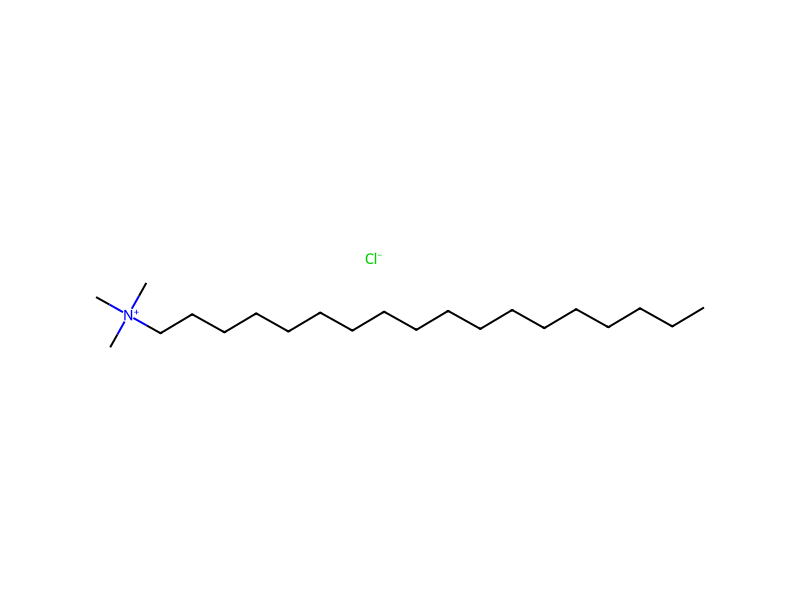
[OH-].[Na+].[CH2:3]([OH:21])[CH2:4][CH2:5][CH2:6][CH2:7][CH2:8][CH2:9][CH2:10][CH2:11][CH2:12][CH2:13][CH2:14][CH2:15][CH2:16][CH2:17][CH:18]([CH3:20])[CH3:19].[CH2:22]([CH:24]1[O:26][CH2:25]1)Cl>[Cl-].C([N+](C)(C)C)CCCCCCCCCCCCCCCCC.CCCCCC>[CH2:22]([O:21][CH2:3][CH2:4][CH2:5][CH2:6][CH2:7][CH2:8][CH2:9][CH2:10][CH2:11][CH2:12][CH2:13][CH2:14][CH2:15][CH2:16][CH2:17][CH:18]([CH3:19])[CH3:20])[CH:24]1[O:26][CH2:25]1Participants
Reactant 3



Product 1

Reagents, catalysts & solvents 2

Conditions
- Temperature
- 50 °C
Procedure
Into a round bottom flask having a capacity of 1 liter and equipped with a reflux condenser, a thermometer, a dropping funnel, and a stirring means, 120 g of a 50% sodium hydroxide solution (60 g (1.5 mole) as pure sodium hydroxide), 68 g (0.25 mole) of isostearyl alcohol [5,7,7-trimethyl-2-(1,3,3-trimethylbutyl) octanol], 200 ml of n-hexane, and 2.51 g (0.0075 mole) of stearyl trimethyl ammonium chloride, were introduced in this order. The reaction mixture was kept at a reaction temperature of 25° C. in a water bath, and while vigorously stirring the mixture at a stirring speed of 400 r.p.m., 93 g (1 mole) of epichlorohydrin was added dropwise from the dropping funnel. It took about 1.5 hours for the addition of the epichlorohydrin, and the reaction mixture was heated to 50° C. and stirred for about 8 hours at this temperature. After the completion of the reaction, the mixture was treated in a usual manner, whereupon 67.9 g (yield: 83%) of isostearyl glycidyl ether (5,7,7-trimethyl-2-(1,3,3-trimethylbutyl)-octyl glycidyl ether) was obtained.
Workup
- customInto a round bottom flask having
- customa capacity of 1 liter and equipped with a reflux condenser
- customThe reaction mixture was kept at a reaction temperature of 25° C. in a water bath
- customAfter the completion of the reaction
Sources & evidence
- ORD record
- ord-f627163b3e1b4da8aeca592dd6510e85
- Source dataset
- uspto-grants-1984_08
- Patent number
- US04465869
Linked notes
Loading…