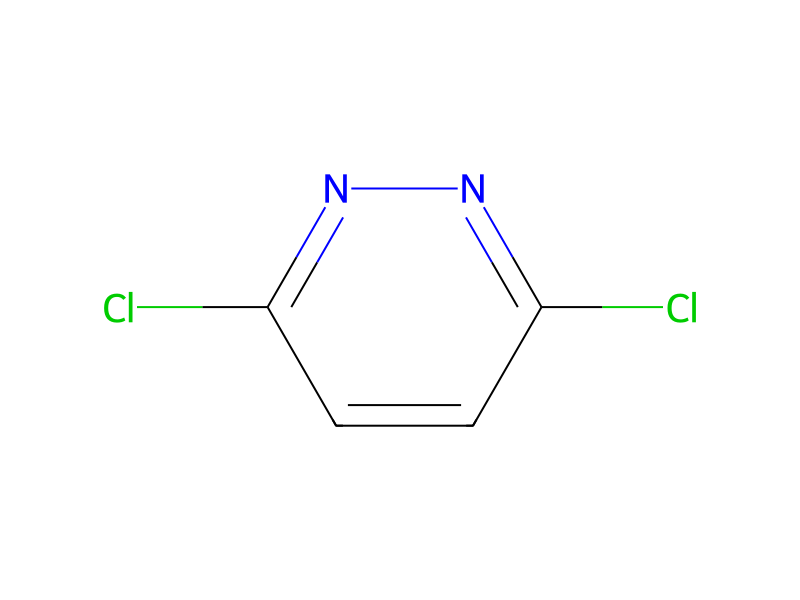
[Cl:1][C:2]1[N:3]=[N:4][C:5](Cl)=[CH:6][CH:7]=1.Br.Br.[F:11][C:12]([F:27])([F:26])[C:13]1[CH:14]=[C:15]([NH:19][CH:20]2[CH2:25][CH2:24][NH:23][CH2:22][CH2:21]2)[CH:16]=[CH:17][CH:18]=1.C(=O)([O-])[O-].[Na+].[Na+]>CN(C)C(=O)C>[Cl:1][C:2]1[N:3]=[N:4][C:5]([N:23]2[CH2:22][CH2:21][CH:20]([NH:19][C:15]3[CH:16]=[CH:17][CH:18]=[C:13]([C:12]([F:11])([F:26])[F:27])[CH:14]=3)[CH2:25][CH2:24]2)=[CH:6][CH:7]=1A mixture of 3 parts of 3,6-dichloropyridazine, 6.1 parts of N-[3-(trifluoromethyl)phenyl]-4-piperidinamine dihydrobromide, 6.4 parts of sodium carbonate and 180 parts of N,N-dimethylacetamide was stirred for 24 hours at 60° C. After cooling to room temperature, the reaction mixture was poured onto water. The product was extracted with methylbenzene. The extract was washed with water, dried, filtered and evaporated. The residue was purified by column chromatography over silica gel using a mixture of trichloromethane and methanol (97:3 by volume) as eluent. The pure fractions were collected and the eluent was evaporated. The residue was crystallized from 2,2'-oxybispropane. The product was filtered off and dried, yielding 2.5 parts (47%) of 1-(6-chloro-3-pyridazinyl)-N-[3-(trifluoromethyl)phenyl]-4-piperidinamine; mp. 117.9° C. (compound 148).