HomeMCPWorkbenchSkills
HomeWorkbenchNotificationsMe
llms.txt · MCP GuidePrivacy Policy · Terms of Service · Supportv1.8.3
  1. Home
  2. /Reaction

Potassium Carbonate → 2-[4-(6-Bromohexyloxy)phenyl]-4,5-dihydro-oxazole

HRID 359813
Print

Reaction equation

HRID 359813 reaction equation
[OH:1][C:2]1[CH:7]=[CH:6][C:5]([C:8]2[O:9][CH2:10][CH2:11][N:12]=2)=[CH:4][CH:3]=1.C(=O)([O-])[O-].[K+].[K+].[Br:19][CH2:20][CH2:21][CH2:22][CH2:23][CH2:24][CH2:25]Br>C(#N)C>[Br:19][CH2:20][CH2:21][CH2:22][CH2:23][CH2:24][CH2:25][O:1][C:2]1[CH:3]=[CH:4][C:5]([C:8]2[O:9][CH2:10][CH2:11][N:12]=2)=[CH:6][CH:7]=1
ParticipantsConditionsProcedureWorkupSources & evidenceReaction notes

Participants

5

Reactant 3

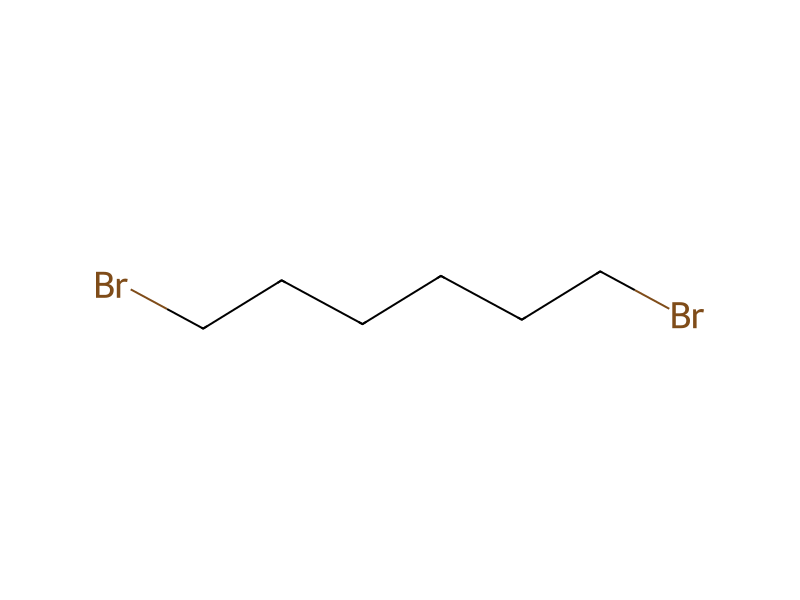
HCID 11430Potassium CarbonateHCID 123681,6-DibromohexaneHCID 101287Phenol oxazoline

Product 1

HCID 200639992-[4-(6-Bromohexyloxy)phenyl]-4,5-dihydro-oxazoleYield 114%

Reagents, catalysts & solvents 1

HCID 6342AcetonitrileSolvent

Conditions

Temperature
0 °C

Procedure

A stirring suspension of 163 g (1.0 mole) of 4,5-dihydro-2-(4-hydroxyphenyl)oxazole and 276 g (2.0 mole) milled potassium carbonate in 750 ml acetonitrile was heated to reflux in a 5 liter round-bottomed flask. A total of 457.5 ml (3.0 mole) of 1,6-dibromohexane was added all at once and reflux continued for 1 hour. The reaction mixture was filtered and the cake of inorganic salts washed with 100 ml of acetonitrile. The filtrate was evaporated on a rotary evaporator (bath temperature <40° C.) and the resulting residue slurried in 1.6 liters of hexane and chilled to 0° C. The resulting white solid was filtered and washed with 500 ml cold hexane. The recovery was 263 g (80%) of white solid. A total of 535 g of crude product was slurried in 1.1 liter of refluxing tert-butyl methyl ether. The mixture was allowed to cool to 30° C. and filtered with suction. The filtrate was cooled to 0° C. and the product crystallized. The solid was filtered off and dried to yield 372 g (70% recovery) of 2-[4-(6-bromohexyloxy)phenyl]-4,5-dihydro-oxazole, m.p. 79°-81° C. The crude product can also be recrystallized from acetonitrile. This removes excess dibromohexane and most of an undesired byproduct formed by reaction of 1 mole of dibromohexane with 2 moles of 4,5-dihydro-2-(4-hydroxyphenyl)oxazole, namely 1,6-bis[4-(4,5-dihydro-2-oxazolyl)phenoxy]hexane, m.p. 174°-175° C. when isolated and purified.


Workup

  1. temperaturewas heated
  2. temperatureto reflux in a 5 liter round-bottomed flask
  3. temperaturereflux
  4. filtrationThe reaction mixture was filtered
  5. washthe cake of inorganic salts washed with 100 ml of acetonitrile
  6. customThe filtrate was evaporated on a rotary evaporator (bath temperature <40° C.)
  7. filtrationThe resulting white solid was filtered
  8. washwashed with 500 ml cold hexane
  9. temperatureto cool to 30° C.
  10. filtrationfiltered with suction
  11. temperatureThe filtrate was cooled to 0° C.
  12. customthe product crystallized
  13. filtrationThe solid was filtered off
  14. customdried

Sources & evidence

ORD record
ord-51898b631d6647868039a11a92d69ab4
Source dataset
uspto-grants-1991_03
DOI
10.6084/m9.figshare.5104873.v1
Patent number
US05002960

Reaction notes

On this pageParticipantsConditionsProcedureWorkupSources & evidenceReaction notes