Reaction equation

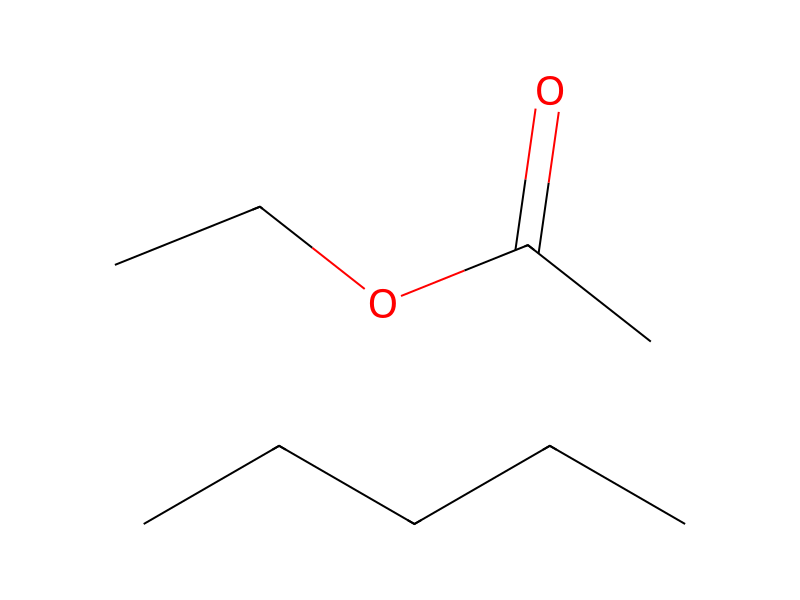
[CH2:1]([N:3]([CH2:14][CH3:15])[C:4]([O:6][C:7]1[CH:8]=[N:9][CH:10]=[CH:11][C:12]=1[NH2:13])=[O:5])[CH3:2].CCN(CC)CC.[C:23](Cl)(=[O:25])[CH3:24].C(OCC)(=O)C.CCCCC>C(Cl)Cl>[CH2:14]([N:3]([CH2:1][CH3:2])[C:4]([O:6][C:7]1[CH:8]=[N:9][CH:10]=[CH:11][C:12]=1[NH:13][C:23](=[O:25])[CH3:24])=[O:5])[CH3:15]Participants
6
Reactant 4



Product 1

Reagents, catalysts & solvents 1

Procedure
4-Amino-3-pyridinol N,N-diethylcarbamate (4.18 g) was dissolved in CH2Cl2 (75 mL) containing Et3N (2.22 g). The reaction mixture was chilled in an ice-water bath and then acetyl chloride (1.57 g) was added dropwise. After stirring in the cold bath for 15 minutes, the mixture was concentrated under reduced pressure to a volume of ca. 20 mL. This suspension was applied directly to a flash chromatography column and eluted with 5% Et3N/ethyl acetate. The product-containing fractions were concentrated to give 3.76 g of chromatographically pure product. An analytically pure material was obtained by recrystallization from ethyl acetate/pentane, m.p. 102°-104° C.
Workup
- temperatureThe reaction mixture was chilled in an ice-water bath
- concentrationthe mixture was concentrated under reduced pressure to a volume of ca. 20 mL
- washeluted with 5% Et3N/ethyl acetate
- concentrationThe product-containing fractions were concentrated
- customto give 3.76 g of chromatographically pure product
Sources & evidence
- ORD record
- ord-5edb993134624c18a07073ec72ba97d3
- Source dataset
- uspto-grants-1999_02
- Patent number
- US05866565
Linked notes
Loading…