Reaction equation

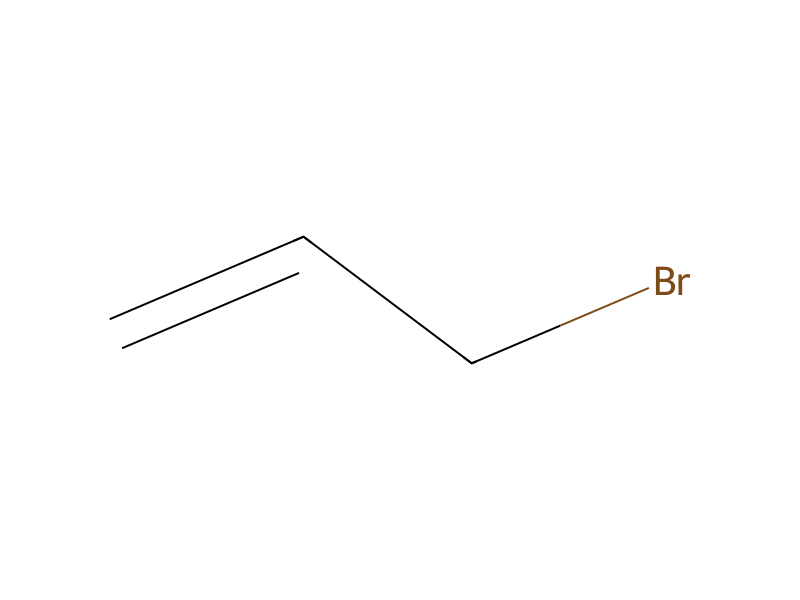
[CH:1]1[C:13]2[NH:12][C:11]3[C:6](=[CH:7][CH:8]=[CH:9][CH:10]=3)[C:5]=2[CH:4]=[CH:3][CH:2]=1.[CH2:14](Br)[CH:15]=[CH2:16].C(=O)([O-])[O-].[K+].[K+].C(#N)C>ClCCl>[CH2:16]([N:12]1[C:11]2[CH:10]=[CH:9][CH:8]=[CH:7][C:6]=2[C:5]2[C:13]1=[CH:1][CH:2]=[CH:3][CH:4]=2)[CH:15]=[CH2:14]Participants
Reactant 4



Product 1

Reagents, catalysts & solvents 1

Procedure
Into a 500-mL, three-necked, round-bottomed flask, equipped with a magnetic stirrer, a thermometer, and a condenser connected to a nitrogen bubbler, were placed carbazole (8.4 g, 50 mmole), allyl bromide (10 mL, 115 mmole), powdered anhydrous potassium carbonate (41 g, 300 mmole), and anhydrous acetonitrile (300 mL). The resultant mixture was stirred and heated under reflux with a heating mantle for 18 hours. Dichloromethane (300 mL) was then added, and the mixture was filtered through a pad of Celite. The clear filtrate was evaporated, and the residue was recrystallized from methanol to yield the desired product as amber-colored crystals. The product had melting point 56°-57° C., and sublimation (100° C./0.1 mm Hg) yielded white crystals (8.65 g, 83%), melting point 57°-58° C. The proton NMR spectrum in carbon tetrachloride was
Workup
- customInto a 500-mL, three-necked, round-bottomed flask, equipped with a magnetic stirrer
- temperatureheated
- temperatureunder reflux with a heating mantle for 18 hours
- filtrationthe mixture was filtered through a pad of Celite
- customThe clear filtrate was evaporated
- customthe residue was recrystallized from methanol
Sources & evidence
- ORD record
- ord-2db01ce7b32a46519cdefc6ef82ad7c5
- Source dataset
- uspto-grants-1995_05
- Patent number
- US05414069
Linked notes
Loading…