Reaction equation

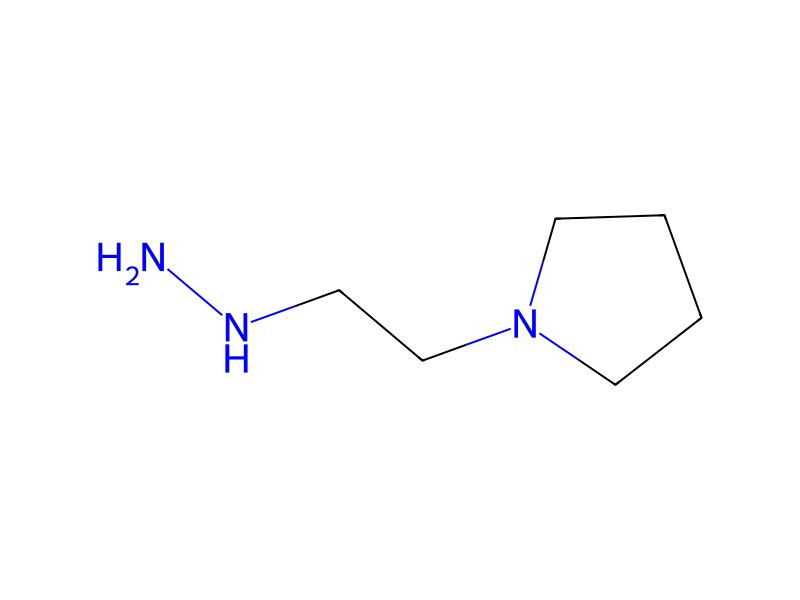
[Cl:1][C:2]1[C:15]2[C:14](=O)[C:13]3[C:8](=[CH:9][CH:10]=[C:11]([O:17][CH3:18])[CH:12]=3)[O:7][C:6]=2[C:5]([N+:19]([O-:21])=[O:20])=[CH:4][CH:3]=1.[NH:22]([CH2:24][CH2:25][N:26]1[CH2:30][CH2:29][CH2:28][CH2:27]1)[NH2:23]>C1COCC1>[ClH:1].[CH3:18][O:17][C:11]1[CH:10]=[CH:9][C:8]2[O:7][C:6]3[C:15]4[C:14](=[N:23][N:22]([CH2:24][CH2:25][N:26]5[CH2:30][CH2:29][CH2:28][CH2:27]5)[C:2]=4[CH:3]=[CH:4][C:5]=3[N+:19]([O-:21])=[O:20])[C:13]=2[CH:12]=1Participants
4



Procedure
A mixture of 12.2 g of 1-chloro-7-methoxy-4-nitro-9H-xanthen-9-one and 11.0 g of 1-(2-hydrazinoethyl)pyrrolidine in 200 ml of THF was stirred 20 hours at room temperature. The orange liquor was decanted, freed of solvent under reduced pressure, and the residue, in chloroform, was chromatographed over silica gel, eluting with chloroform-methanol (25:1 by volume). The desired fractions yielded the free base of the title compound, mp 140°-142° C.
Workup
- customThe orange liquor was decanted
- customthe residue, in chloroform, was chromatographed over silica gel
- washeluting with chloroform-methanol (25:1 by volume)
Sources & evidence
- ORD record
- ord-89315955443e42b683b57d0ac48944ff
- Source dataset
- uspto-grants-1986_08
- Patent number
- US04604390
Linked notes
Loading…