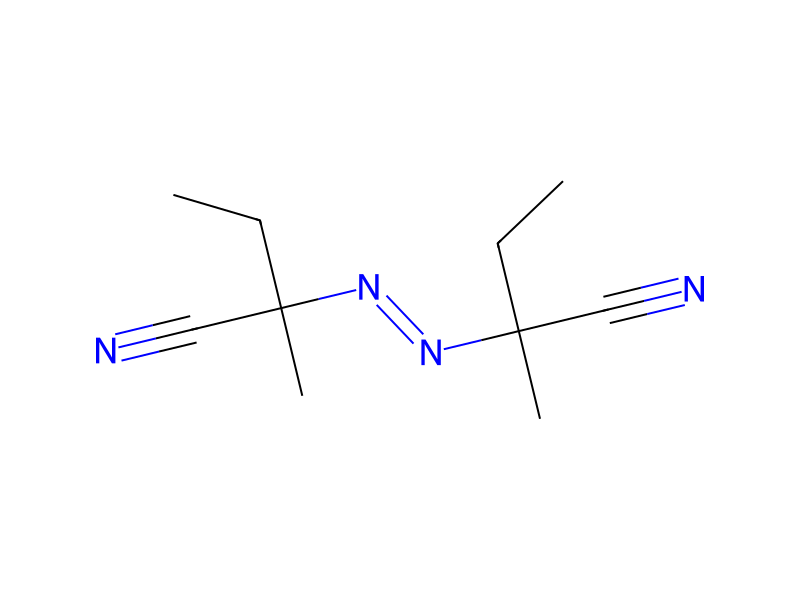
[C:1]([O:5][CH2:6][CH2:7][CH2:8][CH2:9][CH2:10][CH:11]([CH3:13])[CH3:12])(=[O:4])[CH:2]=[CH2:3].[C:14]([NH2:18])(=[O:17])[CH:15]=[CH2:16].[C:19]([O:22][CH:23]=[CH2:24])(=[O:21])[CH3:20].N(C(C)(CC)C#N)=NC(C)(CC)C#N>CO.C(OCC)(=O)C>[C:1]([O:5][CH2:6][CH2:7][CH2:8][CH2:9][CH2:10][CH:11]([CH3:13])[CH3:12])(=[O:4])[CH:2]=[CH2:3].[C:14]([NH2:18])(=[O:17])[CH:15]=[CH2:16].[C:19]([O:22][CH:23]=[CH2:24])(=[O:21])[CH3:20]A master batch was prepared by mixing isooctyl acrylate (1233.75 g), acrylamide (118.125 g), vinyl acetate (337.500 g) and 2,2'-azobis(2-methylbutanenitrile) (1.6875 g). A portion (225.475 g) of the master batch, ethyl acetate (257.7) and methanol (28.6 g) were placed in a 1 liter amber bottle. The mixture was deoxygenated by purging with nitrogen (1 L/min) for 2 minutes. The bottle was sealed and placed in a rotating water bath at 57° C. for 24 hours. The bottle was removed, opened, and then charged with ethyl acetate (214.8 g) and methanol (23.8 g). The contents were mixed until uniform (usually overnight). The percent solids of the resulting copolymer solution was 26.4. The inherent viscosity was 1.47 dl/g in ethyl acetate at 0.15 g/dl.