Adipic Acid → Diisodecyl Adipate
Reaction equation

[C:1]([OH:10])(=[O:9])[CH2:2][CH2:3][CH2:4][CH2:5][C:6]([OH:8])=[O:7].[CH2:11](O)[CH2:12][CH2:13][CH2:14][CH2:15][CH2:16][CH2:17][CH:18]([CH3:20])[CH3:19]>>[C:1]([O:10][CH2:11][CH2:12][CH2:13][CH2:14][CH2:15][CH2:16][CH2:17][CH:18]([CH3:20])[CH3:19])(=[O:9])[CH2:2][CH2:3][CH2:4][CH2:5][C:6]([O:8][CH2:11][CH2:12][CH2:13][CH2:14][CH2:15][CH2:16][CH2:17][CH:18]([CH3:20])[CH3:19])=[O:7]Participants
3
Reactant 2
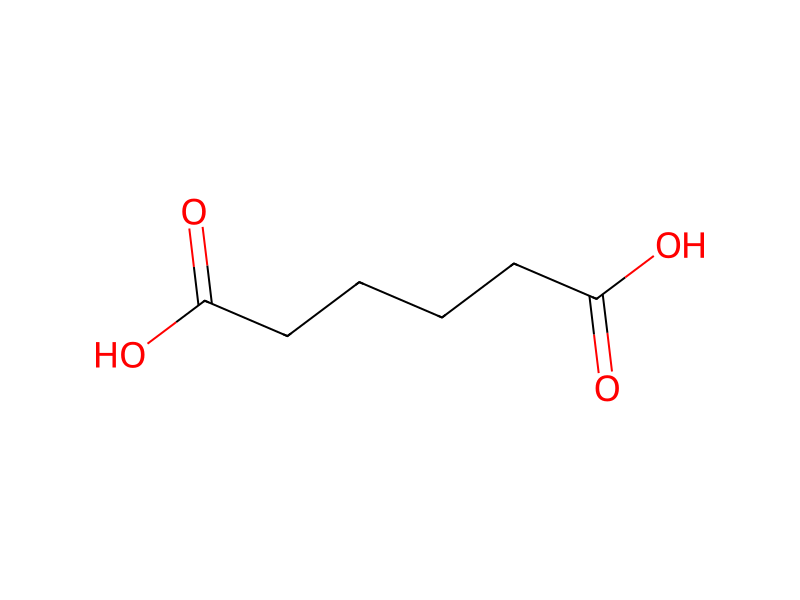

Product 1

Conditions
- Temperature
- 220 °C
Procedure
A standard 2-liter esterification apparatus was charged with 292 g adipic acid and 727 g isodecyl alcohol. The mixture was heated to reflux, removing water as formed. After 30 minutes of reflux the temperature was 215° C. and 40 ml of water was collected, at which time 0.9 g of catalyst compound ATC-I was added to the flask. The pressure was reduced as needed to maintain the reflux temperature at 220° C. After an additional 45 minutes the water of reaction was collected and the acid number of the residue was measured to be 0.01 mg KOH/g. Heating was discontinued and excess alcohol removed as the pressure was reduced to 20 torr. The reaction mixture was cooled to 170° C., the catalyst was hydrolyzed and the remaining alcohol removed by steam distillation using 100 ml water during 2 hours at 100 torr. The residue was filtered with a No. 1 Whatman paper coated with diatomaceous earth to yield a clear residue product diisodecyl adipate (DIDA) (nD25 =1.4502) having an acid number of 0.05 mg KOH/g and color of 15 APHA. The product remained clear after storage for six months at ambient temperature.