1(3H)-Isobenzofuranone, 3-bromo- → Phthalidyl 2-(2,6-dichloroanilino)-phenylacetate
HRID 371113
Reaction equation

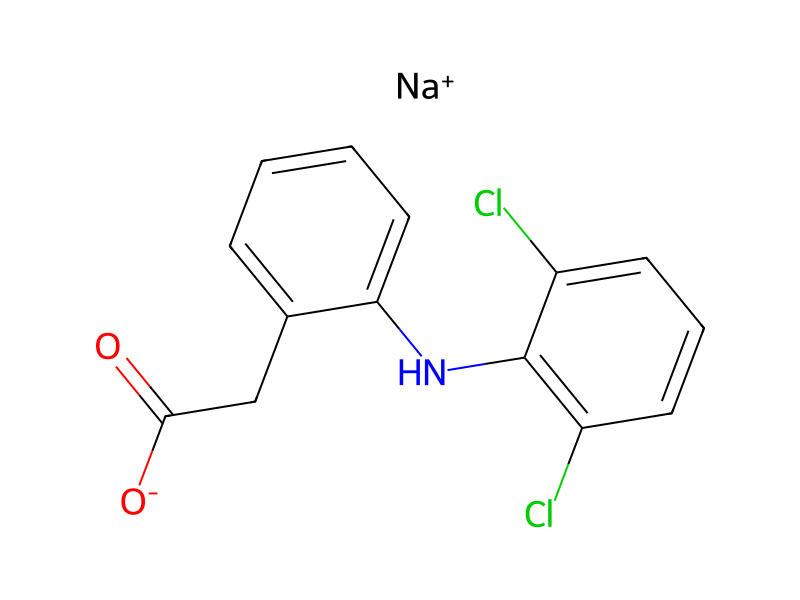
Br[CH:2]1[C:11]2[C:6](=[CH:7][CH:8]=[CH:9][CH:10]=2)[C:4](=[O:5])[O:3]1.[Cl:12][C:13]1[CH:29]=[CH:28][CH:27]=[C:26]([Cl:30])[C:14]=1[NH:15][C:16]1[CH:21]=[CH:20][CH:19]=[CH:18][C:17]=1[CH2:22][C:23]([O-:25])=[O:24].[Na+]>CN(C)C=O>[Cl:12][C:13]1[CH:29]=[CH:28][CH:27]=[C:26]([Cl:30])[C:14]=1[NH:15][C:16]1[CH:21]=[CH:20][CH:19]=[CH:18][C:17]=1[CH2:22][C:23]([O:25][CH:2]1[C:11]2[C:6](=[CH:7][CH:8]=[CH:9][CH:10]=2)[C:4](=[O:5])[O:3]1)=[O:24]Participants
4
Reactant 2

Product 1

Reagents, catalysts & solvents 1

Procedure
To a stirred solution of 10.65 g of 3-bromophthalide in 120 ml of dimethylformamide at room temperature is added 15.9 g of sodium 2-(2,6-dichloroanilino)-phenylacetate. The reaction mixture is stirred 24 hours at the room temperature, and then poured into 500 ml of ice water. After extraction with chloroform, the aqueous phase is washed with an aqueous solution of sodium bicarbonate, then with water and finally it is dried on anhydrous sodium sulfate and evaporated to dryness to yield the phthalidyl 2-(2,6-dichloroanilino)-phenylacetate; yield 70%.