Reaction equation

[CH:1]1[C:14]2[C:5](=[CH:6][C:7]3[C:12]([C:13]=2[C:15](Cl)=[O:16])=[CH:11][CH:10]=[CH:9][CH:8]=3)[CH:4]=[CH:3][CH:2]=1.[CH3:18][NH:19][CH2:20][C:21]#[CH:22]>O1CCCC1>[CH3:18][N:19]([CH2:20][C:21]#[CH:22])[C:15]([C:13]1[C:14]2[C:5]([CH:6]=[C:7]3[C:12]=1[CH:11]=[CH:10][CH:9]=[CH:8]3)=[CH:4][CH:3]=[CH:2][CH:1]=2)=[O:16]Participants
4
Reactant 2

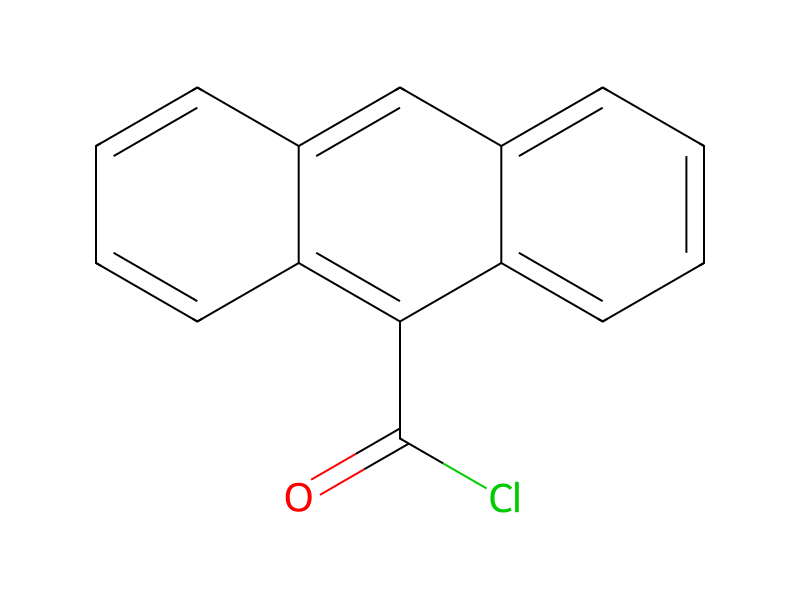
Product 1

Reagents, catalysts & solvents 1

Procedure
A solution of 20.8 g of 9-anthroyl chloride in 100 ml of tetrahydrofuran is added at 10°-15° to a solution of 14.2 g of N-methylpropargylamine in 50 ml of tetrahydrofuran. After stirring at room temperature for 3 hours, the solvent is removed and the residue is stirred with methylene chloride and 5% aqueous sodium bicarbonate solution. The methylene chloride layer is dried and concentrated to give 23.3 g of crude N-methyl-N-propargyl-9-anthramide as an oil. H nmr spectrum: τ 1.7-2.9 (m, 9); 5.4 (d, 2.5 Hz, 1.3); 6.4 (d, 2.5 Hz, 0.7); 6.7 (s, 0.9); 7.4 (s, 2.1); 7.7 (t, 2.5 Hz, 0.7) and 8.0 (t, 0.3). The spectrum shows the presence of two rotamers.
Workup
- customthe solvent is removed
- stirringthe residue is stirred with methylene chloride and 5% aqueous sodium bicarbonate solution
- dry with materialThe methylene chloride layer is dried
- concentrationconcentrated
Sources & evidence
- ORD record
- ord-ddcf4c3575c141d6b7597a58491b445f
- Source dataset
- uspto-grants-1978_05
- Patent number
- US04088772
Linked notes
Loading…