Reaction equation

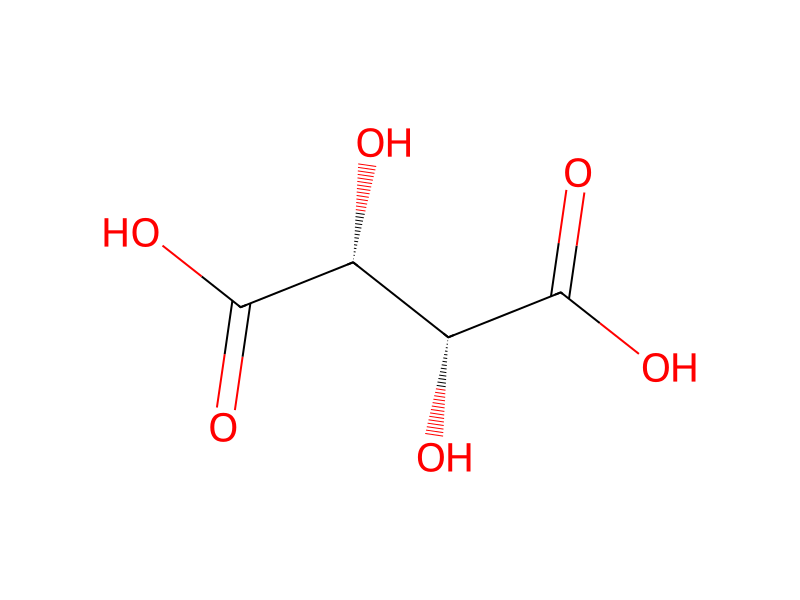
[C:1]([C@@H:4]([C@H:6]([C:8]([O-:10])=[O:9])[OH:7])[OH:5])([O-:3])=[O:2].[Na+].[Na+].C([C@@H]([C@H](C([O-])=O)O)O)([O-])=O.[K+].[K+]>>[C:8]([OH:10])(=[O:9])[C@@H:6]([C@H:4]([C:1]([OH:3])=[O:2])[OH:5])[OH:7]Participants
3


Procedure
The experiment of Example 5 was carried out by following the same procedure except for using an aqueous solution of potassium hydroxide in the place of the aqueous solution of sodium hydroxide. The substrate in the reaction mixture was wholly used up to produce potassium L(+)-tartrate. The amount of the product thus obtained was 1.61 g and the yield was 94 percent. Similarly to the sodium L(+)-tartrate of Example 1, this potassium L(+)-tartrate was treated to afford L(+)-tartaric acid. This acid was found to have an optical purity of 100 percent.
Workup
- customThe amount of the product thus obtained
Sources & evidence
- ORD record
- ord-b3cb10ea5c594b69ba7e17308ae4d068
- Source dataset
- uspto-grants-1978_05
- Patent number
- US04092220
Linked notes
Loading…