Reaction equation

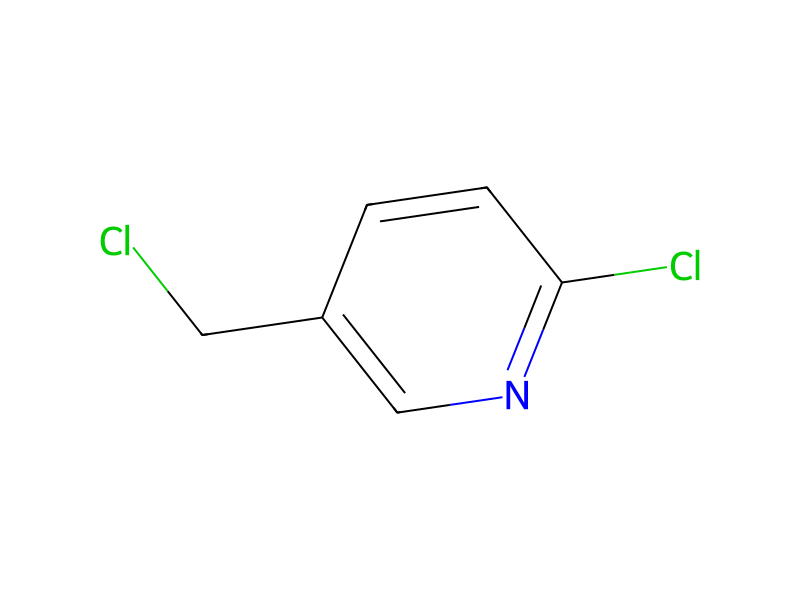
[N+:1]([CH:4]=[C:5]1[NH:9][CH2:8][CH2:7][S:6]1)([O-:3])=[O:2].[H-].[Na+].[H][H].[Cl:14][C:15]1[CH:20]=[CH:19][C:18]([CH2:21]Cl)=[CH:17][N:16]=1>C(#N)C>[Cl:14][C:15]1[CH:20]=[CH:19][C:18]([CH2:21][N:9]2[CH2:8][CH2:7][S:6][C:5]2=[CH:4][N+:1]([O-:3])=[O:2])=[CH:17][N:16]=1Participants
Reactant 4



Product 1

Reagents, catalysts & solvents 1

Procedure
2-Nitromethylenethiazolidine (2.9 g) was dissolved in dry acetonitrile (30 ml), and 60% sodium hydride (0.9 g) was added at room temperature in a stream of nitrogen. Subsequently, the mixture was stirred at room temperature until the generation of hydrogen ceased. Then, a solution of 2-chloro-5-pyridylmethyl chloride (3.2 g) in dry acetonitrile (5 ml) was added at room temperature, and the mixture was stirred at room temperature for 1 day. Acetonitrile was then distilled off under reduced pressure, and dichloromethane was added to the residue. The mixture was then washed with water. Dichloromethane was distilled off from the dichloromethane layer. The remaining oil was purified by silica gel column chromatography to give the desired 3-(2-chloro-5-pyridylmethyl)-2-nitromethylenethiazolidine (1.6 g).
Workup
- distillationAcetonitrile was then distilled off under reduced pressure, and dichloromethane
- additionwas added to the residue
- washThe mixture was then washed with water
- distillationDichloromethane was distilled off from the dichloromethane layer
- customThe remaining oil was purified by silica gel column chromatography
Sources & evidence
- ORD record
- ord-731ccd25c58c4a64afeb4f07a9f6e306
- Source dataset
- uspto-grants-2000_02
- Patent number
- US06022967
Linked notes
Loading…