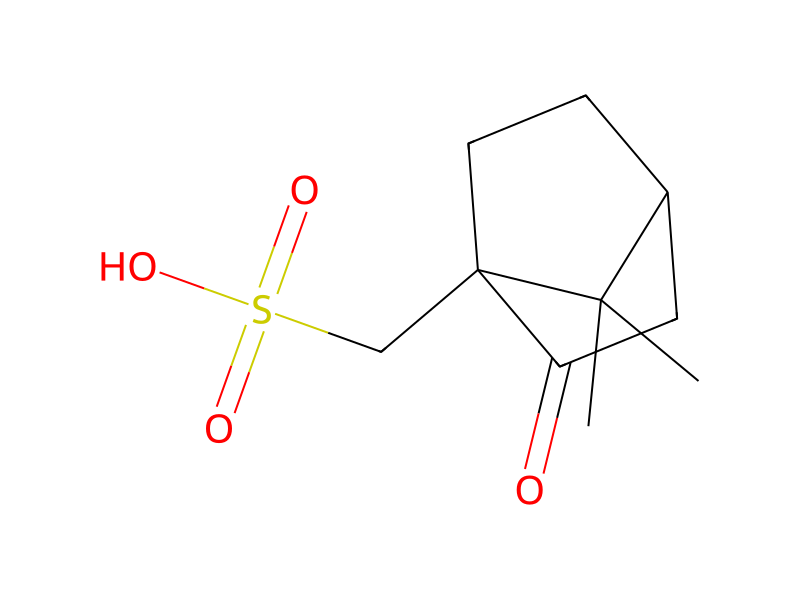
Bicyclo[2.2.1]heptane-1-methanesulfonic acid, 7,7-dimethyl-2-oxo-, (1S)- → Pyrimethanil camphorsulfonate
Reaction equation

[C:1]12([CH2:11][S:12]([OH:15])(=[O:14])=[O:13])[C:8]([CH3:10])([CH3:9])[CH:5]([CH2:6][CH2:7]1)[CH2:4][C:2]2=[O:3].[CH3:16][C:17]1[CH:18]=[C:19]([CH3:30])[N:20]=[C:21]([NH:23][C:24]2[CH:25]=[CH:26][CH:27]=[CH:28][CH:29]=2)[N:22]=1>C(O)C.C1(C)C=CC=CC=1>[CH3:16][C:17]1[CH:18]=[C:19]([CH3:30])[N:20]=[C:21]([NH:23][C:24]2[CH:25]=[CH:26][CH:27]=[CH:28][CH:29]=2)[N:22]=1.[C:1]12([CH2:11][S:12]([O-:15])(=[O:13])=[O:14])[C:8]([CH3:10])([CH3:9])[CH:5]([CH2:6][CH2:7]1)[CH2:4][C:2]2=[O:3]Participants
5
Reactant 2

Product 1

Reagents, catalysts & solvents 2


Procedure
A solution of camphorsulfonic acid (1.25 g) in ethanol (10 ml) was added slowly to a solution of pyrimethanil (1 g) in toluene (20 ml) and the mixture allowed to stand for 30 minutes at room temperature. The mixture was evaporated under reduced pressure and the residue recrystallised from a mixture of diisopropyl ether and ethyl acetate to give pyrimethanil camphorsulfonate, m.p. 1 66-7° C. (compound 2)