Reaction equation

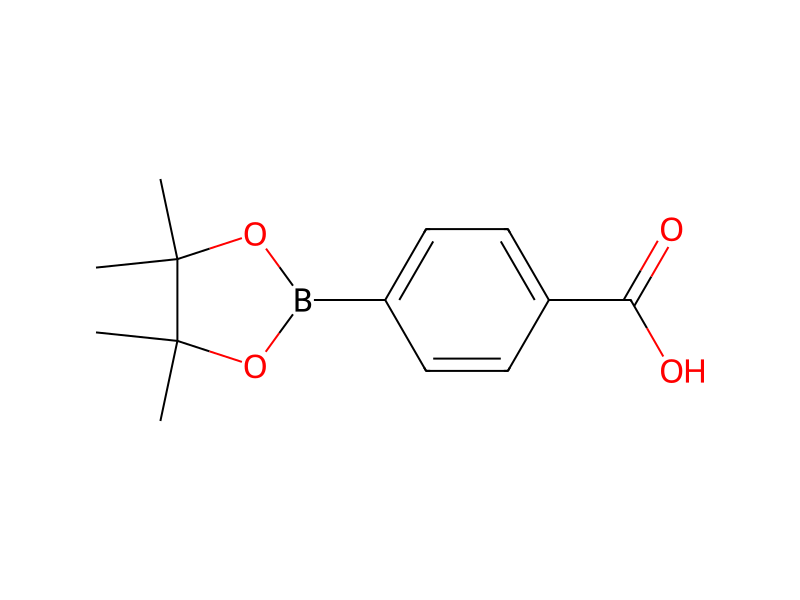
[CH3:1][C:2]1([CH3:18])[C:6]([CH3:8])([CH3:7])[O:5][B:4]([C:9]2[CH:17]=[CH:16][C:12]([C:13]([OH:15])=[O:14])=[CH:11][CH:10]=2)[O:3]1.C(=O)([O-])[O-].[K+].[K+].[CH2:25]([O:27][CH2:28]Cl)[CH3:26]>C(#N)C>[CH3:8][C:6]1([CH3:7])[C:2]([CH3:18])([CH3:1])[O:3][B:4]([C:9]2[CH:17]=[CH:16][C:12]([C:13]([O:15][CH2:28][O:27][CH2:25][CH3:26])=[O:14])=[CH:11][CH:10]=2)[O:5]1Participants
5
Reactant 3


Product 1

Reagents, catalysts & solvents 1

Conditions
- Temperature
- 65 °C
Procedure
4-(4,4,5,5-tetramethyl-1,3,2-dioxaborolan-2-yl)benzoic acid (0.50 g, 2.02 mmol) was dissolved in 20 mls of dry acetonitrile. To this solution was added powdered potassium carbonate (0.42 g, 3.02 mmol) followed by chloromethyl ethyl ether (0.24 mls, 2.42 mmol). This mixture was warmed to 65° C. for 2 hours, then allowed to cool to room temperature, filtered and the filtrate concentrated to give ethoxymethyl 4-(4,4,5,5-tetramethyl-1,3,2-dioxaborolan-2-yl)benzoate as a solid (84%). This material was taken onto the next step without further purification.
Workup
- temperatureto cool to room temperature
- filtrationfiltered
- concentrationthe filtrate concentrated
Sources & evidence
- ORD record
- ord-95a9a672e4e74bd9b0b2f18826c1a00a
- Source dataset
- uspto-grants-2013_09
- Patent number
- US08524702B2
Linked notes
Loading…