HomeMCPWorkbenchSkills
HomeWorkbenchNotificationsMe
llms.txt · MCP GuidePrivacy Policy · Terms of Service · Supportv1.8.3
  1. Home
  2. /Reaction

Ammonia → 2-Benzyl-4-(3-thienyl)-5-[4-(methylsulfonyl)phenyl]-3(2H)-pyridazinone

HRID 381920
Print

Reaction equation

HRID 381920 reaction equation
[CH2:1]([N:8]1[C:13](=[O:14])[C:12](Cl)=[C:11]([C:16]2[CH:21]=[CH:20][C:19]([S:22]([CH3:25])(=[O:24])=[O:23])=[CH:18][CH:17]=2)[CH:10]=[N:9]1)[C:2]1[CH:7]=[CH:6][CH:5]=[CH:4][CH:3]=1.[S:26]1[CH:30]=[CH:29][C:28](B(O)O)=[CH:27]1.[F-].[Cs+].N>COCCOC.[Pd].C1(P(C2C=CC=CC=2)C2C=CC=CC=2)C=CC=CC=1.C1(P(C2C=CC=CC=2)C2C=CC=CC=2)C=CC=CC=1.C1(P(C2C=CC=CC=2)C2C=CC=CC=2)C=CC=CC=1.C1(P(C2C=CC=CC=2)C2C=CC=CC=2)C=CC=CC=1.O.C(OCC)(=O)C>[CH2:1]([N:8]1[C:13](=[O:14])[C:12]([C:28]2[CH:29]=[CH:30][S:26][CH:27]=2)=[C:11]([C:16]2[CH:21]=[CH:20][C:19]([S:22]([CH3:25])(=[O:24])=[O:23])=[CH:18][CH:17]=2)[CH:10]=[N:9]1)[C:2]1[CH:7]=[CH:6][CH:5]=[CH:4][CH:3]=1
ParticipantsProcedureWorkupSources & evidenceReaction notes

Participants

9

Reactant 4

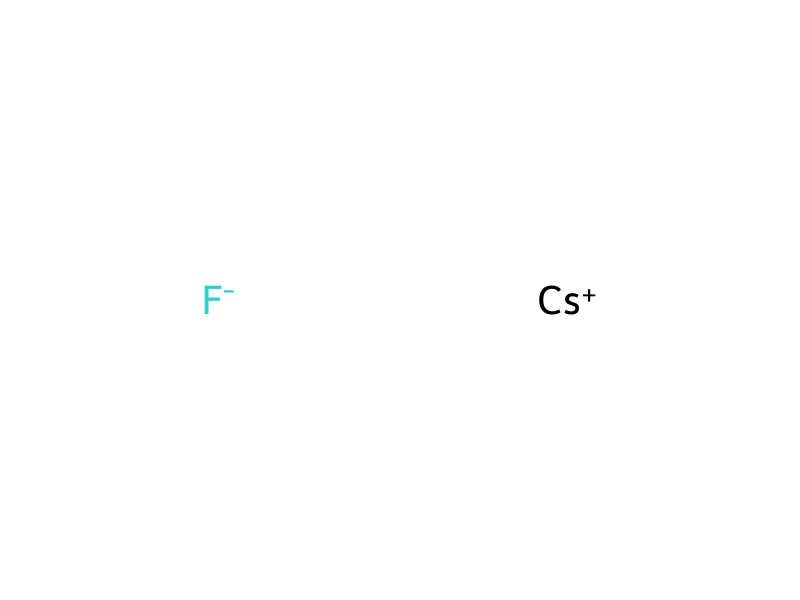
HCID 222AmmoniaHCID 25953Cesium fluorideHCID 581760Thiophene-3-boronic acidHCID 101994392-benzyl-4-chloro-5-[4-(methylsulfonyl)phenyl]-3(2H)-pyridazinone

Product 1

HCID 219342912-Benzyl-4-(3-thienyl)-5-[4-(methylsulfonyl)phenyl]-3(2H)-pyridazinone

Reagents, catalysts & solvents 4

HCID 11979704
Tetrakis(triphenylphosphine)palladium
Catalyst
HCID 962WaterSolvent
HCID 80711,2-DimethoxyethaneSolvent
HCID 8857Ethyl AcetateSolvent

Procedure

2-Benzyl-4-chloro-5-[4-(methylsulfonyl)phenyl]-3(2H)-pyridazinone prepared in Example 78 (150 mg, 0.4 mmol), thiophene-3-boronic acid (66.5 mg, 0.52 mmol), CsF (145.8 mg, 0.96 mmol), and tetrakis-(triphenylphosphine)-palladium(0) (13.9 mg, 0.012 mmol) in DME (25 mL) were stirred at reflux for 6 hours TLC (1CH2Cl2:1 hexanes:1.5 ethyl acetate) indicated that all starting materials were consumed. The reaction mixture was cooled to room temperature and concentrated under reduced pressure. The residue was partitioned between water and ethyl acetate. The organic layer was washed with brine, dried over MgSO4, and filtered. The filtrate was concentrated under reduced pressure. The residue was purified using a silica gel column (0.5:2.5:0.5 CH2Cl2/hexanes/ethyl acetate). A yellow powder was obtained (yield: 50 mg, 31%). 1H NMR (300 MHz, CDCl3) δ 3.09 (s, 3H), 5.41 (s, 2H), 6.72 (dd, J=1.5 Hz, 9 Hz, 1H), 7.13 (dd, J=3 Hz, 3 Hz, 1H), 7.3-7.45 (m, 5H), 7.5-7.6 (m, 3H), 7.78 (s, 1H), 7.92 (d, 9 Hz, 2H). MS (DCI/NH3) m/z 423 (M+H)+. Anal. calc. for C22H18N2O3S2. 0.5 H2O: C, 6.23; H, 4.43; N, 6.49. Found C, 61.29; H, 4.40; N, 6.16.

Workup

  1. customwere consumed
  2. concentrationconcentrated under reduced pressure
  3. customThe residue was partitioned between water and ethyl acetate
  4. washThe organic layer was washed with brine
  5. dry with materialdried over MgSO4
  6. filtrationfiltered
  7. concentrationThe filtrate was concentrated under reduced pressure
  8. customThe residue was purified
  9. customA yellow powder was obtained (yield: 50 mg, 31%)

Sources & evidence

ORD record
ord-e7406ec9e94944cfb4a5d49fcccc3c83
Source dataset
uspto-grants-2001_10
DOI
10.6084/m9.figshare.5104873.v1
Patent number
US06307047B1

Reaction notes

On this pageParticipantsProcedureWorkupSources & evidenceReaction notes