Reaction equation

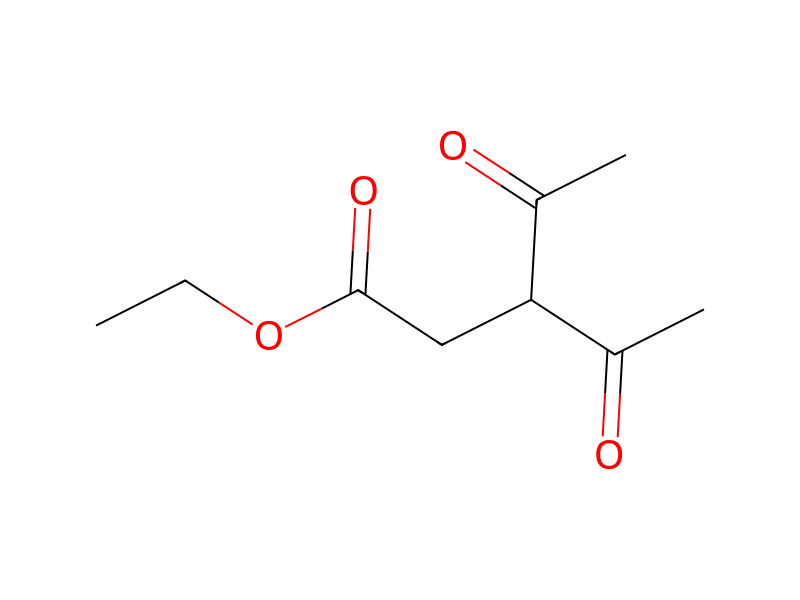
[C:1]([CH:4]([C:11](=O)[CH3:12])[CH2:5][C:6]([O:8][CH2:9][CH3:10])=[O:7])(=O)[CH3:2].O.[NH2:15][NH2:16]>C(O)C>[CH3:2][C:1]1[C:4]([CH2:5][C:6]([O:8][CH2:9][CH3:10])=[O:7])=[C:11]([CH3:12])[NH:16][N:15]=1Participants
Reactant 2

Product 1

Reagents, catalysts & solvents 1

Procedure
To a solution of ethyl 3-acetyl-4-oxopentanoate (synthesized as described D. P. Shrout and D. A. Lightner, Synth. Commun. 20 (1990), 2075) (9.676 g, 51.96 mmol) in ethanol, at 0° C., was added slowly a solution of hydrazine hydrate (2.990 g, 59.75 g) in absolute ethanol. The reaction mixture was warmed to room temperature and stirred for 2 hours. After removing ethanol under vacuum, dichloromethane and water were added to the crude product and the organic layer was separated. The aqueous layer was extracted further with dichloromethane and the combined organic extracts were washed with water. After drying over MgSO4 and evaporation of the solvent under reduced pressure, the pyrazole was isolated as a yellow oil. Yield: 72% (6.777 g, 37.2 mmol).
Workup
- customAfter removing ethanol under vacuum, dichloromethane and water
- additionwere added to the crude product
- customthe organic layer was separated
- extractionThe aqueous layer was extracted further with dichloromethane
- washthe combined organic extracts were washed with water
- dry with materialAfter drying over MgSO4 and evaporation of the solvent under reduced pressure
Sources & evidence
- ORD record
- ord-9c886412d52e4145be71feddcd8fb175
- Source dataset
- uspto-grants-2013_02
- Patent number
- US08372379B2
Linked notes
Loading…