Reaction equation

[OH:1][C:2]1[CH:11]=[CH:10][C:5]([C:6]([NH:8][NH2:9])=[O:7])=[CH:4][CH:3]=1.[Cl:12][C:13]1[CH:14]=[C:15]([N:19]=[C:20]=S)[CH:16]=[CH:17][CH:18]=1>CO.O=[Hg]>[Cl:12][C:13]1[CH:14]=[C:15]([NH:19][C:20]2[O:7][C:6]([C:5]3[CH:10]=[CH:11][C:2]([OH:1])=[CH:3][CH:4]=3)=[N:8][N:9]=2)[CH:16]=[CH:17][CH:18]=1Participants
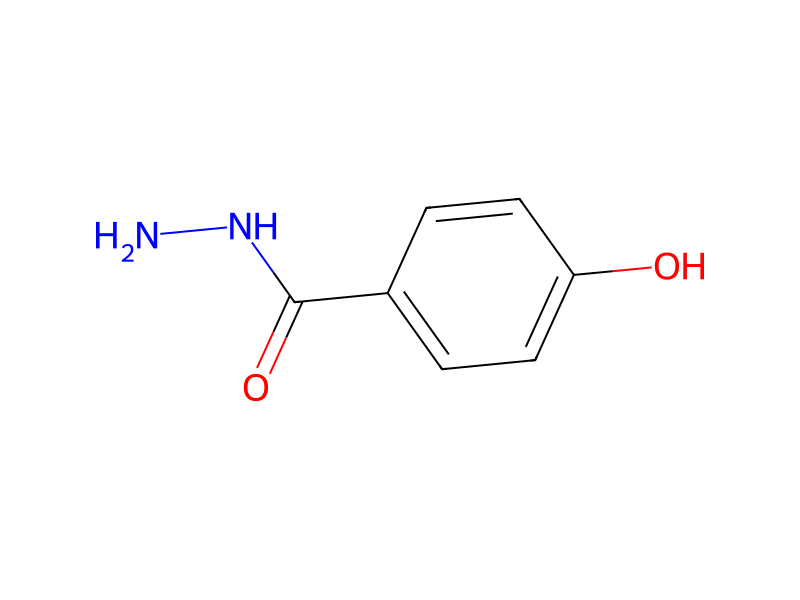



Procedure
Mercury (II) oxide yellow (6.38 g, 29.47 mmol) was suspended in ca. 100 mL of anhydrous methanol. 4-Hydroxybenzoic acid hydrazide (4.48 g, 29.47 mmol) was added to this bright-orange suspension, followed by 3-chlorophenylisothiocyanate (5.0 g, 29.47 mmol). The reaction mixture was brought to reflux and refluxed for 2 hours. The reaction mixture turned pitch-black in color and formed black precipitate. Then it was cooled down to ambient temperature and filtered through a short pad of Celite. Then it was purified by silica gel chromatography using 0% to 20% methanol gradient in EtOAc. Solvent was removed in vacuo and the resulting grey precipitate was re-crystallized from ca. 50 mL of EtOAc. The formed white crystalline solid was filtered, washed with a small amount of EtOAc, anhydrous Et2O and dried in vacuo to give the title product as a white powder (7.606 g). Yield 89.7%.
Workup
- temperatureto reflux
- temperaturerefluxed for 2 hours
- customformed black precipitate
- filtrationfiltered through a short pad of Celite
- customThen it was purified by silica gel chromatography
- customSolvent was removed in vacuo
- customthe resulting grey precipitate was re-crystallized from ca. 50 mL of EtOAc
- filtrationThe formed white crystalline solid was filtered
- washwashed with a small amount of EtOAc, anhydrous Et2O
- customdried in vacuo
Sources & evidence
- ORD record
- ord-b6e4b48d93c546c19fd9d73a427b8ecf
- Source dataset
- uspto-grants-2013_02
- Patent number
- US08372971B2
Linked notes
Loading…