Reaction equation

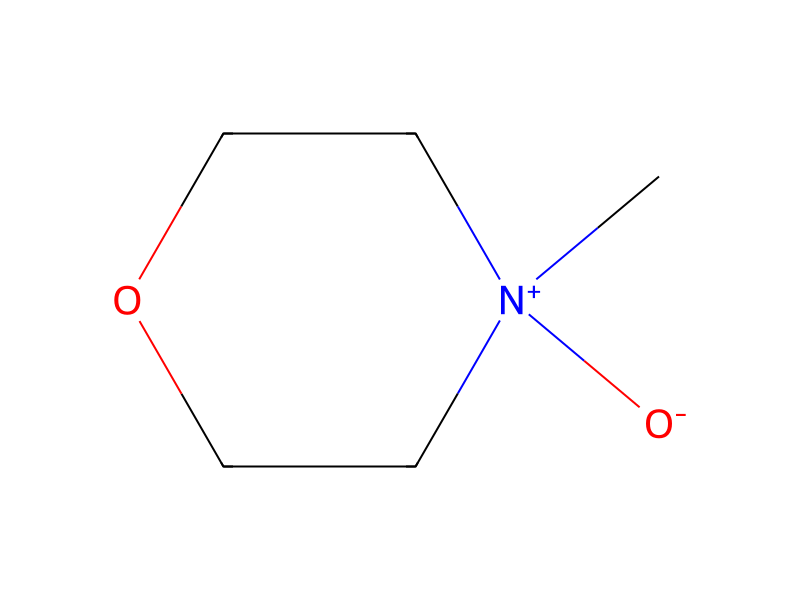
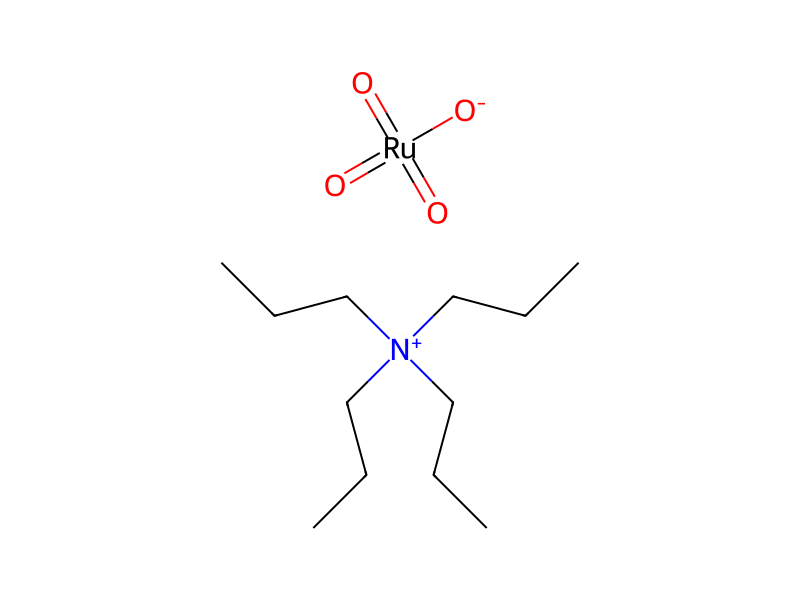
[Si:1]([O:8][C@H]1CCC[C@@]2(C)[C@H]1CC[C@@H]2[C@H](C)CO)([C:4](C)(C)C)([CH3:3])[CH3:2].C[N+]1([O-])CCOCC1.[CH3:31][Si:32]([CH3:50])([CH3:49])OC(C)(C)[C@H](C)CS(C1C=CC=CC=1)(=O)=O>ClCCl.[Ru]([O-])(=O)(=O)=O.C([N+](CCC)(CCC)CCC)CC>[CH3:2][Si:1]([O:8][Si:32]([CH3:50])([CH3:49])[CH3:31])([CH3:4])[CH3:3]Participants
Reactant 3


Product 1

Reagents, catalysts & solvents 2

Procedure
The compound of Example 10E (200 mg, 0.61 mmol) was dissolved in 2 mL of dichloromethane; 100 mg of 4 Å molecular sieves were added, followed by 15 mg of tetrapropylammonium perruthenate and 75 mg of 4-methylmorpholine N-oxide. The mixture was stirred for 2 hours at ambient temperature, and then filtered through diatomaceous earth to removed solids. The crude product was purified by silica gel chromatography using an Analogix IntelliFlash™ 40, eluting with a gradient of 5% to 30% ethyl acetate in hexanes. The compound of Example 10C (200 mg, 0.63 mmol) was combined with this aldehyde according to the coupling procedure described by Kutner et al. in J. Org. Chem. 1988, 53, 3450-3457. The named product was isolated as a mixture of trimethylsilyl ether (Fraction A) and hydroxyl (Fraction B) after chromatographic purification using an Analogix IntelliFlash 280™, eluting with a gradient of 0% to 50% ethyl acetate in hexanes. These products were combined and carried forward to the next step.
Workup
- addition100 mg of 4 Å molecular sieves were added
- filtrationfiltered through diatomaceous earth
- customto removed solids
- customThe crude product was purified by silica gel chromatography
- washeluting with a gradient of 5% to 30% ethyl acetate in hexanes
Sources & evidence
- ORD record
- ord-bc265b841cb44c769a0b6e804ede5f28
- Source dataset
- uspto-grants-2013_02
- Patent number
- US08377913B2
Linked notes
Loading…