Reaction equation

[N:1]1[CH:6]=[C:5]([CH:7]2[CH2:12][CH2:11][CH2:10][N:8]2[CH3:9])[CH:4]=[CH:3][CH:2]=1.C(O)(=O)[C@H]([C@@H](C(O)=O)O)O>>[N:1]1[CH:6]=[C:5]([C@H:7]2[CH2:12][CH2:11][CH2:10][N:8]2[CH3:9])[CH:4]=[CH:3][CH:2]=1Participants

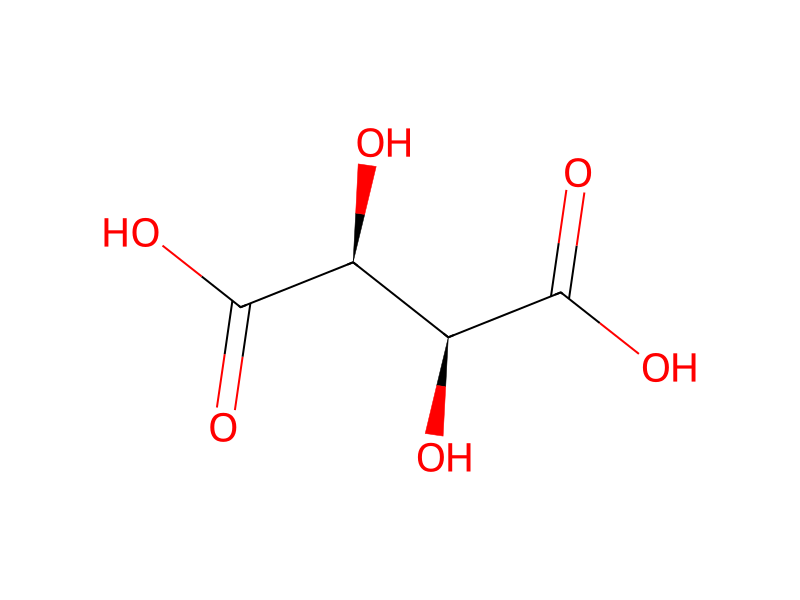

Procedure
Several resolving agents, solvents and their combinations were studied to resolve the synthetically obtained racemic nicotine. When the naturally available d-tartaric acid was used as the resolving agent, only the unnatural (R)-nicotine was obtained with low chiral purity (62%). When l-tartaric acid was used (S)-nicotine was obtained. Although its chiral purity was high (98.3%), the yield was very low (29%). When di-p-toluoyl-d-tartaric acid was used, (S)-nicotine was obtained in 60% yield with 88% chiral purity. When di-p-toluoyl-l-tartaric acid was used, (R)-nicotine was obtained in 15% yield with 94.7% chiral purity. In all the above cases, either the yield or the chiral purity was not satisfactory. We also studied dibenzoyl-d-tartaric acid as a resolving agent in different solvents (Table.1).
Sources & evidence
- ORD record
- ord-a7b5ec88687e4513a5d77a265e97d163
- Source dataset
- uspto-grants-2013_02
- Patent number
- US08378111B2
Linked notes
Loading…