HomeMCPWorkbenchSkills
HomeWorkbenchNotificationsMe
llms.txt · MCP GuidePrivacy Policy · Terms of Service · Supportv1.8.0
  1. Home
  2. /Reaction

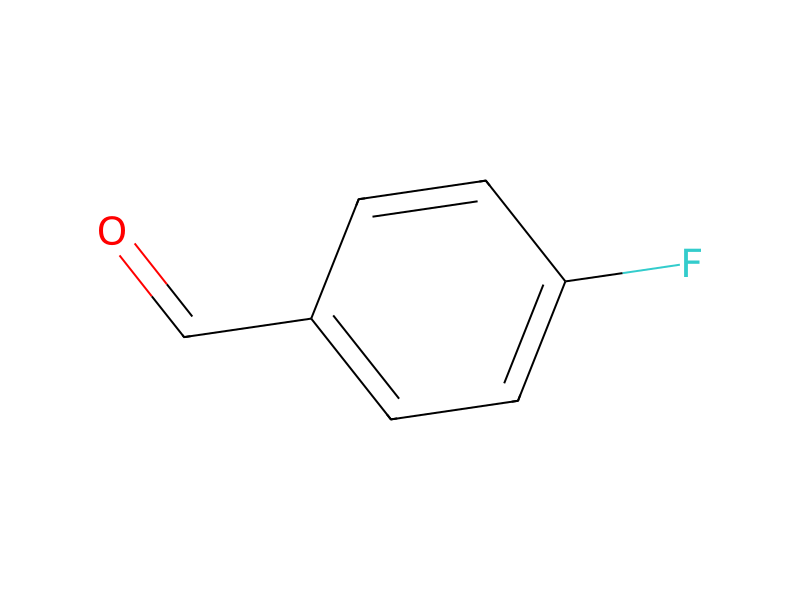
4-Fluorobenzaldehyde → 3-{1-Hydroxy-1-(4-fluorophenyl)-methyl}-N-methyl-benzamide

HRID 392821
Notes
Print preview

Reaction equation

HRID 392821 reaction equation
Br[C:2]1[CH:3]=[C:4]([CH:9]=[CH:10][CH:11]=1)[C:5]([NH:7][CH3:8])=[O:6].C([Li])CCC.[F:17][C:18]1[CH:25]=[CH:24][C:21]([CH:22]=[O:23])=[CH:20][CH:19]=1>O1CCCC1.CCCCCC>[OH:23][CH:22]([C:2]1[CH:3]=[C:4]([CH:9]=[CH:10][CH:11]=1)[C:5]([NH:7][CH3:8])=[O:6])[C:21]1[CH:24]=[CH:25][C:18]([F:17])=[CH:19][CH:20]=1
ParticipantsProcedureWorkupSources & evidenceReaction notes

Participants

6

Reactant 3

HCID 680234-FluorobenzaldehydeHCID 42941703-Bromo-N-methylbenzamideHCID 178418339Butyllithium

Product 1

HCID 226609133-{1-Hydroxy-1-(4-fluorophenyl)-methyl}-N-methyl-benzamideYield 38%

Reagents, catalysts & solvents 2

HCID 8028TetrahydrofuranSolvent2×
HCID 8058
Hexane
Solvent

Procedure

A solution of 3-bromo-N-methylbenzamide (3.48 g, 16.25 mmol) in dry tetrahydrofuran (100 ml) was cooled to −78° C. and treated dropwise over 10 min. with 13 ml (32.5 mmol) of a 2.5 M solution of n-butyllithium in hexane. After 15 min. at −78° C., a solution of 4-fluorobenzaldehyde (2.5 g, 20.1 mmol) in tetrahydrofuran (10 ml) was added dropwise over 10 min. and the resulting mixture was stirred for another 45 min at the same temperature. The temperature was then allowed to reach −20° C. and the mixture was quenched by the addition of saturated ammonium chloride. The reaction mixture was then extracted with ethyl acetate and the organic layer was washed with 0.1N hydrochloric acid, saturated sodium bicarbonate, brine and dried (magnesium sulfate). Evaporation of the solvent and crystallization of the residue from ethyl acetate gave 1.60 g (38%) of the title compound as a white solid: mp: 138-139° C. 1HNMR 400 MHz (CDCl3) δ (ppm): 3.0 and 3.01 (3H, 2 s, NCH3), 5.88 (1H, s, CH), 6.19 (1H, broad, NH), 7.03 (2H, m, aromatics), 7.36 (2H, m, aromatics), 7.41 (1H, t, J=7.6 Hz, aromatic), 7.49 (1H, d, J=7.6 Hz, aromatic), 7.66 (1H, d, J=7.6 Hz, aromatic), 7.79 (1H, s, aromatic). Anal. Calcd for C15H14FNO2: C, 69.49; H, 5.44; N, 5.40. Found: C, 69.41; H, 5.41; N, 5.63.

Workup

  1. customto reach −20° C.
  2. customthe mixture was quenched by the addition of saturated ammonium chloride
  3. extractionThe reaction mixture was then extracted with ethyl acetate
  4. washthe organic layer was washed with 0.1N hydrochloric acid, saturated sodium bicarbonate, brine
  5. dry with materialdried (magnesium sulfate)
  6. customEvaporation of the solvent and crystallization of the residue from ethyl acetate

Sources & evidence

ORD record
ord-32417e10cb6149489193edf9c56eadd5
Source dataset
uspto-grants-2004_10
DOI
10.6084/m9.figshare.5104873.v1
Patent number
US06803378B2

Reaction notes

Loading…

On this pageParticipantsProcedureWorkupSources & evidenceReaction notes


