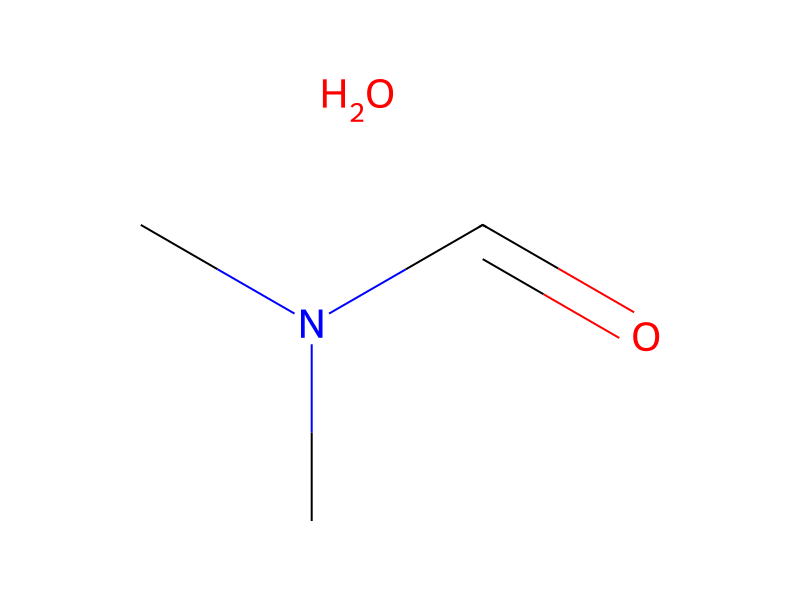
Br[C:2]1[CH:8]=[CH:7][C:5]([NH2:6])=[C:4]([N+:9]([O-:11])=[O:10])[CH:3]=1.C([O-])([O-])=O.[Na+].[Na+].[S:18]1[CH:22]=[CH:21][CH:20]=[C:19]1B(O)O>CN(C=O)C.O.CN(C=O)C.C1C=CC(P(C2C=CC=CC=2)[C-]2C=CC=C2)=CC=1.C1C=CC(P(C2C=CC=CC=2)[C-]2C=CC=C2)=CC=1.Cl[Pd]Cl.[Fe+2]>[N+:9]([C:4]1[CH:3]=[C:2]([C:19]2[S:18][CH:22]=[CH:21][CH:20]=2)[CH:8]=[CH:7][C:5]=1[NH2:6])([O-:11])=[O:10]4-Bromo-2-nitroaniline (1.0 eq) and Na2CO3 (2.0 eq) were dissolved in DMF/H2O (5:1) at room temperature. Nitrogen was bubbled through the reaction mixture for 5 minutes and PdCl2(dppf)2 (0.1 eq) was added. After stirring at 23° C. for approximately 10 minutes, 2-thiopeneboronic acid (1.1 eq) in DMF was added and the reaction was heated at 90° C. for 12 hours. After this time, the solution was concentrated and partitioned between EtOAc and H2O. The layers were separated and the aqueous layer was extracted with EtOAc. The combined organic layers were dried over MgSO4 and concentrated under reduced pressure. The resulting black residue was purified by silica gel chromatography (0-20% EtOAc:hexanes) to yield an orange solid. LC/MS m/z 221.1 (MH+), Rf 2.67 minutes.