Reaction equation

[OH:1][C:2]1[CH:11]=[C:10]2[C:5]([C:6](=[O:18])[CH:7]=[C:8]([C:12]3[CH:17]=[CH:16][CH:15]=[CH:14][CH:13]=3)[O:9]2)=[CH:4][CH:3]=1.C([O-])([O-])=O.[K+].[K+].[CH2:25](Br)[C:26]#[CH:27]>CC(C)=O>[C:25]([O:1][C:2]1[CH:11]=[C:10]2[C:5]([C:6](=[O:18])[CH:7]=[C:8]([C:12]3[CH:17]=[CH:16][CH:15]=[CH:14][CH:13]=3)[O:9]2)=[CH:4][CH:3]=1)#[C:26][CH3:27]Participants
5
Reactant 3


Product 1

Reagents, catalysts & solvents 1

Procedure
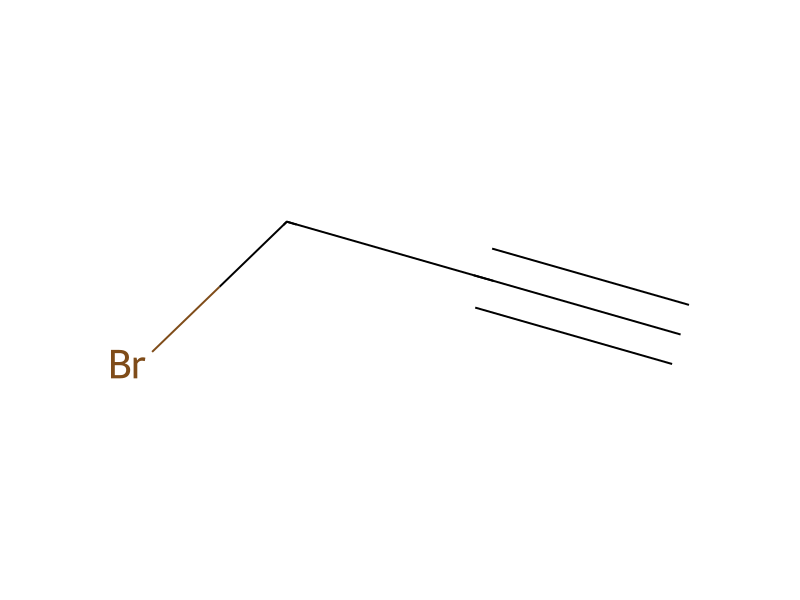
A mixture of 7-hydroxyflavone (2.38 g, 0.01 mol), K2CO3 (2.8 g, 0.02 mol), Kl (0.166 g, 0.001 mol), propargyl bromide (1.78 g, 0.015 mol) and acetone (100 mL) was refluxed 10 h and hot filtered. The solvent was evaporated and the residue was crystallized by toluene. This yields 2.58 g of a product with the following characteristics: m.p. 199-200° C.; 1H NMR (CDC13) δ: 2.6 (m, 1H), 4.8 (s, 2H), 6.75-8.18 (m, 9H).
Workup
- temperaturewas refluxed 10 h
- customThe solvent was evaporated
- customthe residue was crystallized by toluene
Sources & evidence
- ORD record
- ord-bd3a5c6268414d7c95b108d5ce7466a1
- Source dataset
- uspto-grants-2003_08
- Patent number
- US06608089B2
Linked notes
Loading…