Reaction equation

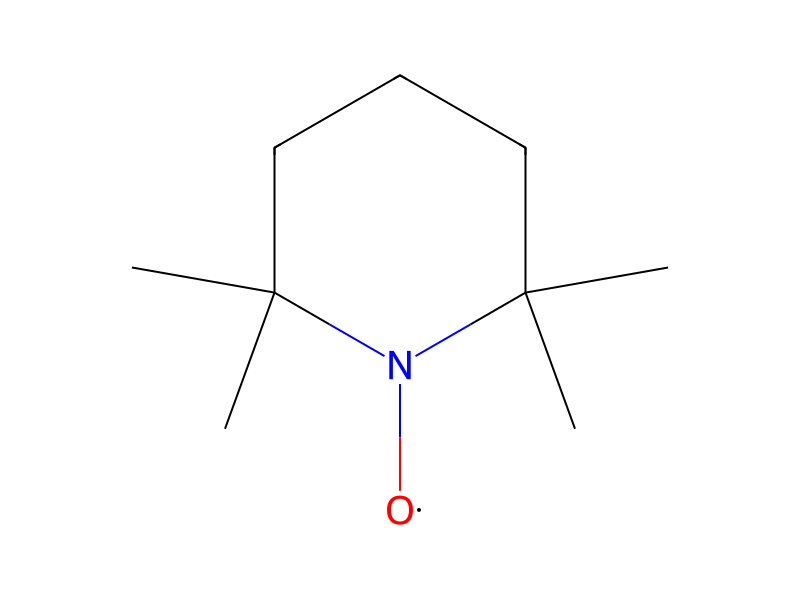
[CH3:1][C:2]1([CH3:9])[CH:7]([OH:8])[C:5](=[O:6])[O:4][CH2:3]1.ClN1C(=O)N(Cl)C(=O)N(Cl)C1=O>CC1(C)N([O])C(C)(C)CCC1>[CH3:1][C:2]1([CH3:9])[C:7](=[O:8])[C:5](=[O:6])[O:4][CH2:3]1Participants
4
Reactant 2


Product 1

Reagents, catalysts & solvents 1
Procedure
5 g (38.4 mmol) of pantolactone were reacted with 3.6 g (15.5 mmol) of trichloroisocyanuric acid as described in Example 13. In contrast to Example 13, 60 mg (0.25 mmol) of TEMPO derivative C were used as the catalyst. The reaction had finished after 3 hours. After recrystallization of the crude product there were obtained 4.6 g (93%) of ketopantolactone, m.p. 69°-70° C., GC content: 100% (area percent).
Workup
- customAfter recrystallization of the crude product
Sources & evidence
- ORD record
- ord-05d2bc7a176a47628cfe714f094b364a
- Source dataset
- uspto-grants-1998_10
- Patent number
- US05821374
Linked notes
Loading…