Reaction equation
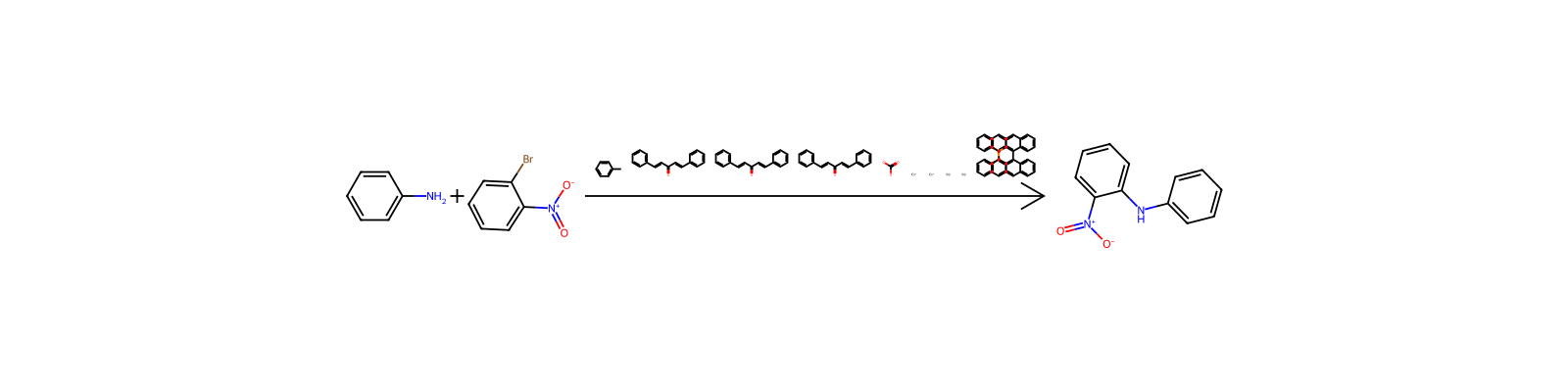
Nc1ccccc1.O=[N+]([O-])c1ccccc1Br>Cc1ccccc1.O=C(/C=C/c1ccccc1)/C=C/c1ccccc1.O=C(/C=C/c1ccccc1)/C=C/c1ccccc1.O=C(/C=C/c1ccccc1)/C=C/c1ccccc1.O=C([O-])[O-].[Cs+].[Cs+].[Pd].[Pd].c1ccc(P(c2ccccc2)c2ccc3ccccc3c2-c2c(P(c3ccccc3)c3ccccc3)ccc3ccccc23)cc1>O=[N+]([O-])c1ccccc1Nc1ccccc1Participants






Conditions
- Temperature
- 100 °C
Procedure
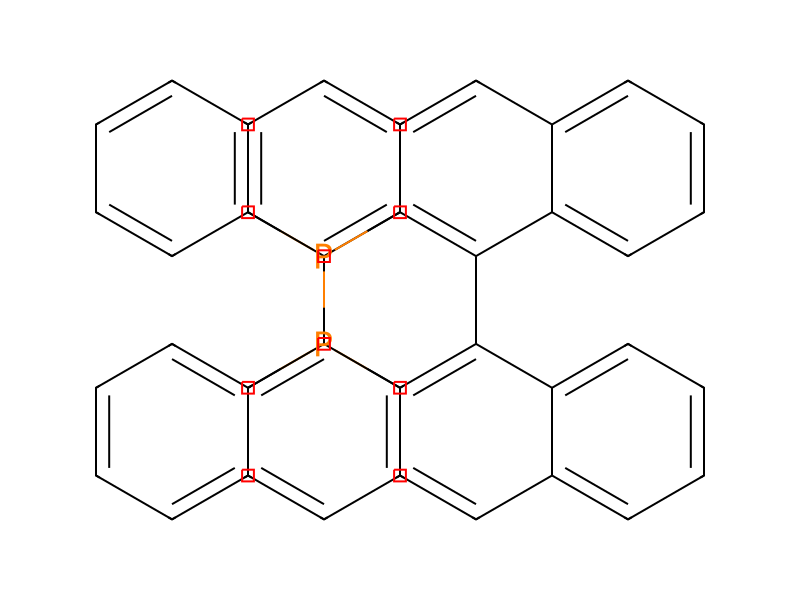
A 200 mL roundbottom flask was charged with 1-bromo-2-nitrobenzene (Alfa Aesar; 2.10 g, 10.40 mmol), Pd2(dba)3 (Aldrich; 119.6 mg, 2.5 mol%), racemic BINAP (Strem; 197.8 mg, 3.1 mol%), and cesium carbonate (Aldrich; 4.87 g, 14.95 mmol). The flask was evacuated and backfilled with N2 (3x), and then anhydrous toluene (20 mL) was added. Aniline (Acros; 1.20 mL, 13.2 mmol) was added followed by additional toluene (30 mL), and the mixture was allowed to stir at room temperature for 5 minutes before being placed in a 100 °C oil bath. After heating overnight, the reaction was allowed to cool and was partitioned between EtOAc and water. The aqueous layer was extracted with EtOAc (2x), and the combined organics were concentrated under reduced pressure. The crude material was purified by silica gel chromatography (gradient elution; Rf in 90:10 hexanes:EtOAc = 0.54) to give a red-orange solid. 1.89 g of solid was collected.
Sources & evidence
- ORD record
- ord-2c85deae4d144af0a18fb548e5e9eabd
- Source dataset
- 750 AstraZeneca ELN dataset
- Original link
- View source
Linked notes
Loading…