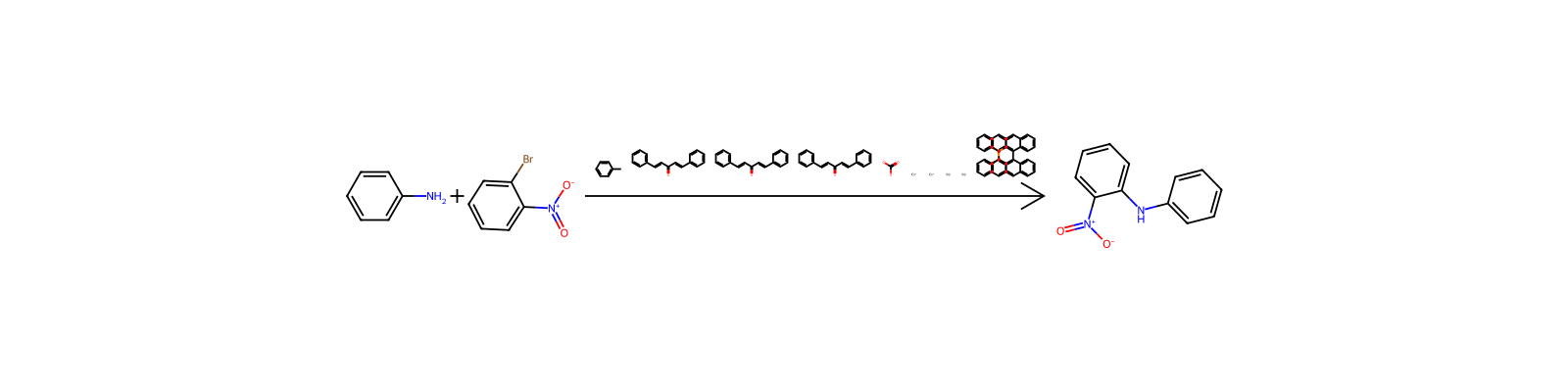

Basic information
- Standard SMILES
O=[N+]([O-])c1ccccc1Nc1ccccc1- InChIKey
RUKISNQKOIKZGT-UHFFFAOYSA-N- Molecular formula
- C12H10N2O2
- Average molar mass
- 214.22 g/mol
- Monoisotopic mass
- 214.07422756
Overview
2-nitrodiphenylamine appears as red-brown crystalline powder or reddish-brown solid. (NTP, 1992)
Names & identifiers
- Preferred name
- 2-Nitrodiphenylamine
- IUPAC
- 2-nitro-N-phenylaniline
- English name
- 2-Nitrodiphenylamine
- Molecular formula
- C12H10N2O2
- Molecular weight
- 214.22
Names & synonyms
2-Nitrodiphenylamine119-75-52-Nitro-N-phenylanilineBenzenamine, 2-nitro-N-phenyl-o-(Phenylamino)nitrobenzeneCCRIS 6075DTXSID4025749EINECS 204-348-6N-Phenyl-2-nitrobenzenamineAI3-08882DTXCID7057492-nitro-n-phenylbenzeneamine
Show more names
NitrodiphenylamineO-NITRO DIPHENYLAMINENSC 4754NSC 629274NSC 105613c.i. 10335Sudan Yellow 1339TIMTEC-BB SBB000544
PHENYL 2-NITROPHENYLAMINEoNitrodiphenylaminePHENYL(2-NITROPHENYL)AMINENPhenylonitroanilineoNitroNphenylaniline2NitroNphenylanilineDiphenylamine, 2nitroRefChem:88722
Database identifiers
- CAS
119-75-5- PubChem CID
- 8407
- DTXSID
DTXSID4025749- ChEMBL
CHEMBL1450018- UNII
- DT9NA7ZDD8
- EC Number
- 204-348-6
- Nikkaji
- J37.804F
Properties
Computed structural properties
- XLogP
- 3.7
- Topological polar surface area
- 57.9 Ų
- Hydrogen bond donors
- 1
- Hydrogen bond acceptors
- 3
- Rotatable bonds
- 2
- Heavy atoms
- 16
- Formal charge
- 0
- Complexity
- 234
Experimental & physicochemical properties
Chemical ClassesNitrogen Compounds -> Nitroanilines
SpringerMaterials PropertiesBoiling point
Density1.36 @25 °C
Solubility
less than 1 mg/mL at 72 °F (NTP, 1992)
1.1 [ug/mL] (The mean of the results at pH 7.4)
Melting Point
167.9 °F (NTP, 1992)
75.5 °C
Physical Description
2-nitrodiphenylamine appears as red-brown crystalline powder or reddish-brown solid. (NTP, 1992)
CBI; Liquid
Orange solid; [Reference #1] Reddish-brown solid; [CAMEO] Red or orange crystalline solid; [Alfa Aesar MSDS]
Physicochemical properties
- Melting point
- 74 · 74-76 °C(lit.)
- Boiling point
- 346 °C · 346 °C
- Density
- 1.36 · 1.36
- vapor density
- 10.7 · 10.7 (vs air)
- refractive index
- 1.666 · 1.6660 (estimate)
- Flash point
- 346 °C · 346°C
- storage temp.
- Keep in dark place,Inert atmosphere,Room temperature
- solubility
- Chloroform (Slightly), , DMSO (Slightly), Methanol (Slightly, Sonicated)
- form
- Solid
- pka
- -3.39 · -3.39±0.20(Predicted)
- color
- Red
- Water Solubility
- negligible
- BRN
- 2213591 · 2213591
- InChIKey
- RUKISNQKOIKZGT-UHFFFAOYSA-N
- CAS DataBase Reference
- 119 · 119-75-5(CAS DataBase Reference)
- FDA UNII
- 9 NA7ZDD8 · DT9NA7ZDD8
- NIST Chemistry Reference
- 2 · Benzenamine, 2-nitro-N-phenyl-(119-75-5)
- EPA Substance Registry System
- 2 · 2-Nitrodiphenylamine (119-75-5)
- Symbol(GHS)
- 7 · GHS07
- Signal word
- Warning
- Hazard statements
- 315 · H315-H319-H335
- Precautionary statements
- 261 · P261-P305+P351+P338
- Hazard Codes
- Xi
- Risk Statements
- 36 · 36/37/38
- Safety Statements
- 26 · 26-36-37/39
- WGK Germany
- 3 · 3
- Hazard Note
- Irritant
- TSCA
- TSCA listed
- HS Code
- 29214400 · 29214400
Safety & regulation
GHS classification
GHS Classification
Warning
H315 (100%): Causes skin irritation [Warning Skin corrosion/irritation]
P261, P264, P264+P265, P271, P280, P302+P352, P304+P340, P305+P351+P338, P319, P321, P332+P317, P337+P317, P362+P364, P403+P233, P405, and P501 (click each P-code to see the statement)
Aggregated GHS information provided per 60 reports by companies from 9 notifications to the ECHA C&L Inventory. Each notification may be associated with multiple companies.
Hazard information
Regulatory Information
Chemical: Benzenamine, 2-nitro-N-phenyl-
Benzenamine, 2-nitro-N-phenyl- is listed on the EPA's Chemical Data Reporting (CDR) system. Manufacturers and importers of Benzenamine, 2-nitro-N-phenyl- are required to report information about their production and use of this chemical to the EPA under the Toxic Substances Control Act (TSCA). (40 eCFR Part 711)
Benzenamine, 2-nitro-N-phenyl-: Does not have an individual approval but may be used as a component in a product covered by a group standard. It is not approved for use as a chemical in its own right.
DOT LabelPoison
Fire HazardsFlash point data for this chemical are not available; however, it is probably combustible. (NTP, 1992)
Health HazardsSYMPTOMS: Symptoms of exposure to this chemical include irritation of the skin, eyes, mucous membranes and upper respiratory tract. Structurally similar chemicals may cause methemoglobinemia.
Hazards SummaryA skin, eye, mucous membrane, and upper respiratory tract irritant; May cause methemoglobinemia, based on structurally similar compounds; [NTP] A skin and strong eye irritant; [Alfa Aesar MSDS] See Otto fuel.
Reactive GroupAmines, Phosphines, and Pyridines
Reactivity Profile2-NITRODIPHENYLAMINE is incompatible with strong oxidizers, strong acids and strong bases. (NTP, 1992)
Air and Water ReactionsThis chemical may be sensitive to prolonged exposure to air. Insoluble in water.
Hazard Classes and CategoriesSkin Irrit. 2 (100%)
Safety & protection
Fire FightingFires involving this material can be controlled with a dry chemical, carbon dioxide or Halon extinguisher. A water spray may also be used. (NTP, 1992)
First Aid
EYES: First check the victim for contact lenses and remove if present. Flush victim's eyes with water or normal saline solution for 20 to 30 minutes while simultaneously calling a hospital or poison control center. Do not put any ointments, oils, or medication in the victim's eyes without specific instructions from a physician. IMMEDIATELY transport the victim after flushing eyes to a hospital even if no symptoms (such as redness or irritation) develop.
Nonfire Spill Response
SMALL SPILLS AND LEAKAGE: If a spill of this chemical occurs, FIRST REMOVE ALL SOURCES OF IGNITION, then you should dampen the solid spill material with acetone and transfer the dampened material to a suitable container. Use absorbent paper dampened with acetone to pick up any remaining material. Seal your contaminated clothing and the absorbent paper in a vapor-tight plastic bag for eventual disposal. Solvent wash all contaminated surfaces with acetone followed by washing with a soap and water solution. Do not reenter the contaminated area until the Safety Officer (or other responsible person) has verified that the area has been properly cleaned.
Isolation and EvacuationExcerpt from ERG Guide 153 [Substances - Toxic and/or Corrosive (Combustible)]:
Protective Action Criteria (PAC)
12 [mg/m3]
130 [mg/m3]
790 [mg/m3]
Personal Protective Equipment (PPE)
RECOMMENDED RESPIRATOR: Where the neat test chemical is weighed and diluted, wear a NIOSH-approved half face respirator equipped with an organic vapor/acid gas cartridge (specific for organic vapors, HCl, acid gas and SO2) with a dust/mist filter. (NTP, 1992)
Toxicology
Adverse EffectsMethemoglobinemia - The presence of increased methemoglobin in the blood; the compound is classified as secondary toxic effect
EPA Provisional Peer-Reviewed Toxicity Values
2-Nitrodiphenylamine
PDF Document
2011
Safety data
- wgk
- 3
- tsca
- TSCA listed
- hs_code
- 29214400
- risk_code
- 36/37/38
- Signal word
- Warning
- Symbol(GHS)
- GHS07
- hazard_code
- Xi
- hazard_note
- Irritant
- safety_code
- 26-36-37/39
- Hazard statements
- H315-H319-H335
- Precautionary statements
- P261-P305+P351+P338
Chemistry & industry
Uses & manufacturing
Uses
Used to control the combustion of propylene glycol dinitrate in Otto fuel II (US navy propellant for torpedoes and other weapons systems); Also used as a solvent dye; [ATSDR Public Health Statements] Used as stabilizer for nitroglycerin and as a chemical intermediate; [NTP]
U.S. Production2023: <75,000 lb
Industry UsesOther
General Manufacturing Information
All Other Chemical Product and Preparation Manufacturing
Benzenamine, 2-nitro-N-phenyl-: ACTIVE
Applications
Description2-Nitrodiphenylamine is a double-base (DB) rocket propellant stabilizer and its microencapsulation potentially improves the shelf life of DB rocket propellants.
Uses(2-Nitrophenyl)phenylamine (cas# 119-75-5) is a compound useful in organic synthesis.
Uses2-Nitrodiphenylamine is used to control the combustion of propylene glycol dinitrate in Otto fuel II (US navy propellant for torpedoes and other weapons systems); Also used as a solvent dye; Used as stabilizer for nitroglycerin and as a chemical intermediate
General DescriptionRed-brown crystalline powder or reddish-brown solid.
Upstream & downstream products
Upstream raw materials
Downstream products
Suppliers50 total
梯希爱(上海)化成工业发展有限公司021-67121386 · [email protected]
衢州润东化工有限公司0570-8789886 18892685668 · [email protected]
湖北永阔科技有限公司027-59223108 15972152991 · [email protected]
南京凯美西化工有限公司02558748998 18951874644 · [email protected]
湖北万得化工有限公司15377098680 15377098680 · [email protected]
上海协瑞实业发展有限公司021-64695700 · [email protected]
Hong Kong Tiansheng New Material Trading Co., Ltd+8617320695765 · [email protected]
南京科朗科技有限公司025-58748998 18951874644 · [email protected]
河北创海生物科技有限公司+86-86-13131129325 · [email protected]
宁波季诺化学品有限公司0574-87314919 057487319282 · [email protected]
Baoji Guokang Healthchem co.,ltd+8615604608665 15604608665 · [email protected]
武汉科美沃化工有限公司+86-2785736489 +8618171418573 · [email protected]
Dayang Chem (Hangzhou) Co.,Ltd.+86-0571-88938639 17705817739 · [email protected]
上海弘顺生物科技有限公司15901914505 · [email protected]
衢州明锋化工有限公司0570-3062502 13819002126;13819008176 · [email protected]
南京凯天化工有限公司+86 (25) 5860-8846 · [email protected]
武汉易泰科技有限公司上海分公司18930552037 · [email protected]
安耐吉化学&3A(安徽泽升科技股份有限公司)400-0056266 · [email protected]
上海瀚鸿科技股份有限公司021-54306202 13764082696 · [email protected]
上海相辉医药科技有限公司13761987713 · [email protected]
上海泰坦科技股份有限公司400-6009262 15618770481 · [email protected]
湖北广奥生物科技有限公司027-02702759223056 18162699093 · [email protected]
孝感深远化工有限公司15527621225; 15527621225 · [email protected]
山东西亚化学有限公司13355009207 13355009207 · [email protected]
大赛璐药物手性技术(上海)有限公司021-50460086-9 15921403865 · [email protected]
玛雅试剂+86 (573) 82222445 (0)18006601000 452520369 · [email protected]
四川库利南科技有限公司400-1166-196 18981987031 · [email protected]
上海耐士化工科技有限公司400-188-0725 +86 21 34310725 13611771617
天津希恩思生化科技有限公司400 638 7771 · [email protected]
Xiamen AmoyChem Co., Ltd+86-86-5926051114 · [email protected]
武汉科美沃化工有限公司027-85736489 · [email protected]
南京化学试剂股份有限公司025-58369808 17895012682 · [email protected]
江苏艾康生物医药研发有限公司025-66113011 13913916777 · [email protected]
TOKYO CHEMICAL INDUSTRY CO., LTD.03-36680489 · [email protected]
深圳康特腾科技有限公司86-0755-86635001 · [email protected]
苏州亚科科技股份有限公司0512-87182055 13451648594 · [email protected]
上海石洋化工有限公司021-56795766 · [email protected]
上海御略医药科技有限公司021-60345187 13671753212 · [email protected]
上海乾劲化工科技有限公司021-20900665 17321230821 · [email protected]
杭州杰恒化工有限公司0571-87396432 · [email protected]
上海孚一生物科技有限公司+86 (21) 61124340
陕西缔都医药化工有限公司029-81024372 17792795018 · [email protected]
凯试(上海)科技有限公司021-50135380 · [email protected]
湖北巨胜科技有限公司027-59599241 18871490274 · [email protected]
池州凯隆进出口贸易有限公司[email protected]
江苏倍达医药科技有限公司0512-63009836 18994340901 · [email protected]
九鼎化学(上海)科技有限公司4009209199 · [email protected]
厦门志信化学有限公司+86-5922680277 +86-13806087780 · [email protected]
南京世洲生物科技有限公司025-85563444 18351873721 · [email protected]
湖北创联康成药物化学有限公司027-65388397 18164111589 · [email protected]
Related reactions
11 records


Linked notes
Loading…