HomeMCPSkillsWorkbenchOpenChem
HomeWorkbenchNotificationsMe
llms.txt · skill.md · MCP GuidePrivacy Policy · Terms of Service · Supportv1.8.5
  1. Home
  2. /Reaction

Isopropyl iodide → 2-Cyano-2-(3,4-dimethoxyphenyl)-2-isopropylethyl-1,3-dioxolane

HRID 405014
Print

Reaction equation

C([Li])CCC.C(NC(C)C)(C)C.[CH3:13][O:14][C:15]1[CH:16]=[C:17]([CH:23](CCC2OCCO2)[C:24]#[N:25])[CH:18]=[CH:19][C:20]=1[O:21][CH3:22].BrCCC1OCCO1.C[O:42][C:43]1[CH:44]=[C:45]([CH2:51]C#N)[CH:46]=[CH:47][C:48]=1[O:49]C.IC(C)C.[NH4+].[Cl-]>C1COCC1.C(OCC)C>[C:24]([C:23]1([C:17]2[CH:18]=[CH:19][C:20]([O:21][CH3:22])=[C:15]([O:14][CH3:13])[CH:16]=2)[O:49][CH:48]([CH2:47][CH2:46][CH:45]([CH3:51])[CH3:44])[CH2:43][O:42]1)#[N:25]
ParticipantsConditionsProcedureWorkupSources & evidenceReaction notes

Participants

10

Reactant 7

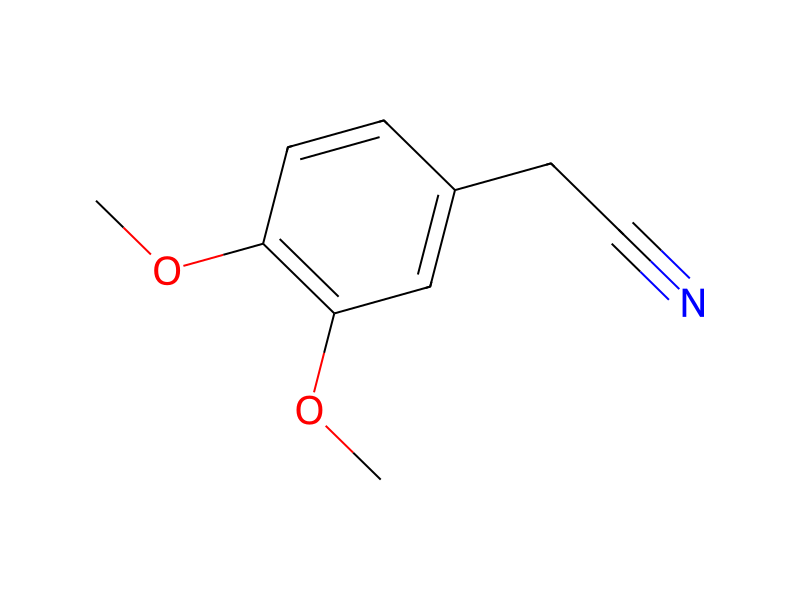
HCID 6362Isopropyl iodideHCID 7912Diisopropylamine2×HCID 25517Ammonium ChlorideHCID 667273,4-DimethoxybenzeneacetonitrileHCID 877762-(2-Bromoethyl)-1,3-dioxolaneHCID 426012402-(3,4-Dimethoxyphenyl)-4-(1,3)-dioxolan-2-yl-butyronitrile
HCID 178418339
Butyllithium
2×

Product 1

HCID 671041742-Cyano-2-(3,4-dimethoxyphenyl)-2-isopropylethyl-1,3-dioxolaneYield 49%

Reagents, catalysts & solvents 2

HCID 3283Diethyl EtherSolventHCID 8028TetrahydrofuranSolvent2×

Conditions

Temperature
-78 °C

Procedure

A solution of butyllithium (1.6 M solution in hexanes, 7.0 mL, 11.2 mmol) was added via syringe to a solution of diisopropylamine (1.5 mL, 10.61 mmol) in anhydrous THF (25 mL) at −78° C. And then a solution of 2-(3,4-dimethoxyphenyl)-4-(1,3)-dioxolan-2-yl-butyronitrile (18) (709 mg, 2.56 mmol) (previously prepared by reacting 2-(2-bromoethyl)-1,3-dioxolane with 2-(3,4-dimethoxyphenyl)-acetonitrile (14) in a solution diisopropylamine to which butyllithium was added) in THF (10 mL) was added via syringe. The mixture was stirred at −78° C. for five minutes and then 2-iodopropane (0.4 mL, 3.96 mmol) was added. The mixture was stirred at −78° C. for five hours and then at room temperature for 17.5 hours., Saturated NH4Cl solution (10 mL) was added to quench the reaction. Ethyl ether (60 mL) was added and the etheral solution was isolated. The aqueous solution was extracted with ether (2×20 mL). After washing with brine, drying with sodium sulfate, the solvent was removed under reduced pressure and the residue was purified by flash column chromatography on SiO2 using EtOAc/hexanes (0-30%) to afford the product (19) (397 mg) in 49% yield. 1H-NMR (CDCl3): δ 6.86-6.82 (m, 3 H), 4.80 (t, J=4.2-4.8 Hz, 1 H), 3.95-3.77 (m, 4 H), 3.878 (s, 3 H), 3.867 (s, 3 H), 2.24 (dt, J=3.9-4.2 Hz, J=12.9-13.2 Hz, 1 H), 2.11-2.02 (m, 1 H), 1.91 (dt, J=3.9 Hz, J=12.6 Hz, 1 H), 1.72 (tt, J=3.9-4.2 Hz, J=12.6-13.2 Hz, 1 H), 1.37-1.24 (m, 1 H), 1.16 (d, J=6.6 Hz, 3 H), 0.80 (d, J=6.9 Hz, 3 H). LC-MS: 342.083 (MNa+).

Workup

  1. additionwas added via syringe
  2. stirringThe mixture was stirred at −78° C. for five hours
  3. waitat room temperature for 17.5 hours
  4. customto quench
  5. customthe reaction
  6. customthe etheral solution was isolated
  7. extractionThe aqueous solution was extracted with ether (2×20 mL)
  8. washAfter washing with brine
  9. dry with materialdrying with sodium sulfate
  10. customthe solvent was removed under reduced pressure
  11. customthe residue was purified by flash column chromatography on SiO2

Sources & evidence

ORD record
ord-762520ed386b43c4862afa5a09128d89
Source dataset
uspto-grants-2014_06
DOI
10.6084/m9.figshare.5104873.v1
Patent number
US08748648B2

Reaction notes

On this pageParticipantsConditionsProcedureWorkupSources & evidenceReaction notes