Reaction equation

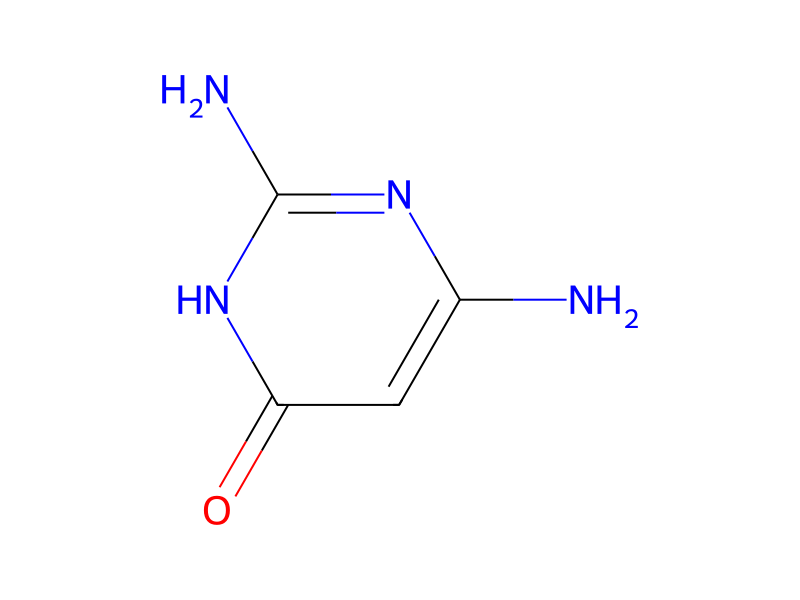
Cl[CH2:2][C:3](=O)[CH2:4][CH2:5][C:6]1[CH:11]=[CH:10][CH:9]=[CH:8][CH:7]=1.[NH2:13][C:14]1[NH:19][C:18](=[O:20])[CH:17]=[C:16]([NH2:21])[N:15]=1>>[NH2:13][C:14]1[NH:19][C:18](=[O:20])[C:17]2[CH:2]=[C:3]([CH2:4][CH2:5][C:6]3[CH:11]=[CH:10][CH:9]=[CH:8][CH:7]=3)[NH:21][C:16]=2[N:15]=1Participants
3


Procedure
FIG. 19 presents the method used to synthesize 2-amino-6-phenethyl-3,7-dihydro-pyrrolo[2,3-d]pyrimidin-4-one 9. Phenylpropanoyl chloride7 was reacted with CH2N2 in the presence of gaseous hydrogen chloride and ether to produce 1-chloro-4-phenyl-2-butanone 8. 1-chloro-4-phenyl-2-butanone 8 was reacted with 2,6-diamino-3H-pyrimidin-4-one 1 to produce 2-amino-6-phenethyl-3,7-dihydro-pyrrolo[2,3-d]pyrimidin-4-one 9 at a 39% yield.
Sources & evidence
- ORD record
- ord-6d4d9d7c49004208bdb0460f4f9d7e6f
- Source dataset
- uspto-grants-2003_05
- Patent number
- US06562969B1
Linked notes
Loading…