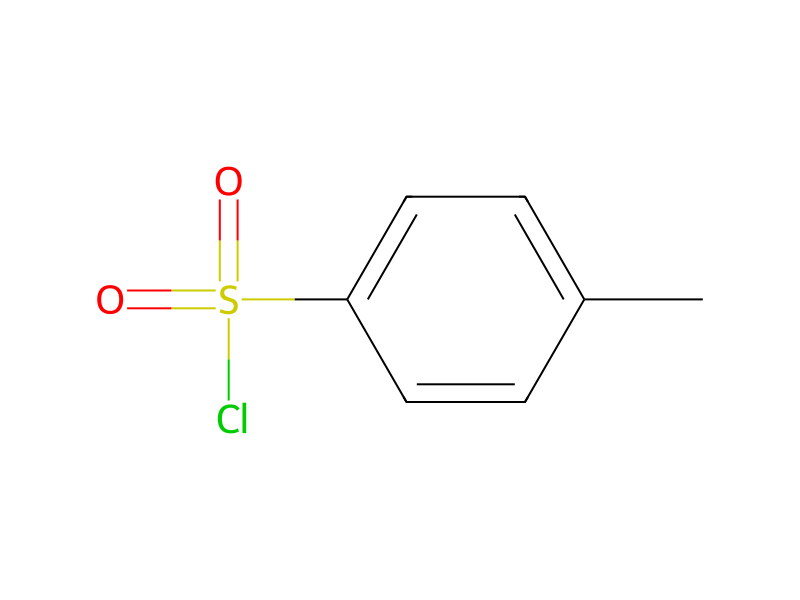
4-Toluenesulfonyl chloride → 1-Benzyl-3-(p-toluenesulfonyl)aminomethylpyrrolidine
HRID 414216
Reaction equation

[CH2:1]([N:8]1[CH2:12][CH2:11][CH:10]([CH2:13][NH2:14])[CH2:9]1)[C:2]1[CH:7]=[CH:6][CH:5]=[CH:4][CH:3]=1.[C:15]1([CH3:25])[CH:20]=[CH:19][C:18]([S:21](Cl)(=[O:23])=[O:22])=[CH:17][CH:16]=1>N1C=CC=CC=1>[CH2:1]([N:8]1[CH2:12][CH2:11][CH:10]([CH2:13][NH:14][S:21]([C:18]2[CH:19]=[CH:20][C:15]([CH3:25])=[CH:16][CH:17]=2)(=[O:23])=[O:22])[CH2:9]1)[C:2]1[CH:7]=[CH:6][CH:5]=[CH:4][CH:3]=1Participants
4
Reactant 2

Product 1

Reagents, catalysts & solvents 1

Procedure
To a solution of 1-benzyl-3-aminomethylpyrrolidine (J. Org. Chem. 26 4955, 1961; 5.0 g) in pyridine (30 ml) was added p-toluenesulfonyl chloride (5.6 g) for 5 minutes, and stirred for 2 hours at room temperature. After the reaction mixture was allowed to stand overnight and concentrated. The residue contain pyridine was removed by azeotrope with water (20 ml). A solution of the resulting residue in dichloromethane (100 ml) was washed with aqueous solution of potassium carbonate (x 2) and water, dried over anhydrous sodium sulfate and concentrated. The residue was purified by silica gel chromatography eluting with methanol:acetonitrile:dichloromethane (0:1:3→0.5:1:3) to give 1-benzyl-3-(p-toluenesulfonyl)aminomethylpyrrolidine (5.31 g) as liquid.