Reaction equation

[N+:1]([C:4]1[C:9]([N+:10]([O-:12])=[O:11])=[CH:8][CH:7]=[CH:6][C:5]=1[OH:13])([O-:3])=[O:2].Br[CH2:15][C:16]([O:18][C:19](C)(C)[CH3:20])=[O:17].C(=O)([O-])[O-].[Cs+].[Cs+]>C(#N)C>[N+:1]([C:4]1[C:9]([N+:10]([O-:12])=[O:11])=[CH:8][CH:7]=[CH:6][C:5]=1[O:13][CH2:15][C:16]([O:18][CH2:19][CH3:20])=[O:17])([O-:3])=[O:2]Participants
Reactant 3


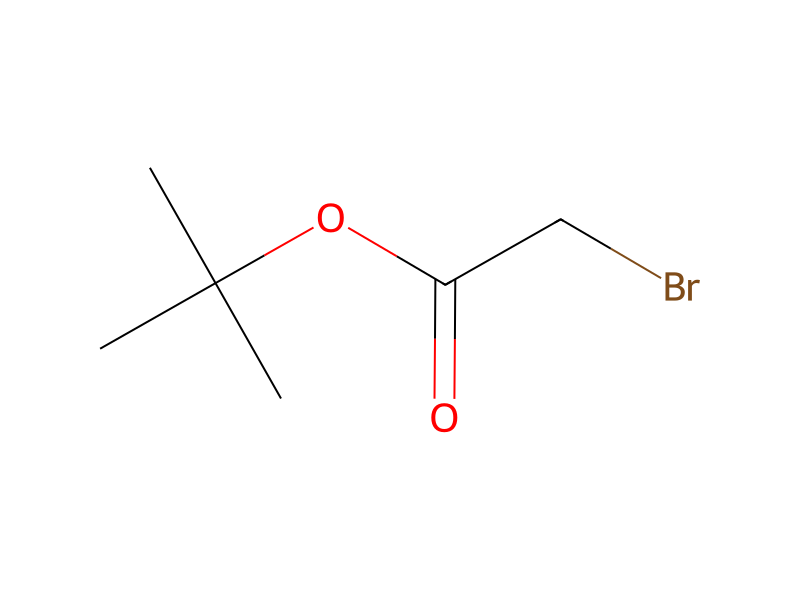
Product 1

Reagents, catalysts & solvents 1

Procedure
A round-bottom flask was charged with 2,3-dinitrophenol (11.04 g, 60 mmol, commercially available from Fluka-Sigma-Aldrich), tert-butyl bromoacetate (14.05 g, 66 mmol), acetonitrile (120 mL) and cesium carbonate (21.6 g). The mixture was stirred at room temperature overnight. The mixture was filtered, and the recovered solid was washed with ethyl acetate. The filtrate was further diluted with ethyl acetate and water. The aqueous layer was extracted with ethyl acetate and combined organic solvent was washed with saturated brine, dried and concentrated under reduced pressure. The residue was triturated with ether to give ethyl 2-(2,3-dinitrophenoxy)acetate (13.0 g, 70% yield). 1H-NMR (DMSO-d6) δ 7.84 (d, 2H), 7.42 (s, 1H), 4.90 (s, 2H), 1.40 (S, 9H).
Workup
- filtrationThe mixture was filtered
- washthe recovered solid was washed with ethyl acetate
- additionThe filtrate was further diluted with ethyl acetate and water
- extractionThe aqueous layer was extracted with ethyl acetate
- washwas washed with saturated brine
- customdried
- concentrationconcentrated under reduced pressure
- customThe residue was triturated with ether
Sources & evidence
- ORD record
- ord-b12faa9f3aab45d38b7a14f8b7d45680
- Source dataset
- uspto-grants-2012_01
- Patent number
- US08088767B2
Linked notes
Loading…