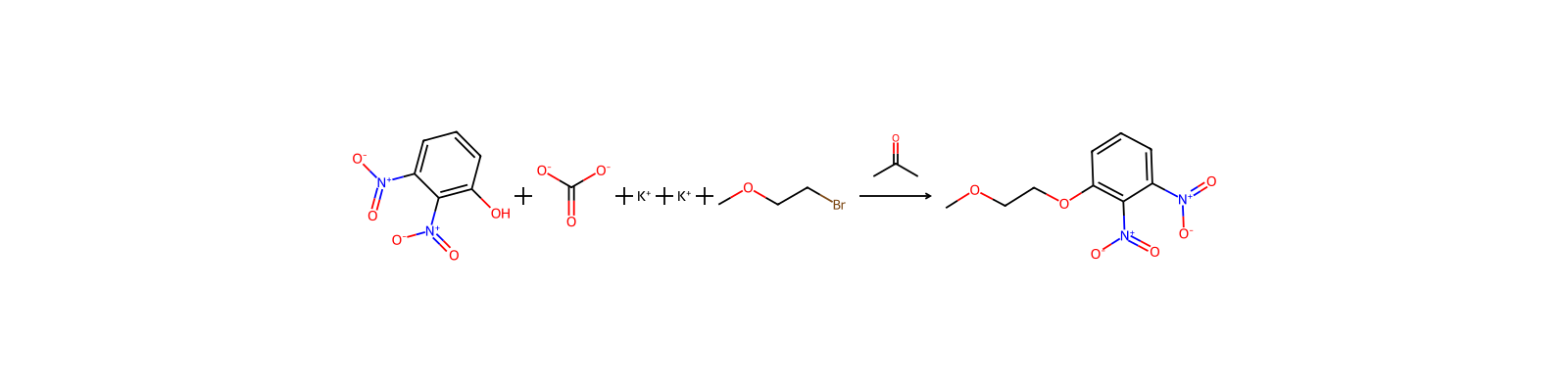
2,3-Dinitrophenol
Completing data — refresh the page later to see the latest

Basic information
- CAS
66-56-8- Standard SMILES
O=[N+]([O-])c1cccc(O)c1[N+](=O)[O-]- InChIKey
MHKBMNACOMRIAW-UHFFFAOYSA-N- Molecular formula
- C6H4N2O5
- Average molar mass
- 184.11 g/mol
- Monoisotopic mass
- 184.01202123
Overview
2,3-dinitrophenol is a dinitrophenol.
Names & identifiers
- Preferred name
- 2,3-Dinitrophenol
- IUPAC
- 2,3-dinitrophenol
- English name
- 2,3-DINITROPHENOL
- Molecular formula
- C6H4N2O5
- Molecular weight
- 184.11
Names & synonyms
2,3-DINITROPHENOL66-56-8Phenol, 2,3-dinitro-2,3-DNPDTXSID2075261NSC-156083735M30625HCHEBI:39354RefChem:81872DTXCID7044685200-628-725550-58-7
Show more names
2,3-dinitro-phenoDinitrophenol, 2,3-2,3-dinitrophenolmoistenedwithwater(h2o~20%)2,3-Dinitrophenol moistened with water, >=98.0% (HPLC)
2,3-Dinitrofenol [Czech]2,3-DinitrofenolCCRIS 3101EINECS 200-628-7NSC 156083BRN 2213580Phenol,3-dinitro-NSC156083
Database identifiers
- CAS
66-56-8- PubChem CID
- 6191
- DTXSID
DTXSID2075261- ChEMBL
CHEMBL3347393- ChEBI
CHEBI:39354- UNII
- 735M30625H
- EC Number
- 200-628-7
- Nikkaji
- J53.754C
Properties
Computed structural propertiesFilling in
- XLogP
- 1.9
- Topological polar surface area
- 112 Ų
- Hydrogen bond donors
- 1
- Hydrogen bond acceptors
- 5
- Rotatable bonds
- 0
- Heavy atoms
- 13
- Formal charge
- 0
- Complexity
- 220
Experimental & physicochemical properties
Chemical ClassesNitrogen Compounds -> Nitrophenols
SpringerMaterials PropertiesBoiling point
Density1.681 @ 20°C
Melting Point144.5 °C
Vapor Pressure0.000012 [mmHg]
Physical DescriptionYellow needles or crystals
Physicochemical properties
- Melting point
- 141 · 141-145 °C
- Boiling point
- 329 ℃ · 329℃
- Density
- 1.65 · 1.650
- refractive index
- 1.4738 · 1.4738 (estimate)
- Flash point
- 151 ℃ · 151℃
- solubility
- Solubility Sparingly soluble in water; soluble in ethanol, ether
Safety & regulation
Safety information is for reference only and does not replace the supplier’s Safety Data Sheet (SDS), applicable regulations, or professional assessment.
GHS classification
GHS Classification
Danger
H301: Toxic if swallowed [Danger Acute toxicity, oral]
P260, P261, P262, P264, P270, P271, P273, P280, P301+P316, P302+P352, P304+P340, P316, P319, P321, P330, P361+P364, P391, P403+P233, P405, and P501 (click each P-code to see the statement)
Danger
H301 (100%): Toxic if swallowed [Danger Acute toxicity, oral]
P260, P261, P262, P264, P270, P271, P273, P280, P301+P316, P302+P352, P304+P340, P316, P319, P321, P330, P361+P364, P391, P403+P233, P405, and P501 (click each P-code to see the statement)
Hazard information
Hazards SummaryMay cause irritation, disruption of oxidative phosphorylation, liver injury, and dermatitis; Highly toxic by inhalation; Toxic by ingestion and skin absorption; [Aldrich MSDS]
See Dinitrophenol.
Hazard Classes and Categories
Acute Tox. 3 (100%)
Acute toxicity - category 3
Acute Tox. 3 *
Safety & protection
Protective Action Criteria (PAC)
1.5 [mg/m3]
13 [mg/m3]
75 [mg/m3]
Toxicology
Adverse EffectsOccupational hepatotoxin - Secondary hepatotoxins: the potential for toxic effect in the occupational setting is based on cases of poisoning by human ingestion or animal experimentation.
Safety data
Chemistry & industry
Uses & manufacturing
UsesA minor constituent of commercial dinitrophenol mixtures, which are used to make dyes, wood preservatives, photographic developers, explosives, insecticides, and other chemicals; [ATSDR ToxProfiles]
Applications
Uses2,3-Dinitrophenol may be employed as nitrogen supplement for the bacterial culture medium.
General Description2,3-Dinitrophenol is a nitroaromatic compound. It has been reported to exhibit high acute toxicity to Scenedesmus obliquus, with EC50 value of 2.5±0.8.
Upstream & downstream products
Downstream products
Additional notes
DefinitionChEBI: 2,3-dinitrophenol is a dinitrophenol.
Related reactions
18 records


Compound notes
Loading…