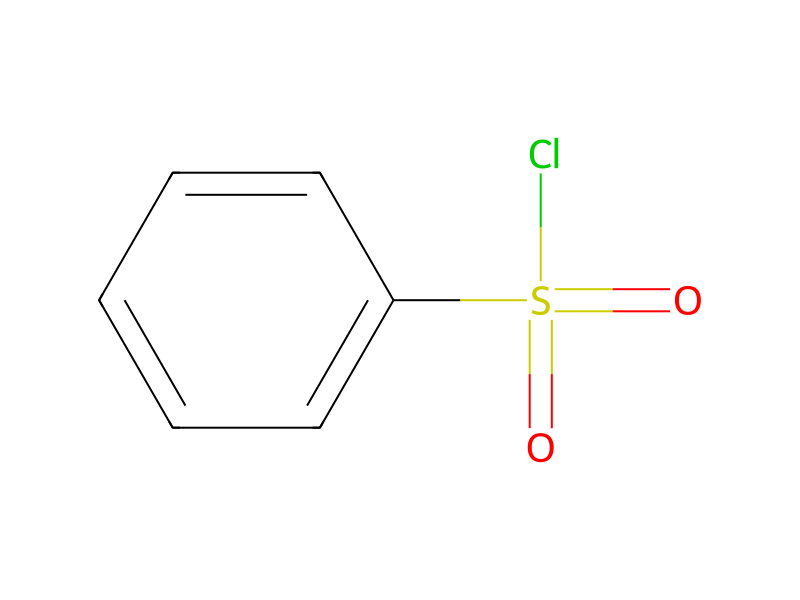
[NH2:1][C:2]1[C:7]([N+:8]([O-:10])=[O:9])=[C:6]([N:11]2[CH2:16][CH2:15][N:14](C(OC(C)(C)C)=O)[CH2:13][CH2:12]2)[C:5]([Br:24])=[CH:4][N:3]=1.C(O)(C(F)(F)F)=O.N1C=CC=CC=1.[C:38]1([S:44](Cl)(=[O:46])=[O:45])[CH:43]=[CH:42][CH:41]=[CH:40][CH:39]=1>C(Cl)Cl>[Br:24][C:5]1[C:6]([N:11]2[CH2:12][CH2:13][N:14]([S:44]([C:38]3[CH:43]=[CH:42][CH:41]=[CH:40][CH:39]=3)(=[O:46])=[O:45])[CH2:15][CH2:16]2)=[C:7]([N+:8]([O-:10])=[O:9])[C:2]([NH2:1])=[N:3][CH:4]=1A solution of tert-butyl 4-(2-amino-5-bromo-3-nitropyridin-4-yl)piperazine-1-carboxylate (250 mg, 0.62 mmol) in CH2Cl2 (2.5 mL) at 0° C. was treated with TFA (2.5 mL) and stirred at 0° C. for 1.5 h. After this time, the solvents were evaporated in vacuo and the excess TFA removed by azeotroping with toluene (3×10 mL). The residue was suspended in CHCl3 (3 mL) and pyridine (3 mL) and treated with benzenesulfonyl chloride (1.1 eq, 0.68 mmol, 0.09 mL), warmed to room temperature and stirred for 12 h. The solvents were removed in vacuo and the residue partition between water (5 mL) and EtOAc (5 mL). The aqueous layer was extracted with EtOAc (2×5 mL) and the combined organic extracts were dried (MgSO4) and concentrated in vacuo. Column chromatography (hexane-EtOAc, 1:1) gave the product (107 mg, 39% for two steps) as a yellow solid; 1H-NMR (500 MHz, DMSO-d6) 3.09 (br s, 8H, 2× piperazine N(CH2)2), 7.08 (br s, 2H, NH2), 7.67-7.70 (m, 2H, phenyl H-3 & H-5), 7.74-7.78 (m, 3H, phenyl H-2, H-4 & H-6), 8.16 (s, 1H, pyridine H-6);
Loading…