Reaction equation

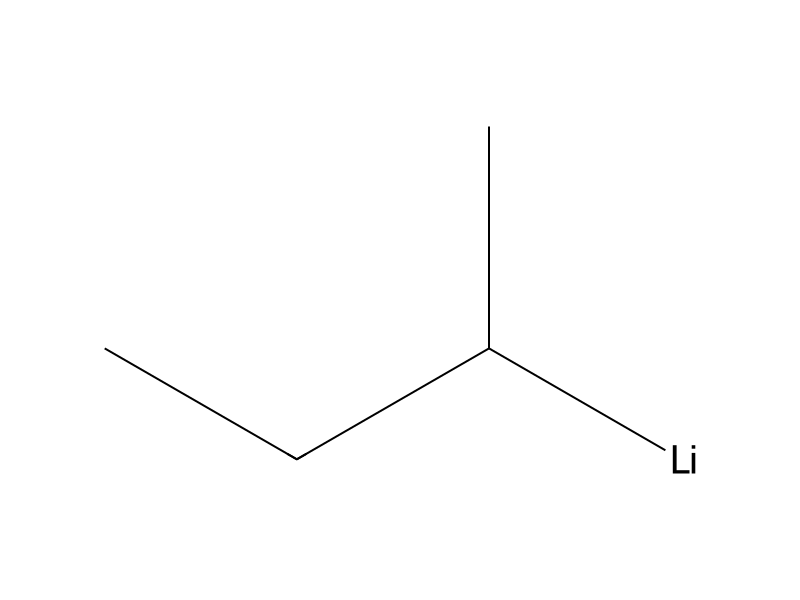
C1SCC(C(O)=O)NC1C(O)=O.[Li]C(CC)C.[CH:18]1([C:21]2[CH:22]=[C:23]([CH:27]=[C:28]([F:30])[CH:29]=2)[C:24]([OH:26])=[O:25])[CH2:20][CH2:19]1.[Br:31]C(Cl)(Cl)C(Cl)(Cl)Br>C1COCC1>[Br:31][C:27]1[C:28]([F:30])=[CH:29][C:21]([CH:18]2[CH2:19][CH2:20]2)=[CH:22][C:23]=1[C:24]([OH:26])=[O:25]Participants
Reactant 4


Product 1

Reagents, catalysts & solvents 1

Procedure
To a solution of TMDA (1.3 ml, 8.61 mmol) in dry THF (9 mL) under inert atmosphere at −65° C., a 1.4M solution of sec-BuLi (8 ml, 11.20 mmol) was added dropwise. Then a solution of 3-cyclopropyl-5-fluorobenzoic acid (0.69 g, 3.83 mmol) in dry THF (3 mL) was added dropwise and stirred for 1 h. Then a solution of 1,2-dibromotetrachloroethane (5 g, 15.48 mmol) in dry THF (11 mL) was added dropwise for 1 h and stirred for additional 20 min. A white suspension was obtained. The cooling bath was removed and at −20° C. water (30 mL) and diethyl ether (30 mL) were added. The organic layer was separated and the aqueous phase was acidified (until pH: 1) using a 2N aqueous solution of HCl (13 mL needed) and extracted with diethyl ether. The organic phase was washed with water and brine, dried, filtered and concentrated in vacuo to afford a mixture 1:1 of the expected compound and starting material (38% yield), which was used without further purification
Workup
- stirringstirred for additional 20 min
- customA white suspension was obtained
- customThe cooling bath was removed and at −20° C. water (30 mL) and diethyl ether (30 mL)
- additionwere added
- customThe organic layer was separated
- extractionextracted with diethyl ether
- washThe organic phase was washed with water and brine
- customdried
- filtrationfiltered
- concentrationconcentrated in vacuo
Sources & evidence
- ORD record
- ord-17d882e4c5214e0687e66e6964a1161a
- Source dataset
- uspto-grants-2013_09
- Patent number
- US08536165B2
Linked notes
Loading…