Reaction equation

[Br:1][CH2:2][CH2:3][CH2:4][CH2:5][CH2:6][C:7]([OH:9])=[O:8].[C:10]([O:14][CH2:15][CH:16](O)[CH3:17])(=[O:13])[CH:11]=[CH2:12].C(Cl)CCl>C(Cl)Cl>[C:10]([O:14][CH2:15][CH:16]([O:8][C:7](=[O:9])[CH2:6][CH2:5][CH2:4][CH2:3][CH2:2][Br:1])[CH3:17])(=[O:13])[CH:11]=[CH2:12]Participants
5
Reactant 3

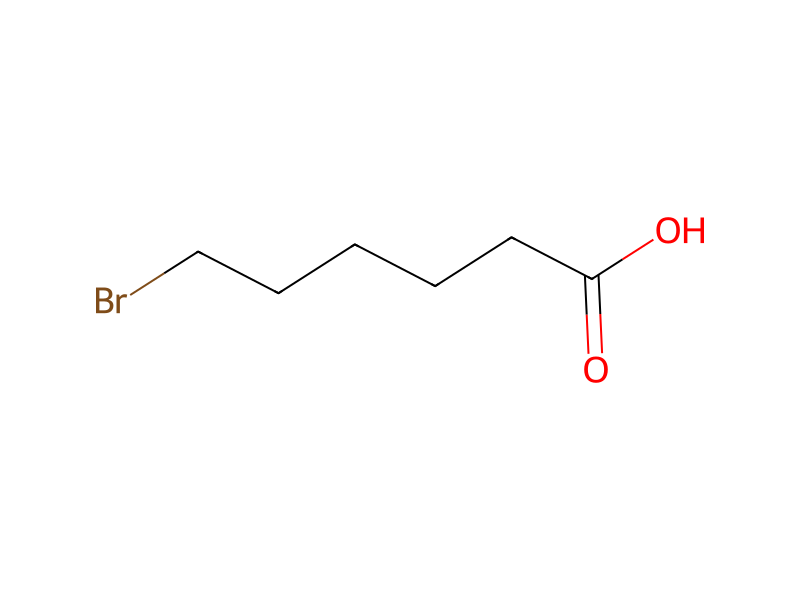

Product 1

Reagents, catalysts & solvents 1

Conditions
- Temperature
- 0 °C
Procedure
To a 0° C. cooled mixture of 6-bromohexanoic acid (9.89 g), 2-hydroxypropyl acrylate (6 g), in CH2Cl2 (30 ml), EDC (7.89 g) was added. After being stirred for 30 min the reaction mixture was diluted with additional 20 ml of CH2Cl2 and stirring was continued for 16 h at room temperature. It was then filtered over celite and the filtrate was evaporated to dryness. The obtained beige-yellow residue was purified by silica column chromatography to give nearly pure material as transparent oil.
Workup
- stirringstirring
- waitwas continued for 16 h at room temperature
- filtrationIt was then filtered over celite
- customthe filtrate was evaporated to dryness
- customThe obtained beige-yellow residue was purified by silica column chromatography
- customto give nearly pure material as transparent oil
Sources & evidence
- ORD record
- ord-0e5407f232de4411a3a215497f6e7f7d
- Source dataset
- uspto-grants-2012_01
- Patent number
- US08105662B2
Linked notes
Loading…