Reaction equation

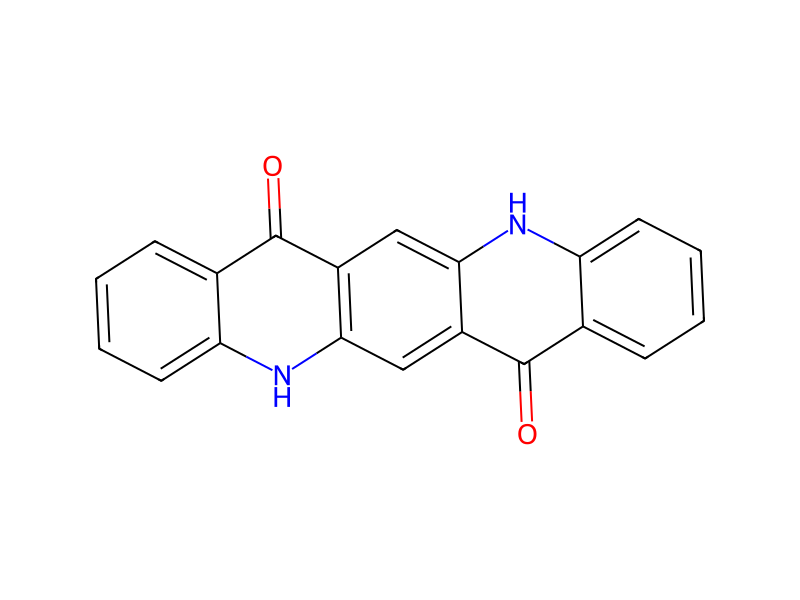
[NH:1]([C:8]1[CH:16]=[C:15]([C:17](O)=[O:18])[C:14]([NH:20][C:21]2[CH:26]=[CH:25][CH:24]=[CH:23][CH:22]=2)=[CH:13][C:9]=1[C:10](O)=[O:11])[C:2]1[CH:7]=[CH:6][CH:5]=[CH:4][CH:3]=1.ClC1C=C(C=CC=1)NC1C=C(C(O)=O)C(NC2C=CC=C(Cl)C=2)=CC=1C(O)=O>>[CH:24]1[CH:25]=[C:26]2[C:17]([C:15]3[C:14]([NH:20][C:21]2=[CH:22][CH:23]=1)=[CH:13][C:9]1[C:10]([C:7]2[C:2]([NH:1][C:8]=1[CH:16]=3)=[CH:3][CH:4]=[CH:5][CH:6]=2)=[O:11])=[O:18]Participants
3


Procedure
Repeating the above example but using exclusively 150 parts of 2,5-dianilinoterephthalic acid instead of a mixture of 135 parts of 2,5-dianilinoterephthalic acid and 15 parts of 2,5-di(3-chloroanilino)terephthalic acid gives quinacridone which is in the β phase.
Sources & evidence
- ORD record
- ord-6e90c0759092460d98f54014c9ef22ef
- Source dataset
- uspto-grants-2001_11
- Patent number
- US06312512B1
Linked notes
Loading…