HomeMCPWorkbenchSkills
HomeWorkbenchNotificationsMe
llms.txt · MCP GuidePrivacy Policy · Terms of Service · Supportv1.8.3
  1. Home
  2. /Reaction

Ethanol → Sodium 4-(pyridin-4-yl)benzoate

HRID 428017
Print

Reaction equation

HRID 428017 reaction equation
Cl.Cl[C:3]1[CH:8]=[CH:7][N:6]=[CH:5][CH:4]=1.[C:9]([C:12]1[CH:17]=[CH:16][C:15](B(O)O)=[CH:14][CH:13]=1)([OH:11])=[O:10].C(=O)([O-])[O-].[Na+:25].[Na+].C(O)C>C1(C)C=CC=CC=1.CO.[Pd](Cl)Cl.C1(P(C2C=CC=CC=2)CCCCP(C2C=CC=CC=2)C2C=CC=CC=2)C=CC=CC=1>[N:6]1[CH:7]=[CH:8][C:3]([C:15]2[CH:16]=[CH:17][C:12]([C:9]([O-:11])=[O:10])=[CH:13][CH:14]=2)=[CH:4][CH:5]=1.[Na+:25]
ParticipantsProcedureWorkupSources & evidenceReaction notes

Participants

8

Reactant 4

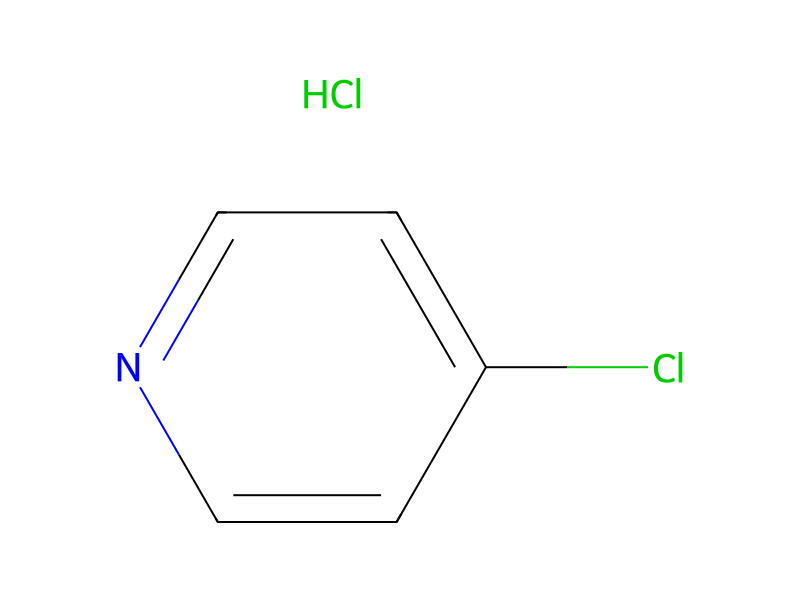
HCID 702EthanolHCID 10340Sodium CarbonateHCID 818524-Chloropyridine hydrochlorideHCID 3121834-Carboxyphenylboronic Acid

Product 1

HCID 23673507Sodium 4-(pyridin-4-yl)benzoateYield 41%

Reagents, catalysts & solvents 3

HCID 10974057
(Butane-1,4-diyl)bis(diphenylphosphane)--dichloropalladium (1/1)
Catalyst
HCID 887MethanolSolvent
HCID 1140TolueneSolvent

Procedure

A solution of 4-chloropyridine hydrochloride (3.00 g, 20.0 mmol), 4-carboxybenzeneboronic acid (4.97 g, 30.0 mmol), 1 M aqueous sodium carbonate solution (50 mL), 1,4-bis(diphenylphosphino)butane palladium(II) dichloride (300 mg, 0.70 nmol), and ethanol (10 mL) in toluene (40 mL) was heated at reflux for 16 h. The mixture was diluted with methanol and filtered through diatomaceous earth. The filtrate was concentrated in vacuo and the pH was adjusted to 14 by the addition of 1 N aqueous sodium hydroxide. After heating the filtrate to boiling, the insoluble material was removed by filtration, and the resulting filtrate was allowed to cool to room temperature. The resulting precipitate was collected by filtration to yield 1.83 g (41%) of the title compound.

Workup

  1. temperatureat reflux for 16 h
  2. filtrationfiltered through diatomaceous earth
  3. concentrationThe filtrate was concentrated in vacuo
  4. additionthe pH was adjusted to 14 by the addition of 1 N aqueous sodium hydroxide
  5. temperatureAfter heating the filtrate
  6. customthe insoluble material was removed by filtration
  7. filtrationThe resulting precipitate was collected by filtration

Sources & evidence

ORD record
ord-b6b379114b5e42a98222ad3bf0977b24
Source dataset
uspto-grants-2001_11
DOI
10.6084/m9.figshare.5104873.v1
Patent number
US06313151B1

Reaction notes

On this pageParticipantsProcedureWorkupSources & evidenceReaction notes