Reaction equation

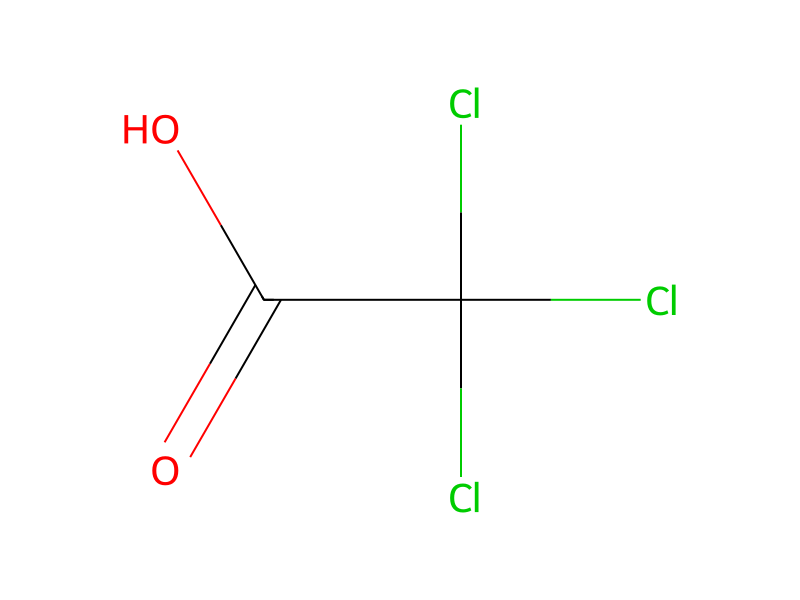
[F:1][C:2]1[C:7]([C:8](=[O:20])[C:9]2[C:14]([F:15])=[C:13]([F:16])[C:12]([F:17])=[C:11]([F:18])[C:10]=2[F:19])=[C:6]([F:21])[C:5]([F:22])=[C:4]([F:23])[C:3]=1[F:24].[Cl:25][C:26]([Cl:31])([Cl:30])C(O)=O.FF.C([O-])(=O)C=C>CO.CN(C)P(N(C)C)(N(C)C)=O>[Cl:25][C:26]([Cl:31])([Cl:30])[C:8]([C:9]1[C:10]([F:19])=[C:11]([F:18])[C:12]([F:17])=[C:13]([F:16])[C:14]=1[F:15])([C:7]1[C:2]([F:1])=[C:3]([F:24])[C:4]([F:23])=[C:5]([F:22])[C:6]=1[F:21])[OH:20]Participants
7




Conditions
- Temperature
- 0 °C
Procedure
A mixture of 4.9 g of decafluorobenzophenone and 2.7 g of trichloroacetic acid was added to 15 mL of hexamethylphosphoramide. The stirred reaction mixture was maintained at about 0° C. for about 2 hours and then allowed to warm to room temperature and continue stirring at ambient temperature for the next 15 hours. The reaction mixture was characterized by GC and fluorine NMR to show a conversion of approximately 20% to the desired carbinol. This carbinol can be converted to the corresponding acrylate by methods previously described (cf. Example 24).
Workup
- customThe stirred reaction mixture
- temperatureto warm to room temperature
Sources & evidence
- ORD record
- ord-9797598e0f8945dcacc0fb81a52e30ac
- Source dataset
- uspto-grants-2001_11
- Patent number
- US06313245B1
Linked notes
Loading…