Reaction equation

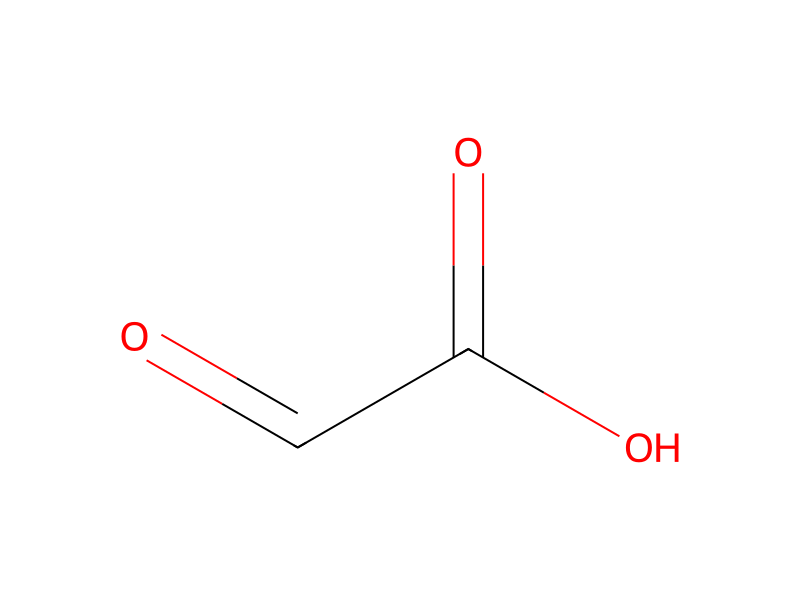
[F:1][C:2]1[CH:8]=[CH:7][CH:6]=[C:4]([OH:5])[C:3]=1[OH:9].[C:10]([OH:14])(=[O:13])[CH:11]=[O:12].[OH-].[Na+].Cl>O>[F:1][C:2]1[CH:8]=[CH:7][C:6]([CH:11]([OH:12])[C:10]([OH:14])=[O:13])=[C:4]([OH:5])[C:3]=1[OH:9]Participants
Reactant 4



Product 1

Reagents, catalysts & solvents 1

Conditions
- Temperature
- 0 °C
Procedure
51.2 g of 3-fluorocatechol and 36.8 g of glyoxylic acid were dissolved at 20° C. in 160 ml of water and 34.8 g of sodium hydroxide in solution in 400 ml of water were added to this solution cooled to 0° C. The mixture was heated for 4 hours at 46° C., then cooled to 0° C. and the pH was brought to 4.6 by the addition of concentrated hydrochloric acid. Extraction was carried out with ethyl ether (after evaporation 14.7 g of the starting 9-fluorocatechol were collected) and the aqueous phase was acidified with concentrated hydrochloric acid until a pH of 1.8 was obtained. Extraction was carried out with ethyl acetate and after evaporation of the solvent, 47.7 g of the desired product were obtained (mixture of isomers, 2,3-bis-hydroxy-4-fluoro; 3,4-bis-hydroxy-5-fluoro; 2-fluoro-3,4-bis-hydroxy) which was used as is in Step A of Example 16.
Workup
- temperatureThe mixture was heated for 4 hours at 46° C.
- temperaturecooled to 0° C.
- extractionExtraction
- customwas carried out with ethyl ether (after evaporation 14.7 g of the starting 9-fluorocatechol were collected)
- customwas obtained
- extractionExtraction
- customafter evaporation of the solvent
Sources & evidence
- ORD record
- ord-669bd1acc77d40b898adbbe7075c7702
- Source dataset
- uspto-grants-2001_11
- Patent number
- US06313305B1
Linked notes
Loading…