Reaction equation

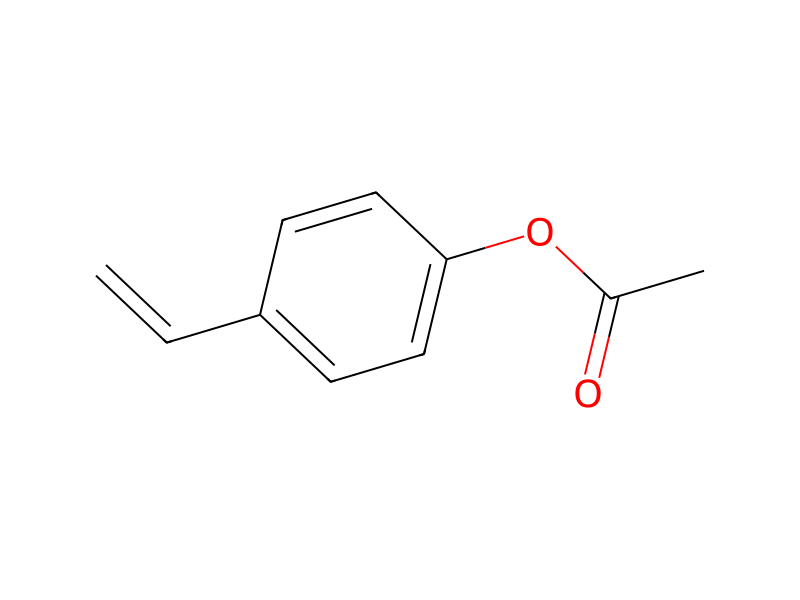
[C:1]([O:4][C:5]1[CH:12]=[CH:11][C:8]([CH:9]=[CH2:10])=[CH:7][CH:6]=1)(=[O:3])[CH3:2].[C:13]([O:17][C:18]1[CH:25]=[CH:24][C:21]([CH:22]=[CH2:23])=[CH:20][CH:19]=1)([CH3:16])([CH3:15])[CH3:14].N(C(C)(CC(C)C)C#N)=NC(C)(CC(C)C)C#N.CO>CC(C)=O>[C:1]([O:4][C:5]1[CH:12]=[CH:11][C:8]([CH:9]=[CH2:10])=[CH:7][CH:6]=1)(=[O:3])[CH3:2].[C:13]([O:17][C:18]1[CH:19]=[CH:20][C:21]([CH:22]=[CH2:23])=[CH:24][CH:25]=1)([CH3:16])([CH3:14])[CH3:15]Participants
6




Procedure
With the use of 48.6 g (0.30 mole) of p-acetyloxystyrene, 17.6 g (0.10 mole) of p-tert-butoxystyrene and a catalytic amount of 2,2′-azobis(2,4-dimethylvaleronitrile), the same reaction and after-treatment as described in Production Example 2-(1) were conducted, and the resulting viscous resinous material was dissolved in 200 ml of acetone and poured into 1000 ml of 50% aqueous methanol solution. The precipitated resin was recovered by decantation and dried under reduced pressure to give 59.7 g of poly(p-acetyloxystyrene/p-tert-butoxystyrene) as white powders. A ratio of p-acetyloxystyrene unit and p-tert-butoxystyrene unit was about 3:1 by 1HNMR. Mw: about 10500, Mw/Mn: 1.32 (GPC method: polystyrene as standard).
Workup
- customThe precipitated resin was recovered by decantation
- customdried under reduced pressure
Sources & evidence
- ORD record
- ord-5759a8a0b1d3406aa646b6aad2797311
- Source dataset
- uspto-grants-2003_12
- Patent number
- US06656660B1
Linked notes
Loading…