Reaction equation

O[C:2]1[CH:3]=[C:4]2[C:9](=[CH:10][CH:11]=1)[CH:8]=[C:7]([C:12](=[O:14])[CH3:13])[CH:6]=[CH:5]2.[CH2:15]([NH:17][CH2:18][CH2:19][OH:20])[CH3:16].O>C(OCC)(=O)C>[CH2:15]([N:17]([CH2:18][CH2:19][OH:20])[C:2]1[CH:3]=[C:4]2[C:9](=[CH:10][CH:11]=1)[CH:8]=[C:7]([C:12](=[O:14])[CH3:13])[CH:6]=[CH:5]2)[CH3:16]Participants
5
Reactant 3

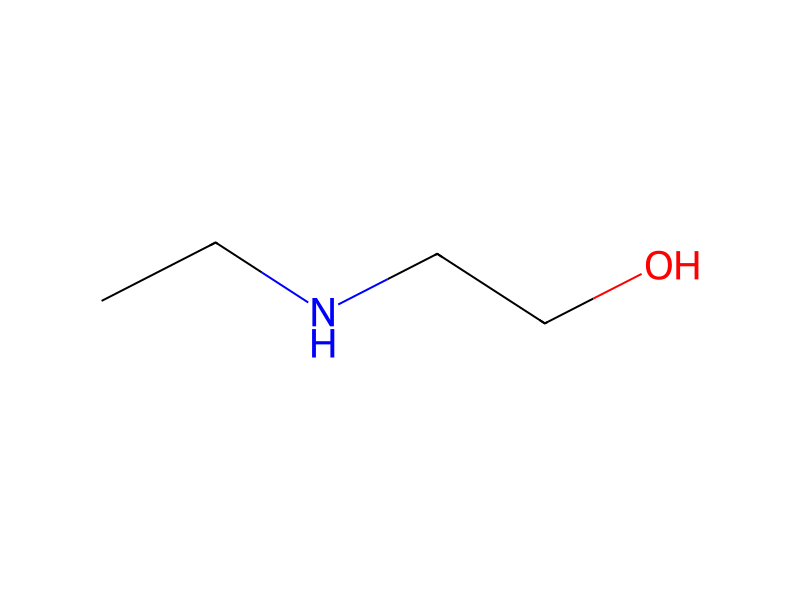

Product 1

Reagents, catalysts & solvents 1

Procedure
A mixture of 1-(6-hydroxy-2-naphthyl)ethanone (744 mg, 3.92 mmol), sodium hydrogen sulfate(IV) (1.66 g, 16 mmol), 2-ethylaminoethanol (2 mL) and water (5 mL) was heated in a steel bomb at 130-140° C. for 3 days. After cooling, the mixture was distributed between water and ethyl acetate, and the organic layer was washed with brine, dried and evaporated. The residue was dissolved in acetone and loaded onto a 4 mm dry silica plate for radial chromatography. The plate was eluted with a 1:1 mixture of petroleum ether and ethyl acetate. Appropriate fractions were collected and evaporated to give 125 mg(12%)of 1-{6-[ethyl-(2-hydroxylethyl)-amino]-2-naphthyl}ethanone.
Workup
- temperatureAfter cooling
- washthe organic layer was washed with brine
- customdried
- customevaporated
- dissolutionThe residue was dissolved in acetone
- washThe plate was eluted with a 1:1 mixture of petroleum ether and ethyl acetate
- customAppropriate fractions were collected
- customevaporated
Sources & evidence
- ORD record
- ord-ca001cf43e7b4569a0640564d35c01b4
- Source dataset
- uspto-grants-2003_12
- Patent number
- US06660530B2
Linked notes
Loading…