HomeMCPWorkbenchSkills
HomeWorkbenchNotificationsMe
llms.txt · MCP GuidePrivacy Policy · Terms of Service · Supportv1.8.0
  1. Home
  2. /Reaction

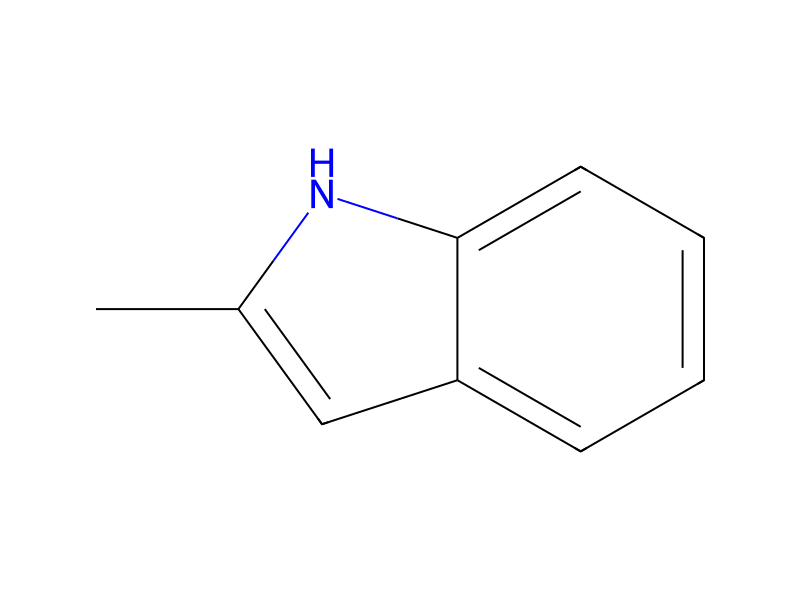
2-Methylindole → 2-(2-Methyl-1-buten-4-yl)indole

HRID 431802
Notes
Print preview

Reaction equation

HRID 431802 reaction equation
[CH3:1][C:2]1[NH:3][C:4]2[C:9]([CH:10]=1)=[CH:8][CH:7]=[CH:6][CH:5]=2.C([Li])CCC.[CH3:16][C:17]([CH3:20])([O-])[CH3:18].[K+].BrCC(C)=C>C(OCC)C.CCCCCC>[CH3:18][C:17]([CH2:20][CH2:1][C:2]1[NH:3][C:4]2[C:9]([CH:10]=1)=[CH:8][CH:7]=[CH:6][CH:5]=2)=[CH2:16]
ParticipantsProcedureWorkupSources & evidenceReaction notes

Participants

7

Reactant 4

HCID 72242-MethylindoleHCID 3577853-Bromo-2-methyl-1-propeneHCID 23665647Potassium tert-butoxideHCID 178418339Butyllithium

Product 1

HCID 187616282-(2-Methyl-1-buten-4-yl)indoleYield 47%

Reagents, catalysts & solvents 2

HCID 3283
Diethyl Ether
Solvent
HCID 8058HexaneSolvent

Procedure

To a stirred solution of 2-methylindole (1 g) in diethylether (76 ml) under nitrogen was added a 1.6 M solution of n-butyllithium in hexane (14.3 ml) slowly dropwise via syringe. Potassium tert-butoxide (1.711 g) was then added, producing a bright yellow mixture. After stirring at room temperature under nitrogen for 50 minutes, the mixture was cooled to −78° C., whereupon 3-bromo-2-methylpropene (1.54 ml) was added dropwise via syringe, giving a red-orange solution. The reaction mixture was stirred at −78° C. for 2 hours, then quenched with water (10 ml). After warming to room temperature, water (150 ml) and 1 N hydrochloric acid (1 ml) was added to neutralize the reaction mixture. The mixture was extracted with ethyl acetate (250 ml), and the organic layer was washed with brine (100 ml) and dried with sodium sulfate. The solvent was removed under reduced pressure, and the crude residue was purified by flash chromatography (4% ethyl acetate/hexane) to afford 2-(2-methyl-1-butene-4-yl)indole (664 mg. 47%) as a waxy yellow solid.

Workup

  1. customproducing a bright yellow mixture
  2. additionwas added dropwise via syringe
  3. customgiving a red-orange solution
  4. stirringThe reaction mixture was stirred at −78° C. for 2 hours
  5. customquenched with water (10 ml)
  6. temperatureAfter warming to room temperature
  7. additionwater (150 ml) and 1 N hydrochloric acid (1 ml) was added
  8. extractionThe mixture was extracted with ethyl acetate (250 ml)
  9. washthe organic layer was washed with brine (100 ml)
  10. dry with materialdried with sodium sulfate
  11. customThe solvent was removed under reduced pressure
  12. customthe crude residue was purified by flash chromatography (4% ethyl acetate/hexane)

Sources & evidence

ORD record
ord-3ad60e08ce1645c5a59c298cb19287f1
Source dataset
uspto-grants-2003_12
DOI
10.6084/m9.figshare.5104873.v1
Patent number
US06660763B2

Reaction notes

Loading…

On this pageParticipantsProcedureWorkupSources & evidenceReaction notes



